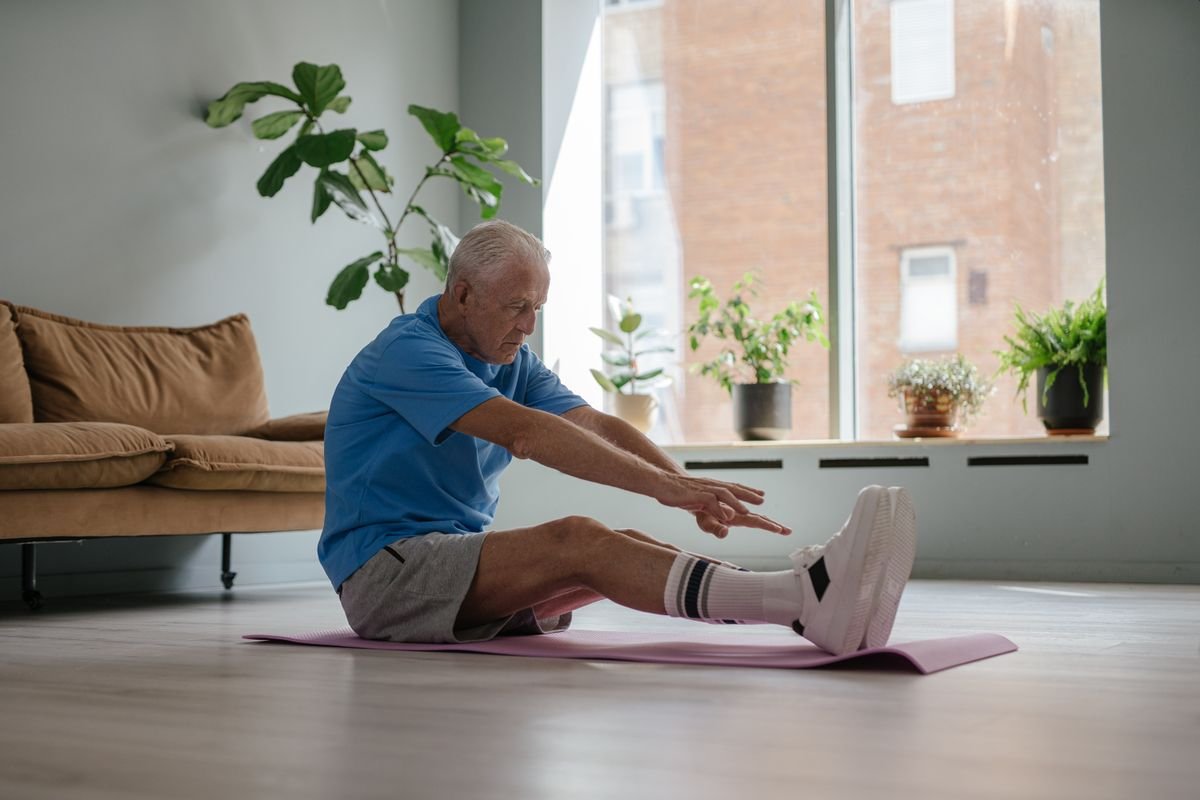
When the Pain Runs Down Your Leg
You stand up from a chair and a sharp ache shoots from your lower back through your buttock and down the back of your leg. Or a dull burn sits in your calf all afternoon, and your foot feels tingly on the walk to the mailbox. The ache may fade lying down and return the moment you sit too long. This pattern has a name: sciatica.
Sciatica is not a disease on its own. MedlinePlus explains it plainly: sciatica is a symptom of a problem with the sciatic nerve, the largest nerve in the body. Something presses on or irritates the nerve, and the pain follows its path from the base of the spine, through the buttock, and down the back of the thigh, as the Cleveland Clinic describes. It usually affects one side of the body only.
The most common causes, according to MedlinePlus, are a slipped or herniated disk, a narrowing of the spinal canal called spinal stenosis, and piriformis syndrome, a problem with the narrow buttock muscle that sits close to the nerve. Mayo Clinic adds that bone spurs can press on the nerve roots in the lower spine. Only your doctor can find the cause of yours.
What Sciatica Feels Like
Sciatica pain varies widely: a mild tingling, a dull ache, or a burning sensation, sometimes severe enough to stop a person moving, according to MedlinePlus. Mayo Clinic describes the range the same way, from a mild ache to a sharp, burning pain, sometimes like a jolt or electric shock, following a path from the low back to the buttock and the back of the thigh and calf. One part of the leg can hurt while another feels numb, and the foot may catch on the ground.
Pain may worsen after standing or sitting a while, or when coughing or sneezing. It may start slowly, ease, and return. MedlinePlus notes that sciatica often gets better on its own but commonly comes back. That on-and-off pattern is why a steady, gentle routine helps more than one hard session.
The Safety Rule: Stop If Pain Travels Down
Here is the one rule for every move: stop any move that sends pain further down your leg. A gentle stretch in the buttock or back of the thigh is expected. Pain that shoots past the knee, new numbness, or weakness means the move is wrong for you that day. Ease out slowly, rest, and skip it next time. Never push through shooting leg pain: stretching should feel like a mild pull, never a stab or a shock.
Move slowly and breathe normally. Do not hold your breath or bounce, which can force a muscle past its range and irritate the nerve more. Hold each stretch still, and use a firm, flat surface, a thin mat or a firm bed, with a sturdy chair nearby for support.
Check With Your Doctor or Physical Therapist First
Talk with your doctor before you start, especially if the pain is new, severe, or getting worse, or if you have had a back operation or a fall. A physical therapist can check your form and adjust it for you. MedlinePlus notes that back exercises are recommended early on to strengthen your back. The National Institute on Aging adds: tell your doctor where you hurt and exactly how it feels, and do not accept pain as a normal part of aging, because managing pain is often easier when it is addressed early.
If your doctor or therapist has given you different moves, follow theirs. This routine is general information for mild, stable sciatica, not a diagnosis or a substitute for fitted care.
The Gentle Routine
Do this routine once a day, when pain is calmest, often late morning, for about 15 minutes. Start with two or three repetitions of each move, build to five over two weeks, and rest between moves. If a move breaks the safety rule, skip it.
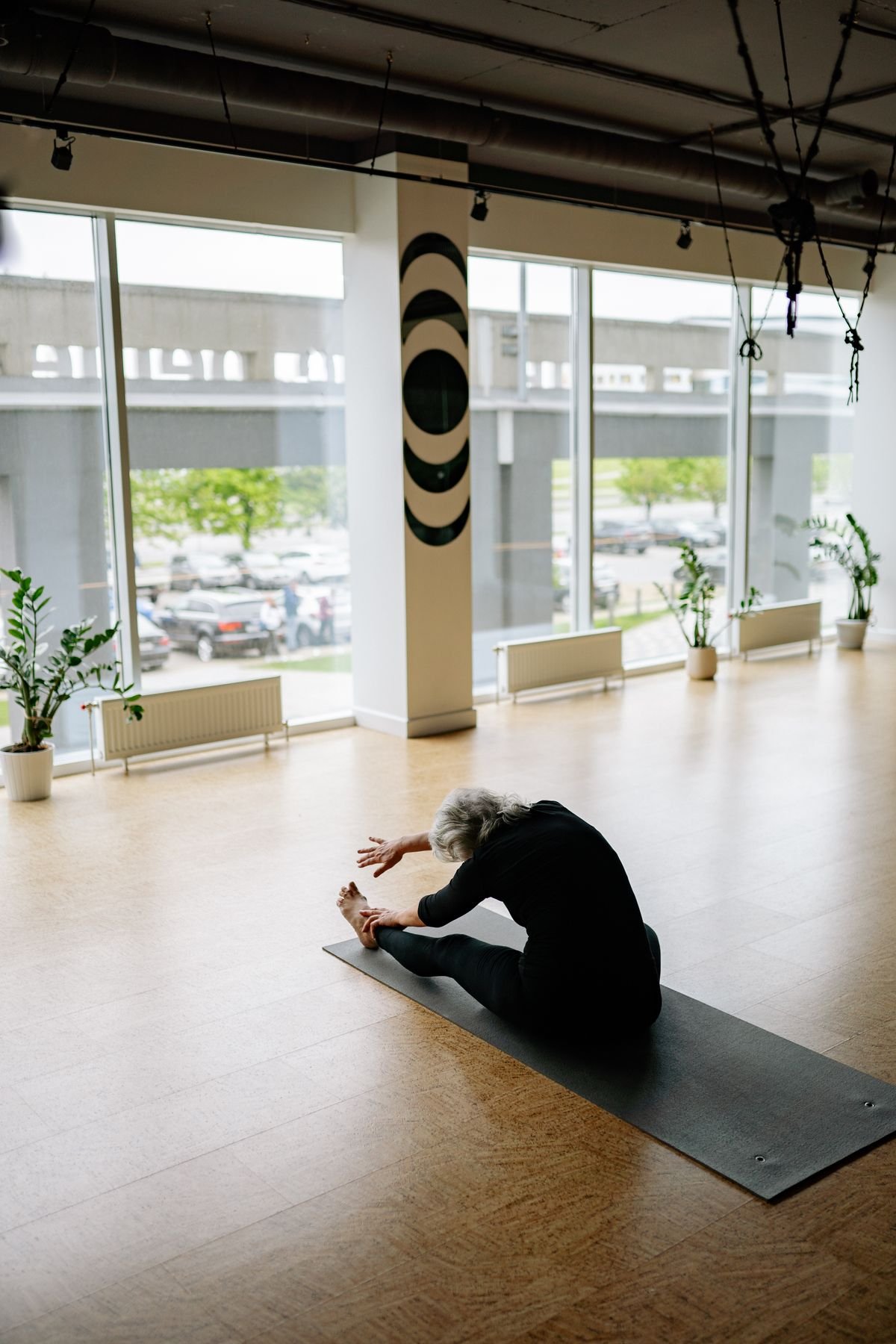
1. Pelvic tilts (lying down, 2 minutes). Lie on your back, knees bent, feet flat and hip-width apart. Breathe in; as you breathe out, press the small of your back toward the floor by tightening your belly muscles. Hold five slow breaths, then relax. Repeat three to five times. This wakes up the deep core muscles that support the lower back and help good posture, as Mayo Clinic notes.
2. Figure-four piriformis stretch (lying down, 3 minutes). Lie on your back, knees bent. Cross your right ankle over your left knee so the right knee falls open. Reach through, hold the back of your left thigh, and draw it toward your chest until you feel a mild stretch deep in your right buttock. Hold 30 seconds, breathing slowly, then repeat on the other side. The piriformis is the narrow buttock muscle that sits close to the sciatic nerve; when tight, it can press on the nerve. This stretch most often helps buttock pain, and it is the one to stop first if it sends pain down the leg.
3. Hamstring stretch with a towel (lying down, 3 minutes). Lie on your back. Loop a bath towel around the arch of one foot, holding one end in each hand. Straighten that leg toward the ceiling until you feel a gentle pull behind the thigh, knee soft, not locked. Hold for 30 seconds, lower slowly, and repeat on the other side, then once more each side. Tight hamstrings pull on the pelvis and strain the lower back, so easing them often eases leg pain too. A stretching routine for seniors offers more stretches for the same muscles on other days.
4. Seated nerve glide (sitting in a chair, 2 minutes). Sit tall, feet flat. Straighten one leg, heel on the floor, toes up. Slowly bend your ankle so toes pull toward you, then point them away, like a slow wave. Repeat five times, then switch legs. Keep it small and pain-free: stop if tingling grows or pain shoots down the leg.
5. Short walks (3 minutes, building up). Finish with a short, easy walk: around the house, to the mailbox, or down the block and back, at a relaxed pace. MedlinePlus advises against bed rest and recommends a slow return to usual activities; walking is the simplest form of that advice. Build from three minutes toward ten over a few weeks, and shorten the walk if pain travels further down the leg.

Stand up slowly between moves, using the chair for support. A balance exercise routine for seniors pairs well with this routine on other days.
What to Do on a Bad Day
Some days the pain is worse, often after a long car ride, poor sleep, or too much sitting. On a bad day, do less: only the pelvic tilts and the short walk. Change position often: sitting in one place most often makes sciatica worse, according to Mayo Clinic. Stand up every 30 to 45 minutes, and use a seat with good lower back support, with a small pillow or rolled towel in the small of your back, as Mayo Clinic recommends.
Heat or ice can help: the Cleveland Clinic notes ice may help at first and heat after that, about 20 minutes at a time, with a cloth between the pack and your skin. Do not fall asleep on a heating pad. If pain does not ease after a few weeks of gentle care, talk with your health care provider rather than continuing on your own.
For sleep, lie on your side with a pillow between your knees, or on your back with a pillow under your knees. Get up slowly in the morning: roll to your side first and push up with your hands.
Warning Signs: Get Care Right Away
Most sciatica is not an emergency, but some symptoms are. Get emergency care right away, or call 911, if you have any of these:
- Loss of bladder or bowel control, or new trouble starting or stopping urination
- Numbness in the saddle area, the inner thighs, buttocks, or groin
- Sudden or worsening weakness in one or both legs, or a foot that drags and will not lift
- Sudden numbness in a leg
- Pain after a violent injury, such as a car accident or a hard fall
Mayo Clinic lists sudden numbness or weakness in a leg, pain after a violent injury, and trouble controlling bowels or bladder as reasons to get immediate care, noting that sciatica can damage nerves. MedlinePlus adds pain traveling below the knee, weakness or numbness in the buttocks, thigh, leg, or pelvis, and unexplained fever with back pain. These symptoms can mean pressure on the bundle of nerves at the base of the spine and need urgent evaluation the same day.
Call your doctor promptly, the same day, if you have:
- Pain lasting longer than a week, severe, or getting worse
- Pain that has lasted longer than four weeks
- New pain after a fall or blow to the back
- Unexplained weight loss along with back pain
- Fever along with back pain
Do not try to work through these symptoms with stretches. Stop the routine and get checked.
How the Routine Fits Your Week
Start with two or three sessions a week, walking and changing position often on other days. A gentle chair yoga routine for seniors on alternate days adds breathing and balance work. The National Institute on Aging notes that pain can make you inactive, and inactivity leads to more pain and loss of function. If a move hurts this week, drop back to fewer repetitions or skip it for a few days.
Keep a short note of the date, the moves, and whether pain stayed in the buttock or traveled down. It will help your doctor or therapist adjust the routine, and the National Institute on Aging suggests telling your doctor exactly how the pain feels and what makes it better or worse.
Frequently Asked Questions
How long does sciatica usually last?
It varies. Mayo Clinic notes that cases caused by a herniated disk can clear up with treatment in a few weeks to months, and mild sciatica usually goes away over time. MedlinePlus notes it often gets better on its own but commonly returns. If pain lasts longer than a week, is severe, or keeps getting worse, call your doctor.
Should I rest in bed until the pain goes away?
No. MedlinePlus advises that bed rest is not recommended. Reduce activity for the first couple of days, then slowly resume your usual activities. Short walks help more than staying in bed, which stiffens the back.
Can I do these exercises if I have had a back operation?
Ask your surgeon or physical therapist first. This routine is written for people who have not had a recent back operation, which needs a plan fitted to the operation. Do not start new exercises after a back operation without clearance from your care team.
Why does sitting make my leg pain worse?
Sitting, especially in a soft chair or for a long time, puts pressure on the lower spine and the nerve. Mayo Clinic notes pain can be worse when sitting a long time. Stand up every 30 to 45 minutes, use a seat with lower back support, and keep knees and hips level.
Will stretching cure my sciatica?
Stretching cannot fix the cause, and no exercise can promise a cure. Gentle movement eases pressure on the nerve and builds core strength. MedlinePlus notes that in most cases recovery happens with conservative, non-surgical care and the underlying cause should be identified and treated. Stretching is one part of the plan, not the whole plan.
About the Author
PureFitDay Editorial Team creates practical health, wellness, and nutrition content for readers who want simple guidance for healthier living.
References
1. MedlinePlus, U.S. National Library of Medicine. “Sciatica.” https://medlineplus.gov/ency/article/000686.htm
2. Mayo Clinic. “Sciatica: Symptoms and Causes.” https://www.mayoclinic.org/diseases-conditions/sciatica/symptoms-causes/syc-20377435
3. Cleveland Clinic. “Sciatica: What It Is, Causes, Symptoms, Treatment & Pain Relief.” https://my.clevelandclinic.org/health/diseases/12792-sciatica
4. National Institute on Aging. “Pain: You Can Get Help.” https://www.nia.nih.gov/health/pain/pain-you-can-get-help
Medical Disclaimer
This article is for general information only and is not medical advice. Sciatica can have many causes, and only your own doctor can find the cause of yours. Talk to your doctor or physical therapist before you start these exercises, especially if the pain is new, severe, or getting worse, or if you have had a back operation, a fall, or a lasting back problem. Stop any move that sends pain further down your leg, and seek emergency care right away for loss of bladder or bowel control, numbness in the saddle area, or sudden leg weakness.