

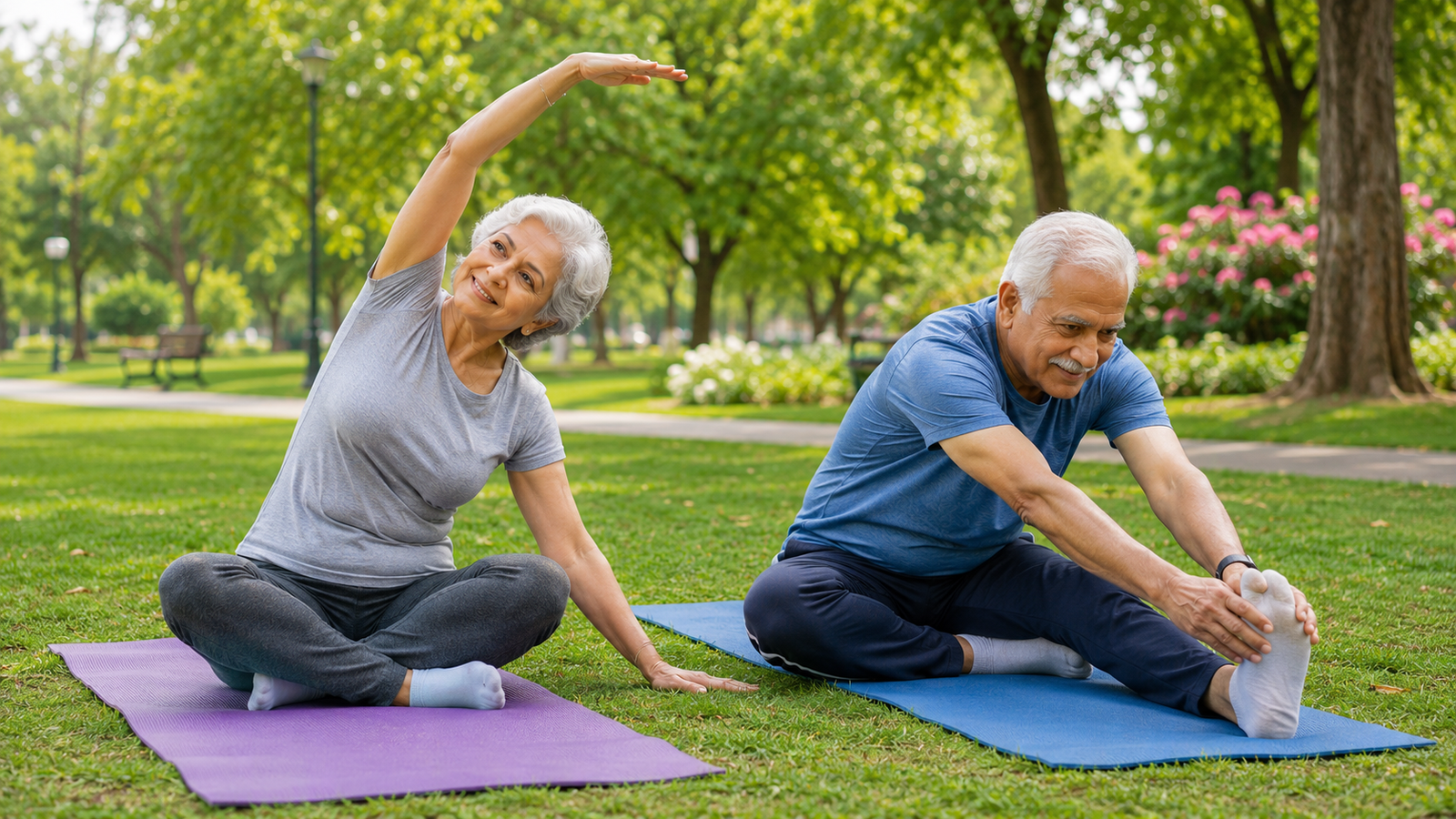
Stretching Exercises for Seniors to Improve Flexibility
Stretching becomes more important as we get older. Many seniors notice that their body feels stiffer in the morning, after sitting for a long time, or after doing daily household tasks. Simple movements like bending, reaching, turning, or standing up may not feel as easy as they once did.
This is normal, but it does not mean stiffness should be ignored.
Gentle stretching exercises for seniors can help improve flexibility, support mobility, and make everyday movement feel more comfortable. You do not need to do difficult yoga poses or long workout sessions. A few slow stretches, done regularly, can make a real difference over time.
The goal of stretching is not to force the body. The goal is to move gently, breathe calmly, and help the muscles and joints feel less tight.
Why Stretching Matters for Seniors
Flexibility affects many everyday activities.
Reaching for something on a shelf, putting on socks, turning to look behind you, getting out of bed, or walking comfortably all require some level of flexibility.
When muscles become tight, movement may feel restricted. This can sometimes lead to poor posture, discomfort, and less confidence during daily tasks.
Regular stretching may help support:
- Better flexibility
- Reduced stiffness
- Improved posture
- Easier movement
- Better mobility
- More comfort during daily activities
- Greater body awareness
Stretching does not need to be intense. In fact, gentle and consistent stretching is usually better for seniors than forcing deep movements.
Stretch Safely and Slowly
Safety should always come first.
Before stretching, choose a quiet and safe space where you can move comfortably. Use a sturdy chair, wall, or countertop for support if needed.
Do not bounce during stretches.
Move slowly and breathe normally.
A stretch should feel gentle, not painful. Mild tension is okay, but sharp pain is a sign to stop.
Seniors with recent injuries, surgery, joint problems, or serious medical conditions should speak with a healthcare professional before starting a new stretching routine.
Neck Stretch
Neck stiffness is common, especially after sleeping, reading, watching television, or using a phone.
Sit or stand upright. Slowly tilt your head toward one shoulder. Hold for a few seconds, then return to the center. Repeat on the other side.
Keep the movement gentle.
Do not pull your head with your hands.
This stretch may help reduce tightness in the neck and upper shoulders.
Shoulder Rolls
Shoulder rolls are simple and useful for upper-body mobility.
Sit or stand with your back straight. Slowly roll your shoulders forward in small circles. After a few repetitions, roll them backward.
This movement helps loosen the shoulder area and may improve posture.
Shoulder rolls are also a good warm-up before other stretches.
Try 8 to 10 slow circles in each direction.
Seated Side Stretch
A seated side stretch helps loosen the sides of the body and waist.
Sit upright in a sturdy chair with both feet flat on the floor. Raise one arm gently overhead and lean slightly to the opposite side.
Hold briefly, then return to the center.
Repeat on the other side.
Do not lean too far.
The movement should feel controlled and comfortable.
Chest Opener Stretch
Many seniors develop rounded shoulders from sitting, reading, or using devices.
A chest opener stretch can help improve posture.
Sit or stand tall. Bring your shoulders gently back and open your chest. If comfortable, place your hands behind your back and gently squeeze your shoulder blades together.
Hold for a few seconds, then relax.
This stretch helps open the chest and may reduce upper-body tightness.
Seated Forward Reach
The seated forward reach helps stretch the back and legs gently.
Sit near the front of a sturdy chair with your feet flat on the floor. Slowly reach your hands toward your knees, shins, or ankles depending on comfort.
Do not force your body forward.
Return slowly to an upright position.
If you feel dizzy, stop immediately.
This stretch should feel light and easy.
Hamstring Stretch
The hamstrings are muscles at the back of the thighs. Tight hamstrings can affect walking, posture, and lower-body comfort.
Sit on the edge of a chair. Extend one leg forward with the heel on the floor and toes pointing upward. Keep your back straight and lean forward slightly from the hips.
Hold for a few seconds, then switch legs.
Avoid rounding your back too much.
Move gently and breathe normally.
Calf Stretch
Calf muscles help with walking and balance.
Stand facing a wall and place both hands on the wall for support. Step one foot back and keep that heel on the floor. Bend the front knee slightly until you feel a gentle stretch in the back leg.
Hold briefly, then switch sides.
This stretch can help reduce lower-leg tightness and support walking comfort.
Ankle Circles
Ankles often become stiff when people sit for long periods.
Sit comfortably in a chair. Lift one foot slightly off the floor and slowly rotate the ankle in circles. After a few circles, reverse direction. Repeat with the other foot.
Ankle circles help support mobility and may make walking feel easier.
They are especially useful before standing exercises or short walks.
Wrist and Finger Stretch
Hands and wrists can become stiff with age, especially for people who do household tasks, write often, or use phones and devices.
Extend one arm in front of you. Gently open and close your fingers. Then slowly bend the wrist up and down.
You can also spread the fingers wide, then relax them.
This simple movement can help maintain hand comfort and flexibility.
Stretching and Balance Work Together
Flexibility and balance are connected.
When the body moves more freely, it may feel easier to stand, walk, and shift weight safely. Tight muscles can sometimes make movement feel restricted or unsteady.
If balance is also a concern, you may find this guide helpful: Balance Exercises for Seniors to Prevent Falls.
Stretching and balance exercises can work together to support safer and more confident movement.
Create a Simple Stretching Routine
A stretching routine does not need to be long.
Here is a simple example:
Morning
- Neck stretch
- Shoulder rolls
- Seated side stretch
- Ankle circles
Afternoon
- Chest opener stretch
- Wrist and finger stretch
- Seated forward reach
Evening
- Hamstring stretch
- Calf stretch
- Gentle breathing
Even 10 minutes of stretching can help seniors feel less stiff and more comfortable.
The routine can be adjusted based on comfort and ability.
Common Stretching Mistakes to Avoid
Stretching should never feel aggressive.
Common mistakes include bouncing, forcing a stretch, holding the breath, moving too quickly, or stretching through pain.
Another mistake is expecting instant results.
Flexibility improves gradually.
A gentle stretch done daily is usually more helpful than a deep stretch done once in a while.
Final Thoughts
Stretching exercises for seniors can help improve flexibility, reduce stiffness, support mobility, and make daily movement feel easier.
Simple stretches such as neck stretches, shoulder rolls, side stretches, hamstring stretches, calf stretches, ankle circles, and wrist movements can be done at home without special equipment.
The most important thing is to move slowly and stay consistent.
Stretching should feel comfortable, not painful.
With regular practice, seniors may feel looser, steadier, and more confident in daily life.
FAQs
1. What are the best stretching exercises for seniors?
Helpful stretching exercises for seniors include neck stretches, shoulder rolls, seated side stretches, hamstring stretches, calf stretches, ankle circles, and wrist stretches.
2. How often should seniors stretch?
Many seniors can benefit from gentle stretching most days of the week. Even 5–10 minutes per day can help reduce stiffness.
3. Is stretching safe for seniors?
Yes, gentle stretching is usually safe when done slowly and without pain. Seniors should use support when needed and avoid forcing movements.
4. Can stretching improve flexibility after 60?
Yes. Flexibility can improve at any age with regular gentle stretching and consistent practice.
5. Should seniors stretch before or after walking?
A gentle warm-up before walking and light stretching afterward can both be helpful. Movements should stay comfortable.
6. What should seniors avoid while stretching?
Seniors should avoid bouncing, forcing deep stretches, holding their breath, or stretching through pain.
7. Can stretching help with stiffness?
Yes. Regular stretching may help reduce stiffness and make daily movement feel more comfortable.
8. Do seniors need equipment for stretching?
No. Most stretching exercises can be done with a sturdy chair, wall, or open space at home.
Author Bio
About the Author
PureFitDay Editorial Team creates practical and easy-to-understand health, wellness, and fitness content for readers who want simple guidance. Our content focuses on senior fitness, healthy aging, flexibility, mobility, balance, body care, nutrition, and everyday wellness habits.
References
- Centers for Disease Control and Prevention (CDC) – Physical Activity for Older Adults
https://www.cdc.gov/physical-activity-basics/guidelines/older-adults.html - National Institute on Aging (NIA) – Flexibility and Exercise
https://www.nia.nih.gov/health/exercise-and-physical-activity - World Health Organization (WHO) – Physical Activity
https://www.who.int/news-room/fact-sheets/detail/physical-activity - Harvard Health Publishing – Stretching and Flexibility
https://www.health.harvard.edu/stretching - Mayo Clinic – Stretching: Focus on Flexibility
https://www.mayoclinic.org/healthy-lifestyle/fitness/in-depth/stretching/art-20047931
Disclaimer
Medical Disclaimer
The information provided in this article is for educational and informational purposes only and should not be considered medical advice. Seniors should consult a qualified healthcare professional before starting any new stretching or exercise routine, especially if they have joint pain, recent injuries, surgery, balance concerns, heart conditions, or mobility limitations. Individual fitness levels and health needs may vary.

Leave feedback about this