
A Stronger Memory Starts With Daily Practice
You walk into the kitchen and forget why you went there. You meet a neighbor at the mailbox and her name slips away, then comes back ten minutes later. Moments like these worry many older adults. The good news is that most of them are a normal part of aging — and that memory, like a muscle, responds to regular use.
Memory exercises for seniors are not about memorizing long lists or scoring high on a phone app. They are small, enjoyable activities that make your brain work a little harder each day — recalling, sorting, naming, learning, and paying attention. Done for 15 to 20 minutes a day, they help you stay confident with names, errands, and conversations.
One honest limit comes first. These activities support everyday memory and general thinking. They do not prevent or treat dementia or Alzheimer’s disease — the National Institute on Aging (NIA) states plainly that no drugs or lifestyle approaches can currently prevent Alzheimer’s or a related dementia. This article works within that honest frame: practice that helps daily life, plus a clear list of warning signs that deserve a doctor’s visit.
Why Memory Changes With Age
As people grow older, changes occur in all parts of the body, including the brain. The NIA explains that some people notice they do not remember information as well as they once did, cannot recall it as quickly, occasionally misplace things, or forget to pay a bill. These are usually signs of mild forgetfulness, not a serious memory problem.
Learning something new also takes longer, which is normal. Given enough time, healthy older adults can still learn new skills, build new memories, and even improve in areas such as vocabulary.
The line that matters is daily life. The NIA puts it this way: forgetting things once in a while is normal at any age, but serious memory problems make everyday things such as driving, using the phone, and finding the way home hard. Occasional lapses — a name remembered later, keys found by retracing steps — are typical. Repeated problems that interfere with independence are not, and they deserve a doctor’s attention; the warning-signs section near the end lists them in full.
Other factors can also cloud memory and are worth knowing about, because some are treatable: poor sleep, depression or anxiety, medication side effects, low vitamin B12, thyroid problems, and heavy alcohol use. If memory problems persist for a few weeks, the NIA advises talking with a doctor, since finding the cause is the first step to the right plan.
12 Memory Exercises for Seniors
The activities below are grouped by the skill each one trains. Pick the ones you enjoy — the exercise you actually do beats the perfect one you skip. Most need nothing more than a pencil, a deck of cards, or a walking partner.
Word and Language Games
1. Crossword puzzles and word searches. A daily crossword in the morning paper or a word-search book trains word recall and spelling. Start with the Monday puzzle and work up to harder days. If a clue stumps you, set it aside and return after lunch — recall often improves with a break.
2. The category game. Name as many items as you can in one category in 60 seconds: breeds of dogs, U.S. state capitals, vegetables, or movies from the 1960s. Play it with a spouse or a grandchild over coffee, taking turns. Categories force your brain to search its stores on demand, the skill that fades when it goes unused.
3. Read, then retell. Read one newspaper article or a chapter of a book, close it, and tell someone what it said in your own words: the main point, two details, and why it mattered. Retelling forces your brain to organize and store what it just read, instead of letting it slide past. A book-club discussion works the same way — the discussion afterward is the exercise.
Recall Drills
4. The grocery-list test. Before a shopping trip, write a list of eight items — milk, eggs, whole-grain bread, bananas, canned tomatoes, chicken, oatmeal, and coffee — then leave the list at home. Walk the store aisles from memory and check the list only when you get back. Start with five items and add one each week.
5. Photo recall. Take out an old family photo and study it for one minute. Put it away and describe everything you remember: who stood where, what everyone wore, the room or yard behind them, and the year it was taken. Then check the photo again and notice what you missed. Old photos pull long-term memories forward and tie names, faces, and stories together.
6. The yesterday recap. Each morning, write down three things that happened yesterday: one person you talked to, one thing you did, and one thing you ate. Keep the notes in a small notebook by the coffee maker, and flip back through them after a week. Recalling yesterday’s details on purpose strengthens the habit of noticing today’s.
Learning Something New
7. Learn one new skill. The NIA’s own tips for dealing with forgetfulness begin with learning a new skill. Pick something with steps to remember: a new soup recipe, basic tablet skills such as sending a photo to family, or ten words of Spanish. Learning that is genuinely new — not a variation of something you already do — asks more of your memory than repeating a familiar task. A class at a senior center adds a teacher and classmates, which keeps you coming back.
8. Memorize a song or a poem. Choose a favorite song from your youth or a short poem, and learn one verse a week until you can recite the whole thing. Music and rhyme give memory extra hooks. Sing it while you wash dishes or walk to the mailbox.
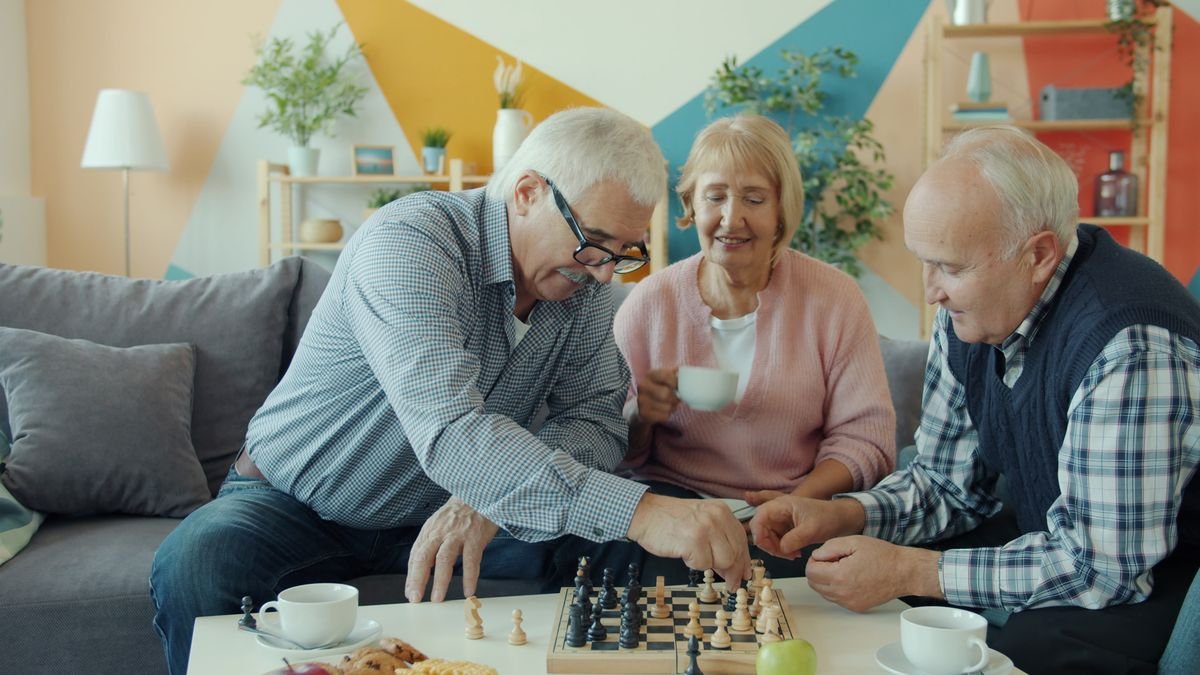
9. Puzzles and strategy games. A 500-piece jigsaw puzzle trains visual memory and patience — you must remember shapes and colors you saw minutes ago. Strategy games such as chess, checkers, or Scrabble train planning and word recall at the same time. A weekly Scrabble game with a friend is as good a memory workout as any app.
Movement and Social Play

10. Walk and talk. Take a short daily walk and add a thinking task: name every street you pass, count backward from 100 by threes, or describe what you see in full sentences to your walking partner. Doing two things at once is called dual-task practice, and it trains the attention daily life requires, such as walking a busy store aisle while reading a list.
11. Cards, bingo, and trivia. Card games such as gin rummy or bridge require you to remember which cards have been played. Bingo asks you to listen, scan, and mark quickly. Trivia nights at a senior center or a local restaurant test recall of facts under friendly pressure. All three add the ingredient most brain games lack: other people. MedlinePlus notes that talking with friends and family often is one of the simplest memory supports there is.
12. Teach someone something. Show a grandchild how to play your favorite card game, teach a neighbor your meatloaf recipe, or explain to a friend how you fixed a leaky faucet. Teaching forces you to recall steps in order, choose clear words, and answer questions — three memory skills at once.
A Simple Weekly Routine
Fifteen to twenty minutes a day is enough. The routine below spreads the four groups across the week; adjust it freely — the pattern matters more than the exact schedule.
- Monday: Crossword or word search (15 minutes) + the yesterday recap.
- Tuesday: Learn one new skill — one step of the recipe, one tablet skill, or one verse of the song.
- Wednesday: Grocery-list test on a shopping day + a walk-and-talk walk.
- Thursday: Photo recall with a family album + the category game over coffee.
- Friday: Jigsaw puzzle or Scrabble with a friend.
- Saturday: Cards, bingo, or trivia with other people.
- Sunday: Teach someone something, then rest. Review the week’s notebook entries.
Two habits make the routine stick. First, do it at the same time each day — after breakfast, when the mind is fresh. Daily routines that support mind wellness work best anchored to something you already do. Second, keep the puzzle book, notebook, and deck of cards in one basket by your chair, so starting takes no effort.
Habits That Support Memory
Memory exercises work best alongside a few everyday habits from the NIA’s tips for dealing with forgetfulness:
- Sleep seven to eight hours a night. A regular bedtime and wake time help more than sleeping in on weekends.
- Move every day. MedlinePlus suggests walking every day for up to 30 minutes along with a healthy diet. Movement supports blood flow to the brain and lifts mood, both of which help memory.
- Stay connected. Volunteer in your community or at your place of worship, and spend time with friends and family. Social contact gives memory daily practice in names and stories.
- Keep a routine and use memory tools. Follow a daily routine, plan tasks, make to-do lists, and use calendars and notes. Put your wallet, keys, phone, and glasses in the same place each day. Tools are not a sign of failure — they are how organized people protect their attention for harder things.
- Take care of blood pressure and mood. Prevent or control high blood pressure, avoid or limit alcohol, and get help if you feel depressed for weeks at a time. Depression and anxiety can make anyone forgetful, and treating them often clears the fog. Stress management techniques such as slow breathing and a calm evening routine can help with the daily strain that wears memory down.
Warning Signs Worth Discussing With a Doctor
Some memory changes are signals to get checked, not to push through with puzzles. The NIA lists these signs that it might be time to talk with a doctor: asking the same questions over and over again, getting lost in places you used to know well, having trouble following recipes or directions, becoming more confused about time, people, and places, and not taking care of yourself — eating poorly, not bathing, or behaving unsafely.
The Alzheimer’s Association’s 10 early signs add detail: memory loss that disrupts daily life, trouble planning or solving problems, difficulty completing familiar tasks, confusion with time or place, trouble with words, misplacing things and being unable to retrace steps, poor judgment, withdrawal from social activities, and changes in mood or personality. The Centers for Disease Control and Prevention (CDC) notes that people with one or more of these signs should see a doctor to find the cause, and that early diagnosis may identify reversible causes or allow treatment to start early, when it is most effective.
Do not wait for a crisis. If you or family members notice changes, book an appointment and bring a written list of what you noticed and when it started. A doctor can perform tests to find the source of the problem and may recommend a neurologist. People with memory problems should have their memory checked every six to 12 months.
One more caution from the NIA: be careful with pills, supplements, brain-training computer games, and other products that promise to improve memory or prevent brain disorders. They might be unsafe, a waste of money, or both, and they might interfere with other medical treatments. Talk with your doctor before spending money on any of them.
Frequently Asked Questions
Do memory exercises prevent dementia?
No. Memory exercises support everyday thinking and confidence, but no exercise, game, or lifestyle approach has been shown to prevent Alzheimer’s or a related dementia. The NIA states this directly. What the exercises can do is keep your recall, attention, and learning skills active for daily life, and help you notice real changes early enough to discuss them with a doctor.
How long before I notice a difference?
Most people notice small changes within a few weeks: names come faster, the grocery list sticks better, conversations feel easier. The gains are modest and gradual. If a month of practice brings no change at all, mention it at your next doctor’s visit.
Are brain-training apps better than puzzles and games?
Not necessarily. The NIA cautions that there is not enough evidence that commercial brain-training apps match structured training programs. A crossword, a card game with friends, or learning a real new skill gives the same mental work plus social contact, and costs nothing.
I live alone. How do I practice the social activities?
Phone calls count. Call a friend or family member daily and retell something you read, or play a word game over the phone. Join a class or group at a senior center, public library, or place of worship — many run free clubs. If getting out is hard, ask a family member to set up a weekly video call.
What if I try an activity and find it too hard?
Make it smaller: a 20-piece puzzle instead of 500, a five-item list instead of eight, one verse instead of the whole song. Difficulty should feel like a stretch, not a wall. If an activity frustrates you every time, swap it — the best exercise is the one you will keep doing.
About the Author
PureFitDay Editorial Team creates practical health, wellness, and nutrition content for readers who want simple guidance for healthier living.
References
- National Institute on Aging. “Memory Problems, Forgetfulness, and Aging.” https://www.nia.nih.gov/health/memory-loss-and-forgetfulness/memory-problems-forgetfulness-and-aging
- Alzheimer’s Association. “10 Early Signs and Symptoms of Alzheimer’s.” https://act.alz.org/site/SPageServer?pagename=%2F10Signs
- Centers for Disease Control and Prevention. “Signs and Symptoms of Alzheimer’s.” https://www.cdc.gov/alzheimers-dementia/signs-symptoms/alzheimers.html?CDC_AAref_Val=https://www.cdc.gov/aging/healthybrain/ten-warning-signs.html
- MedlinePlus, U.S. National Library of Medicine. “Remembering tips.” https://medlineplus.gov/ency/article/002046.htm
Medical Disclaimer
This article is for general information only and is not medical advice. Memory exercises support everyday thinking but do not prevent, treat, or cure dementia, Alzheimer’s disease, or any other medical condition. If you notice memory changes that disrupt daily life, get worse over time, or worry you or your family, talk with your doctor. Only your own doctor can find the cause of memory problems and advise on testing or treatment. Do not start or stop any medicine, supplement, or treatment based on this article.