

Home Workouts to Build Muscle Fast: Complete Beginner Guide
Home muscle workouts can work surprisingly well when you train with a proper plan. You do not always need a gym membership, expensive machines, or heavy dumbbells to build strength. Your own bodyweight, a backpack, a chair, a towel, and a little space can be enough to start seeing real progress.
The biggest mistake people make at home is doing random push-ups for a few days and then stopping. Muscle growth needs structure. Your workouts should challenge your chest, back, legs, shoulders, arms, and core in a balanced way. You also need to make the exercises harder over time, otherwise your body gets used to the same routine.
This guide keeps things simple. You will learn how to train at home, which exercises build muscle, how to progress without gym weights, what to eat, and how to recover properly.
Can You Build Muscle at Home?
Yes, you can build muscle at home. Your muscles do not know whether the resistance is coming from a barbell, dumbbell, machine, or your own bodyweight. They only respond to tension, effort, and repeated progress.
A hard set of push-ups can train your chest, shoulders, and triceps. A slow squat can challenge your legs. A pull-up can build your back and arms. A loaded backpack can turn a simple movement into a serious muscle-building exercise.
The key is not the location. The key is how hard and how consistently you train.
The Home Muscle Rule: Make Easy Exercises Harder
At first, regular push-ups and squats may feel difficult. After a few weeks, they may become too easy. That is when progress can slow down.
To keep growing, you need progressive overload. At home, you can do this in different ways:
- Add more reps
- Slow down each rep
- Pause at the hardest point
- Use a backpack with books
- Try harder exercise variations
- Reduce rest time between sets
For example, if normal squats become easy, try slow squats, jump squats, split squats, or backpack squats. If push-ups become easy, try decline push-ups, pause push-ups, or close-grip push-ups.
One simple test shows how much the speed matters: take five slow seconds to drop into a deep squat, then stand up. That slow lowering keeps the muscle under tension far longer, so a bodyweight squat feels much harder without adding any weight.
Best Home Exercises for Muscle Growth
The best home muscle workouts include exercises that train several muscles at once. These moves give better results than only doing small arm or ab exercises.
1. Push-Ups
Push-ups are one of the best home exercises for the upper body. They train your chest, shoulders, triceps, and core. Beginners can start with incline push-ups using a table or wall. As strength improves, move to normal push-ups, decline push-ups, and slow push-ups.
2. Squats
Squats build the legs and glutes. Keep your feet stable, chest up, and knees controlled. To make squats harder, slow down the lowering phase or wear a backpack filled with books.
3. Lunges
Lunges train each leg separately, which helps improve balance and strength. Reverse lunges are easier for beginners, while walking lunges and backpack lunges are harder options.
4. Pull-Ups or Towel Rows
If you have a pull-up bar, use it. Pull-ups are excellent for back and biceps. If you do not have a bar, you can do towel rows using a strong door setup, but only if it is safe and stable.
5. Chair Dips
Chair dips train the triceps, chest, and shoulders. Use a strong chair and keep your movement controlled. Do not go too low if your shoulders feel uncomfortable.
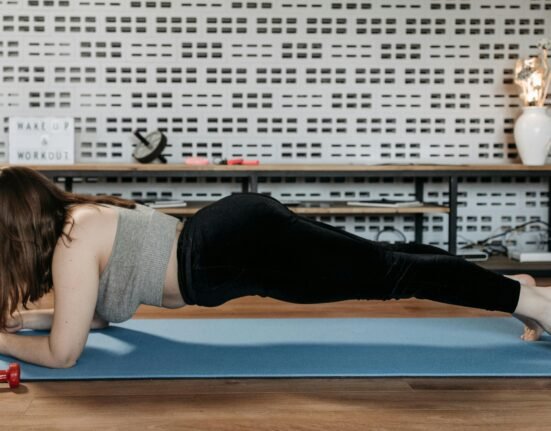
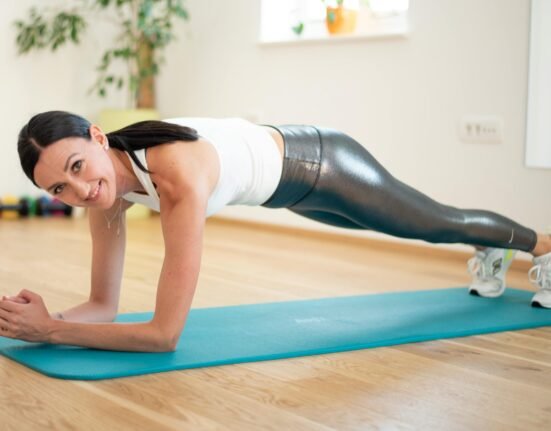
6. Planks
Planks help build core strength and protect your posture. Keep your body straight and avoid dropping your hips. You can make planks harder by increasing time or trying shoulder taps.
7. Glute Bridges
Glute bridges are useful for strengthening the glutes, hamstrings, and lower back. They are especially helpful for people who sit for long hours.
A Simple Home Workout Plan
Start with three days per week. Leave one rest day between workouts so your body can recover.
- Push-ups: 3 sets of 8–15 reps
- Squats: 3 sets of 15–20 reps
- Lunges: 3 sets of 10–12 reps per leg
- Chair dips: 3 sets of 8–12 reps
- Glute bridges: 3 sets of 15 reps
- Plank: 3 rounds of 30–45 seconds
If the workout feels too easy, add a backpack, slow down your reps, or add one more set. If it feels too hard, reduce reps and focus on clean form.
Use Home Items for Extra Resistance
You do not need expensive equipment to make home training harder. A backpack can become your home gym tool. Fill it with books, water bottles, or rice bags and wear it during squats, lunges, push-ups, or step-ups.
You can also use water bottles for lateral raises or curls. A strong chair can help with dips and step-ups. A towel can help with rows or stretching. A heavy water can in each hand also works well for step lunges. Just make sure every item is safe and stable before using it.
Do Not Forget Fat Loss
Building muscle is one part of changing your body. If there is too much fat covering your muscles, you may not see definition clearly. That is why some cardio and better food choices are also important.
If your goal is to build muscle and look leaner, you can also read our Best Fat Loss Workout Guide to balance strength training with fat-burning habits.
If you want machine cardio alongside home strength work, read our detailed guide on the best cardio exercises in gym — it explains how to add stamina sessions without wearing out your legs.
Food for Home Muscle Growth
Training gives your body the signal to grow, but food gives it the material. Protein is what your body uses to rebuild the muscle you just trained. Carbs are the fuel that gets you through a hard session. Healthy fats support hormones and general health.
Good muscle-building foods include eggs, chicken, fish, lentils, beans, rice, oats, potatoes, yogurt, milk, nuts, fruits, and vegetables. You do not need a perfect diet, but you do need enough food and enough protein.
If you train hard but eat very little, your body will struggle to grow. If you eat only junk food, you may gain weight without building quality muscle. Keep your meals simple and consistent.
Recovery Matters More Than You Think
Muscles do not grow while you are doing push-ups. They grow when your body repairs after training. This is why sleep and rest days matter.
That repair is the growth itself: hard training causes tiny damage to muscle fibres, and your body rebuilds them a little thicker each time — but only while you rest and eat well. Aim for around eight hours of sleep a night; scrolling on your phone till 2 AM misses that growth window completely.
Try to sleep enough, drink water, and avoid training the same muscles hard every single day. If your chest, arms, or legs are still sore, give them time before training them again.
Common Home Workout Mistakes
The first mistake is doing the same routine forever. If your workout does not get harder, your body has no reason to improve.
The second mistake is rushing reps. Fast, sloppy reps may look impressive, but they usually reduce muscle tension. Slower, cleaner reps are better.
The third mistake is skipping legs. Many people do only push-ups and planks at home, but a strong body needs strong legs too.
The fourth mistake is expecting fast results in one week. Real muscle takes time. Stay consistent and focus on progress.

A Living-Room Workout That Actually Happens
The best home workout is not the perfect one on a chart. It is the one that fits between work, dinner, and everything else.
Picture a small apartment in Austin. No rack, no bench, just a backpack loaded with books, two chairs, and a strip of floor between the couch and the TV. Push-ups with feet on the couch. Split squats holding the backpack. Dips off a chair. Rows under the kitchen table.
The whole session takes 35 minutes, three evenings a week, while dinner is in the oven. The dog gets walked between sets. Nobody drives anywhere, nobody waits for equipment, and the membership costs zero dollars.
What makes it work is not the gear. It is that the workout is almost impossible to skip, because there is nothing to skip to. When a session feels easy two weeks in a row, one more book goes in the backpack.
That slow, boring progression is exactly how muscle gets built at home.
Once bodyweight work feels easy, these muscle building exercises show the gym lifts that take the same muscles further.
If you want the sessions arranged for you, this daily workout routine at home lays out a full-body week.
And if you later join a gym, our gym training guide to building strength and muscle picks up exactly where home training leaves off.
Final Thoughts
Home muscle workouts can help you build strength, size, and confidence without going to the gym. You only need a simple plan, clean form, steady progress, and proper recovery.
Start with push-ups, squats, lunges, dips, planks, bridges, and rows. Make the exercises harder over time using slower reps, more sets, or a loaded backpack. Eat enough good food, sleep properly, and stay patient.
You do not need excuses, expensive machines, or complicated routines. You need consistency. Train smart at home, and your body will slowly start changing.
FAQs
1. Can home workouts really build muscle?
Yes, home workouts can build muscle if you train close to your limit, use proper form, and make the exercises harder over time.
2. How many days should I do home muscle workouts?
If you are new to this, three sessions a week is plenty to start. This gives enough training stimulus while allowing the body to recover between sessions.
3. What is the best home exercise for upper body muscle?
Push-ups are one of the best upper body exercises at home. They train the chest, shoulders, triceps, and core.
4. Do I need equipment for home workouts?
No, you can start with bodyweight exercises. Later, a backpack, chair, towel, or resistance band can help make workouts harder.
5. How long does it take to see muscle growth at home?
Most people need several weeks to notice visible changes. Progress depends on training effort, food, sleep, consistency, and body type.
6. How do I make push-ups harder without weights?
Slow the lowering part down to three or four seconds, pause at the bottom, or raise your feet on a chair. When regular push-ups feel easy, backpack push-ups with a few books inside are the simplest home upgrade there is.
7. What should I eat after a home workout?
A normal meal with protein and carbs within a couple of hours is enough for most people — eggs and whole-grain toast, chicken with rice, or Greek yogurt with fruit. You do not need a special shake unless the rest of your day is short on protein.
8. Why am I still sore two or three days after training?
Deep soreness is normal in the first two or three weeks, especially after exercises your body is not used to. It should ease as the same workouts repeat. Sharp pain, joint pain, or soreness that changes how you walk is different — rest that area and get it checked if it does not settle.
9. Can I build muscle training at home after 40?
Yes. Muscle responds to progressive training at almost any age, though recovery takes a little longer and warm-ups matter more. Start with three days a week, keep one or two reps “in reserve” on each set, and give sleep the same respect you give the workouts.
Author Bio
PureFitDay Editorial Team creates practical health, wellness, and nutrition content for readers who want simple guidance for healthier living.
References
- ACE Fitness — Exercise Library
- NSCA — Strength Training Articles
- Harvard Health — Exercise and Fitness
- Better Health Channel — Resistance Training Benefits
- MedlinePlus — Exercise and Physical Fitness
- NHS — Strength exercises
Disclaimer
Everything here is general training information for healthy adults working out at home. It is not a program written for your body, your joints, or your medical history. If you have joint pain, back pain, heart disease, injury history, chronic illness, or any medical concern, speak with a qualified healthcare professional or certified fitness trainer before starting a new home workout routine.


7 Comments