How to Get a Picky Eater to Eat Vegetables (Without Pressure)
Dinner is on the table. The chicken nuggets disappear in minutes, the macaroni and cheese is gone, but the green beans sit untouched — again. If that sounds like your house, you are far from alone. In a 2023 CDC report based on a national survey of 18,386 children ages 1 to 5, nearly half (49.1%) did not eat a vegetable every day. In 20 states, more than half of young children went a full week without a daily vegetable. The same report found about one in three children (32.1%) did not eat a daily fruit either.
That number tells you something useful: a child who refuses vegetables is normal, not a failure — yours or theirs. It also tells you that the usual fixes do not work. Forcing one more bite, or promising ice cream for an empty plate, only turns dinner into a fight. Pediatricians at Mayo Clinic and the American Academy of Pediatrics (AAP) give the same advice in different words: stop fighting about food, keep putting vegetables in front of your child, and let repeated, relaxed chances do the work. This guide shows you how.
Why Pressure Backfires
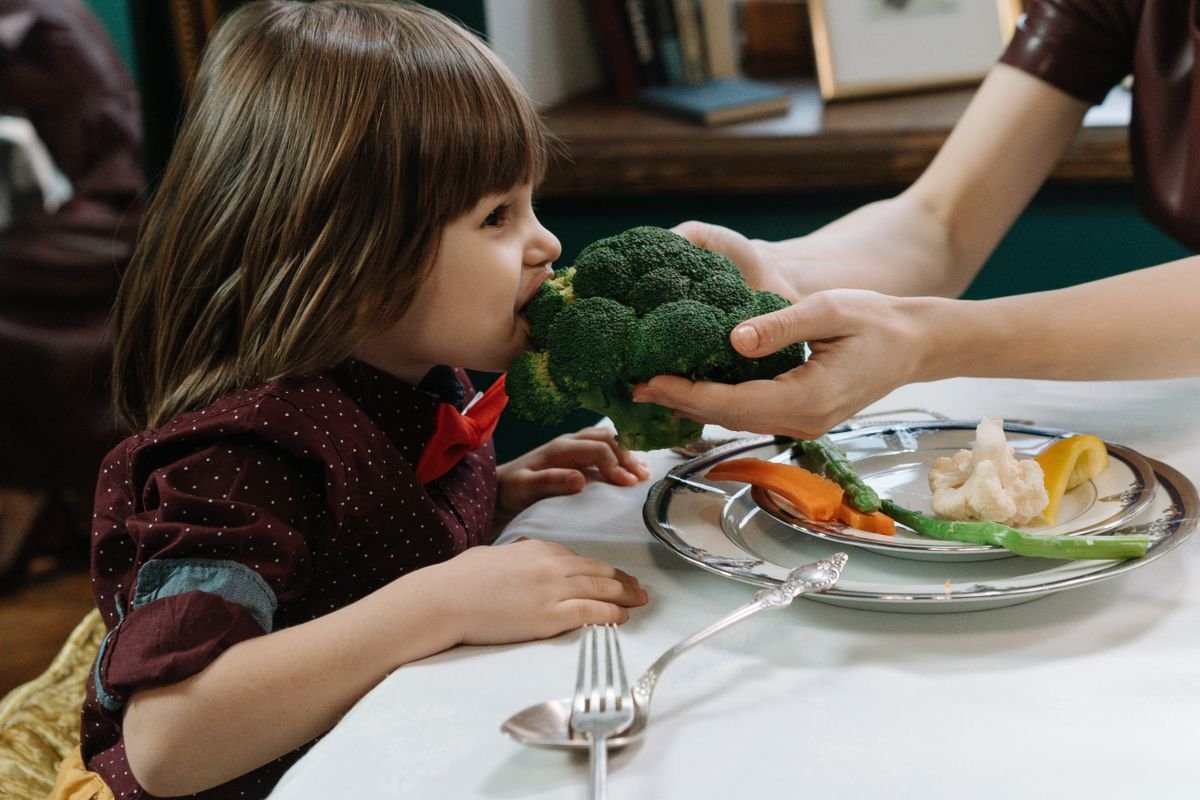
When a meal turns into a standoff, both sides dig in. Mayo Clinic’s childhood nutrition experts put it plainly: research shows that experience is the only real predictor of whether a child accepts a food and starts to like it. Forcing a bite does not build experience. It builds a memory of the dinner table as a place where your child loses. The AAP’s HealthyChildren.org makes the same point: if a toddler refuses a meal, fussing over it only makes the refusal bigger. Children are learning to listen to their own hunger, and that is a skill worth protecting.
Bribes cause their own trouble. Tell a child “eat your broccoli and you get dessert,” and you teach two lessons you did not plan. First, dessert becomes the prize and the vegetable becomes the price. Second, your child learns that vegetables are so unpleasant they need a payoff. Mayo Clinic and the AAP both warn against using dessert as a reward for eating other foods. The food fight can spread even further: cook a separate meal for the picky eater and you teach the whole family that refusing works. Serve one meal for everyone, and include at least one food your child already likes with it.
The One Rule That Matters: Keep Offering, Without Forcing
Here is the number to hold on to. It can take 10 or more times of tasting a food before a toddler accepts it, according to the AAP. Mayo Clinic says the same thing — it takes 10 times or more of being offered a certain food before a child might accept it. That changes how you count success. A refusal is not a verdict. It is exposure number three, or six, or nine.
A few habits make repeated exposure easier:
- Serve a small portion. A full serving can overwhelm a small child. A couple of bites is enough, and your child can ask for more.
- Offer one new food at a time, in a meal that also has familiar foods your child likes. Children try more when the plate is not full of strangers.
- Look at the week, not the meal. Mayo Clinic notes that most children get the right balance of nutrients over the course of a week. One vegetable-free dinner does not undo a good week.
- Stay calm and keep serving it. Put it on the plate, let your child ignore it, and try again next week. The vegetable keeps showing up, and that is the point.
7 Low-Pressure Ways to Get Vegetables on the Plate
1. Put vegetables out before dinner
While you finish cooking, set a small plate of baby carrots, cucumber slices, or bell pepper strips on the table with a dip. Hungry kids pick at what is in front of them, and no other food is competing for attention yet. It works best when you do not announce it as a test. Just put the plate down and keep cooking.
2. Add a dip your child already likes
A dip turns a vegetable into something to play with. Ranch dressing, hummus, guacamole, salsa, or a yogurt-based dip all work. Broccoli dipped in ranch tastes completely different from plain steamed broccoli, and the crunch is half the fun. The dip is not the enemy. It is the invitation.
3. Roast them until they turn sweet
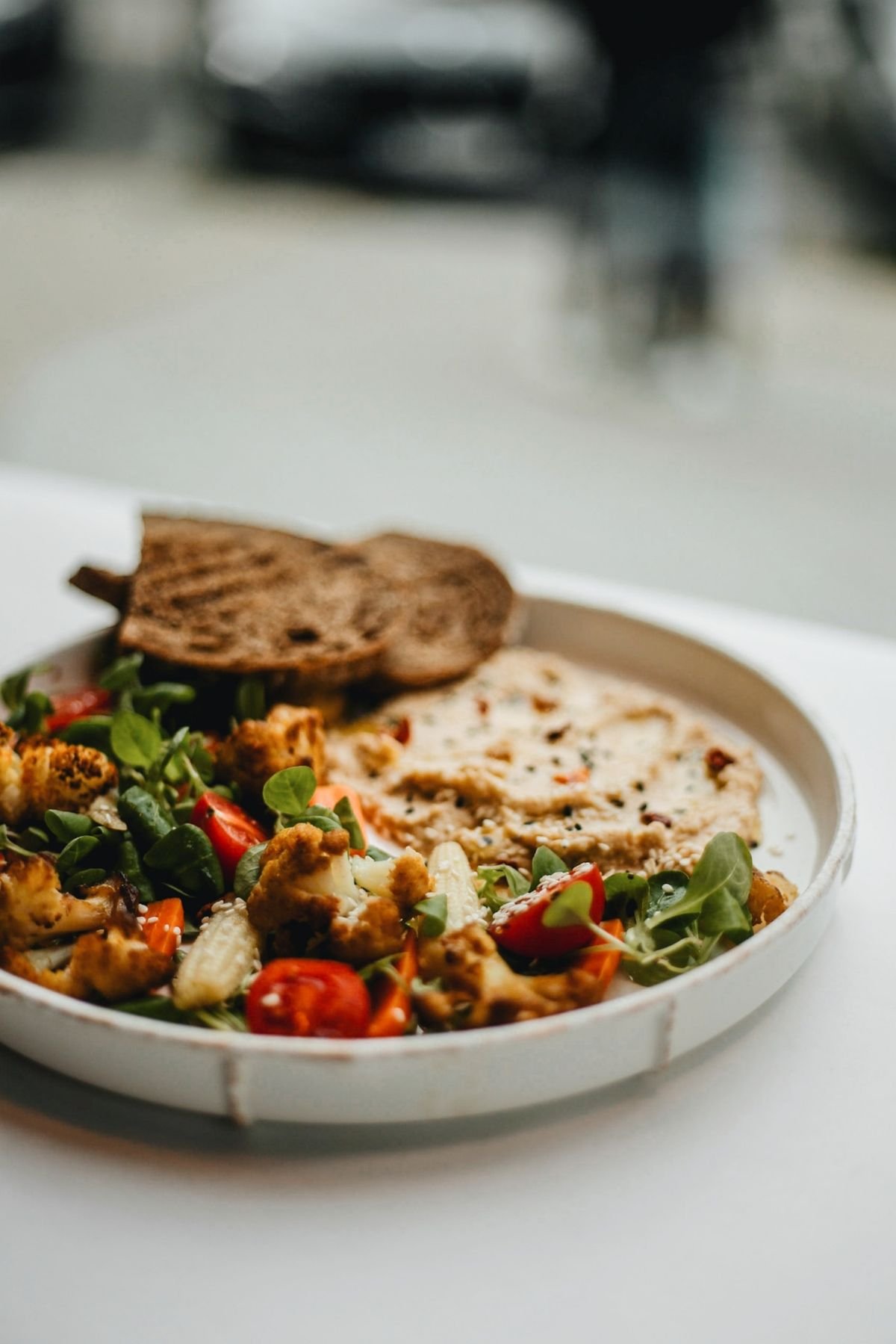
Raw carrots and steamed broccoli taste bitter to many kids. Roasting changes that. Toss sweet potato cubes, carrot sticks, or broccoli florets in a little olive oil and roast at 400°F until the edges brown. The heat brings out the natural sweetness, and the soft texture is easier to chew. Green beans and cauliflower work the same way, and an air fryer does the job in about 10 minutes.
4. Let your child pick at the store
Take your child to the produce aisle or a farmers market and let them choose one vegetable to bring home. It can be the purple cauliflower, the odd-shaped carrot, or the corn on the cob. A child who chose the food has already touched it, smelled it, and decided it is interesting. That is exposure number one, before the food ever reaches the plate. If you want a short list of the most useful foods to offer first, start with our guide to the best foods for kids’ growth and energy.
5. Let your child help cook
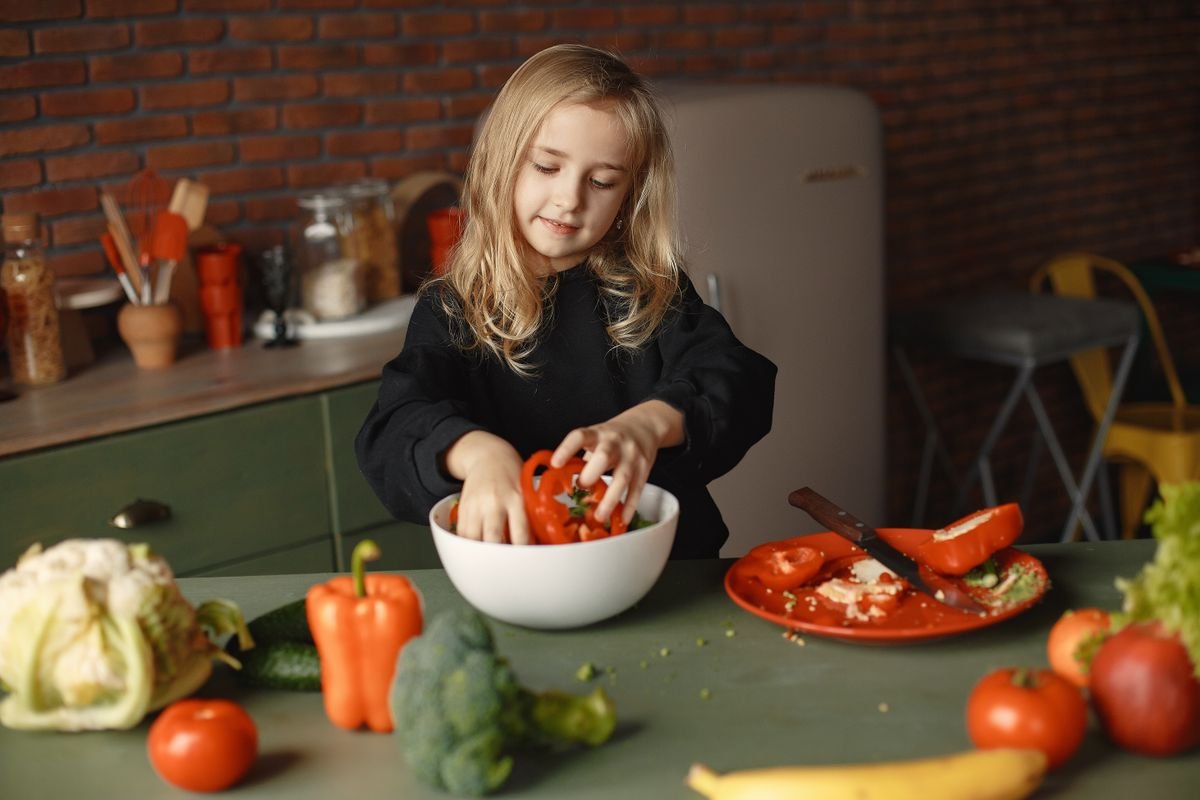
Children eat food they helped make. A three-year-old can wash lettuce and tear it into a bowl. A five-year-old can stir a pot of soup, sprinkle cheese on top, or snap green beans. A school-age child can peel carrots with a vegetable peeler or help toss a salad. Cooking gives your child a reason to touch and smell vegetables without anyone asking for a bite. Cooking together is one of the easiest healthy habits for kids at home.
6. Make it fun, not a lesson
Arrange vegetables into a face on the plate — cucumber slices for eyes, a carrot nose, a bell pepper smile. Cut sandwiches with cookie cutters. Set up a build-your-own taco night with bowls of lettuce, tomatoes, corn, and peppers so your child can choose what goes in. The AAP suggests arranging foods in fun, colorful shapes that kids can recognize, and it works because the food stops feeling like a chore.
7. Mix vegetables into foods they already love — and be honest about it
Stir peas into macaroni and cheese, blend carrots into pasta sauce, or add spinach to a fruit smoothie. These dishes help your child get the nutrients now. But do not let hidden vegetables be your only trick. Kids need to see the vegetable, touch it, and, one day, taste it on its own. Use mixed-in vegetables as a bridge, not a hiding place.
What Not to Do
- Do not force a bite or demand a clean plate.
- Do not promise dessert for eating vegetables.
- Do not cook a separate meal after a refusal.
- Do not make a big deal of a refusal, and do not praise eating vegetables like it is a performance.
- Do not give up after one try. Ten or more tries is normal.
- Do not pick a fight at the table. If your child is not hungry, let the meal end and wait for snack time.
A Simple Week of Small Wins
You do not need a full plan. One small exposure a day is plenty.
- Monday: baby carrots and ranch on the table while dinner cooks.
- Tuesday: your child picks one vegetable at the grocery store.
- Wednesday: roasted sweet potato cubes next to the main dish.
- Thursday: your child helps wash lettuce for a salad.
- Friday: build-your-own tacos with a bowl of peppers and corn.
- Saturday: a smoothie with a handful of spinach and frozen berries.
- Sunday: the same vegetable your child refused last week, offered again, in a small portion, with no comment at all.
If your child tries one bite all week, that is a win. If your child only touches it, that is still exposure — and exposure is the whole method. A steady meal-and-snack routine helps, too. Our healthy eating tips for children cover simple habits that make these ideas easier to keep up.
Frequently Asked Questions
How many times should I offer a vegetable before giving up?
Do not give up after a few tries. The AAP says it can take 10 or more tastings before a toddler accepts a food, and Mayo Clinic says the same about offering it 10 times or more. Keep the portions small and the tone relaxed, and keep offering.
Is it okay to hide vegetables in food?
Yes, as a starting point. Blending carrots into pasta sauce or adding spinach to a smoothie helps your child get nutrients now. But hiding should not be your only move. Your child also needs to see and meet the vegetable itself, a little at a time, so acceptance can grow.
What if my child eats no vegetables at all?
First, look at the whole week, not one meal — most children balance out over a week. Keep offering small portions without pressure, and try the dips, roasts, and cooking-together ideas above. If you are worried about growth or weight, or your child eats only a handful of foods, talk to your pediatrician or a dietitian.
Should I use dessert as a reward for eating vegetables?
No. The AAP and Mayo Clinic both warn against it. Dessert as a reward makes the dessert more wanted and the vegetable more of a chore. Serve dessert on its own sometimes, and keep it separate from whether your child ate their vegetables.
Do dips and sauces make vegetables less healthy?
No — the vegetable still counts. Ranch dressing adds salt and fat, so a lighter dip like hummus, salsa, or plain yogurt with herbs is a good everyday choice. But if ranch is the reason your child eats carrots, that is a fair trade while the habit forms.
At what age does picky eating get better?
Picky eating is common in toddlers and preschoolers, and Mayo Clinic notes that it tends to decrease with age. Every child moves at a different pace. If your child’s picky eating is getting worse, or weight and growth are a concern, talk to your child’s doctor.
References
- Hamner HC, Dooyema CA, Blanck HM, Flores-Ayala R, Jones JR, Ghandour RM, Petersen R. Fruit, Vegetable, and Sugar-Sweetened Beverage Intake Among Young Children, by State — United States, 2021. MMWR Morb Mortal Wkly Rep. 2023;72(7):165–170. Centers for Disease Control and Prevention. https://www.cdc.gov/mmwr/volumes/72/wr/mm7207a1.htm
- American Academy of Pediatrics. 10 Tips for Parents of Picky Eaters. HealthyChildren.org. https://www.healthychildren.org/English/ages-stages/toddler/nutrition/Pages/Picky-Eaters.aspx
- Mayo Clinic Staff. Picky eaters: Is it worth the food fight? Mayo Clinic. https://www.mayoclinic.org/connected-care/picky-eaters-is-it-worth-the-food-fight/cpt-20487509
PureFitDay Editorial Team creates practical health, wellness, and nutrition content for readers who want simple guidance for healthier living.
This article is for general information only and is not a substitute for advice from your child’s doctor or a registered dietitian.