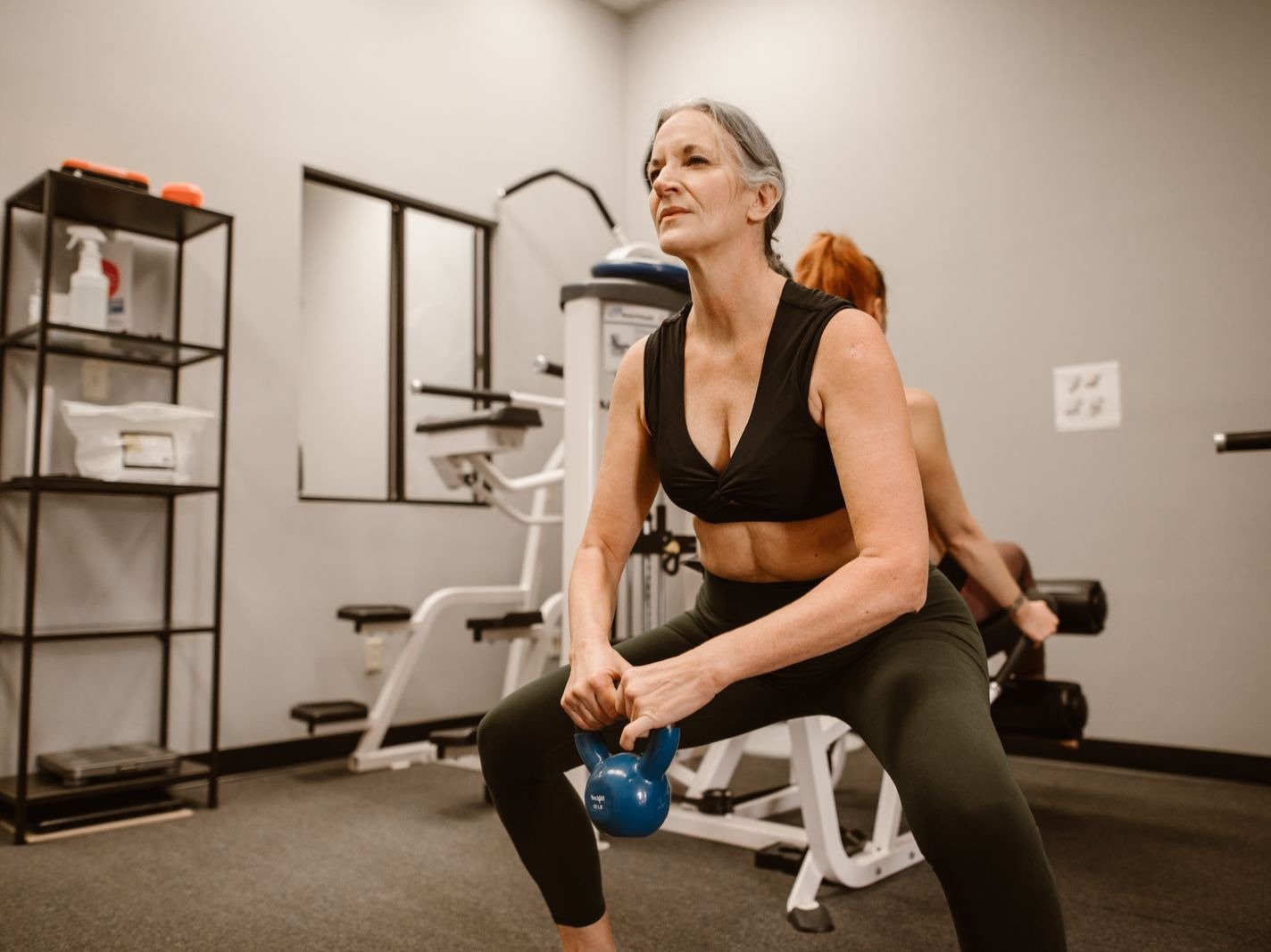
If you are a woman over 50 and friends at the gym keep talking about creatine, you probably have two questions: does it actually help at this age, and is it safe? The short answer is that creatine can help a little with strength and muscle, but only with strength training, and it does not do everything the ads suggest. Here is what the research in women after menopause actually shows, how much to take, and who should check with a doctor first.
What Is Creatine, in Plain Words?
Creatine is a compound your body makes from amino acids in the liver, kidneys, and pancreas. About half of your daily supply, roughly 1 to 2 grams a day, comes from food, mainly red meat and seafood. About 95 percent of it sits in your skeletal muscles.

Inside muscle, creatine is stored as phosphocreatine, a quick-access fuel. When you lift something heavy, your muscles burn through their ready energy in seconds, and phosphocreatine helps rebuild it fast, so you can squeeze out another rep or two. That is the whole trick. Creatine does not build muscle by itself. It helps you train a little harder, and the training builds the muscle.
Creatine is not a steroid and not a hormone. It is a fuel molecule your body already uses every day. Women tend to carry lower muscle creatine stores than men, partly because women usually have less muscle mass, a gap a 2021 review in Nutrients describes in detail. The form used in nearly all the research is creatine monohydrate, a plain white powder and the cheapest form on the shelf. No other form has been shown to work better.
Why Creatine Comes Up After 50
After menopause, muscle and strength tend to fall faster. Stairs feel harder, grocery bags feel heavier, and balance gets less steady. Strength training is the most direct answer, and eating enough protein gives training something to build with. Creatine sits one step behind those two. It is a helper, not the main act.
That order matters. If you are not lifting at all, creatine has little to add: the trials that found a benefit all paired it with resistance training, two or three sessions a week. If you are just starting out, read our guide to strength training for seniors and our post on protein needs for seniors first. Creatine only makes sense on top of those two habits.
What the Research in Women Over 50 Actually Shows
Most of the direct evidence comes from postmenopausal women. A 2026 review in the Journal of the International Society of Sports Nutrition pooled seven randomized trials with 608 postmenopausal women, average age about 62. Compared with placebo, creatine added an average of 0.37 kg of lean mass and 7.5 kg to the leg-press one-rep max.
Read those numbers plainly. A gain of 0.37 kg of lean mass is less than a pound, and results across trials ranged from almost no gain to about 0.7 kg. These are small, real gains, not a transformation. They showed up only when women took 5 grams a day or more and lifted weights. Trials using 3 grams a day or less without training showed no measurable effect.
An earlier 2021 review of ten trials with 211 older women found a similar pattern. Creatine plus resistance training improved upper-body strength overall, and in studies that ran 24 weeks or longer, both upper- and lower-body strength improved.
Cleveland Clinic adds two honest notes. Studies so far have not shown that creatine builds muscle in people older than 65, because that group has been studied far less. And women in these studies tended to gain less strength and muscle than men. So if you are 55 and lifting twice a week, a small edge is a fair hope. A new body in eight weeks is not.
What Creatine Does Not Do
The biggest misunderstanding is bone density. Creatine does not rebuild bone. The longest direct test, a two-year trial published in 2023, followed 237 postmenopausal women, average age 59, who took creatine or a placebo while doing resistance training three days a week and walking six days a week. Compared with placebo, creatine had no effect on bone mineral density at the femoral neck, total hip, or lumbar spine.
The same trial did find two smaller things: the creatine group held on to some measures of hip-bone shape that predict how well bone resists bending, and they walked 80 meters about 1.5 seconds faster. Those are real findings, but they are not denser bones. The 2026 review agreed: bone density was unchanged overall. Do not buy creatine for your bones. Bone care still rests on strength training, calcium, vitamin D, and your doctor’s advice.
Creatine also does not replace training, protein, or sleep, and it does not melt fat. Any product that promises those things is selling a story, not a result. The same goes for brain claims: Cleveland Clinic notes that studies suggest creatine may support memory and reasoning in people 60 and older, but researchers are still studying it. Treat that as a maybe, not a reason to buy the tub.
How Much to Take, and How
The standard dose is 3 to 5 grams of creatine monohydrate a day, every day, training days and rest days alike. The International Society of Sports Nutrition position stand gives the same range.
You do not need a loading phase. Loading means taking about 20 grams a day, split into four 5-gram servings, for five to seven days, then dropping to 3 to 5 grams a day. A plain daily dose reaches the same level in three to four weeks, so most women over 50 can skip it. One point worth remembering: the postmenopausal trials that showed strength gains used 5 grams a day with training, so if you lift regularly, 5 grams a day is the dose with the evidence behind it.
Timing barely matters. Morning or evening, with food or without, the effect comes from taking it daily for weeks. Stir the powder into water, coffee, or a smoothie. A plain powder with one ingredient on the label is all you need, and a product tested by an independent lab, such as NSF Certified for Sport or Informed Sport, is a safer pick.
Give it time. Your muscles take three to four weeks to fill up, and strength changes worth noticing take more like eight to twelve weeks of steady training. Weigh yourself at the same time of day if you track weight: creatine pulls a little water into muscle cells in the first weeks, so a rise of 1 to 3 pounds early on is usually water, not fat.
Safety: Who Should Ask a Doctor First
For healthy adults, the safety record is strong. The International Society of Sports Nutrition position stand found no evidence that creatine at recommended doses harms healthy people, short or long term. In the 2026 review of postmenopausal women, side effects were mild and about the same as placebo, and kidney markers did not change.
Still, some people should ask a doctor before starting:
- Anyone with kidney disease or liver disease. The safety evidence is for healthy kidneys.
- Anyone with diabetes, or with bipolar disorder. Cleveland Clinic notes that creatine may raise the risk of mania in people with bipolar disorder, and that there is not enough evidence to call it safe in these groups.
- Anyone who is pregnant or breastfeeding. Research here is thin, so a doctor’s call is needed.
- Anyone taking prescription medicine. Bring the tub or a photo of the label to your visit and ask your doctor or pharmacist whether it fits with your medicines, and review your other supplements too, including the ones in our guide to the best daily vitamin supplements.
The most common side effects are mild: a little stomach upset, especially with large single doses, and the water-weight rise described above. Splitting a dose or taking it with food usually settles the stomach. If anything feels wrong after starting, stop and call your doctor.
One last note: in the United States, the FDA does not approve dietary supplements before sale the way it approves medicines, so buy a brand that pays for independent testing and keep your doctor in the loop.
A Simple Way to Start
Ask your doctor first, then buy plain creatine monohydrate from a brand with independent testing. Take 5 grams a day if you strength train two or three times a week, or 3 to 5 grams if you are just getting going. Skip the loading phase. Keep lifting, keep protein up, and track your weights for 12 weeks. If nothing has changed after three months of steady training, the supplement is not the part that needs fixing. The training is still doing the real work.
Frequently Asked Questions
Does creatine make women bulky?
No. Gains in the postmenopausal trials were small, under a pound of lean mass on average, and Cleveland Clinic notes that women in these studies gained less strength and muscle than men. The early scale rise is water inside your muscles, not bulk.
Will creatine hurt my kidneys?
In healthy adults, studies found no harm to kidney function at recommended doses. If you already have kidney disease, do not start without asking your doctor first.
Does creatine help bone density?
No. A two-year trial in 237 postmenopausal women found no effect on bone density at the hip, femoral neck, or spine. Creatine is a muscle and strength supplement, not a bone treatment.
Do I need a loading phase?
No. Taking 3 to 5 grams a day reaches the same muscle levels in three to four weeks. Loading only gets there faster and raises the chance of stomach upset.
Can I take creatine if I do not exercise?
You can, but the trials found no measurable benefit without resistance training. The gains showed up only when creatine was combined with lifting.
References
- Kreider RB et al. International Society of Sports Nutrition position stand: safety and efficacy of creatine supplementation in exercise, sport, and medicine. J Int Soc Sports Nutr. 2017;14:18. https://jissn.biomedcentral.com/articles/10.1186/s12970-017-0173-z
- Cleveland Clinic. Creatine: What It Does, Benefits, Supplements & Safety. https://my.clevelandclinic.org/health/treatments/17674-creatine
- Smith-Ryan AE et al. Creatine Supplementation in Women’s Health: A Lifespan Perspective. Nutrients. 2021;13(3):877. https://pmc.ncbi.nlm.nih.gov/articles/PMC7998865/
- Naddafha S et al. Creatine monohydrate for lean mass, strength, and bone density in postmenopausal women: a systematic review and meta-analysis. J Int Soc Sports Nutr. 2026;23(1):2668435. https://pmc.ncbi.nlm.nih.gov/articles/PMC13182165/
- Chilibeck PD et al. A 2-yr Randomized Controlled Trial on Creatine Supplementation during Exercise for Postmenopausal Bone Health. Med Sci Sports Exerc. 2023;55(10):1750-1760. https://pmc.ncbi.nlm.nih.gov/articles/PMC10487398/
- Dos Santos EEP et al. Efficacy of Creatine Supplementation Combined with Resistance Training on Muscle Strength and Muscle Mass in Older Females: A Systematic Review and Meta-Analysis. Nutrients. 2021;13(11):3757. https://pmc.ncbi.nlm.nih.gov/articles/PMC8619193/
PureFitDay Editorial Team creates practical health, wellness, and nutrition content for readers who want simple guidance for healthier living.
The information in this article is for general education only and is not medical advice. Talk with your own doctor before starting any supplement, especially if you have a health condition or take prescription medicine.