
Healthy Habits for Teenagers at Home
Healthy habits for teenagers are important because the teen years are a time when lifestyle choices begin to shape confidence, energy, focus, emotional balance, and long-term wellness. Teenagers are no longer small children, but they are still growing physically, mentally, and socially.
At this stage, habits should not feel like strict rules. They should feel practical, realistic, and respectful of a teen’s growing independence. A teenager who learns how to manage sleep, food, study, screen time, movement, hygiene, and emotions at home is better prepared for school, friendships, personal goals, and adult life.
The purpose of healthy habits for teenagers is not to create perfection. It is to help teens build a lifestyle that supports their body, mind, and daily routine.
Why Teen Habits Matter More Than Ever
Teenagers often have busy schedules, school pressure, exams, social changes, screen distractions, and emotional ups and downs.
During these years, small daily habits can influence:
- Energy levels
- School focus
- Sleep quality
- Mood
- Confidence
- Fitness
- Personal hygiene
- Time management
- Emotional wellness
Good habits help teenagers feel more in control of their day. Poor habits, on the other hand, can slowly affect health, focus, and motivation.
The 6 Habits That Shape Teen Life
Healthy teen living can be understood through six main habit areas.
These areas work together to support a balanced lifestyle.
1. Energy Habits
Teenagers need steady energy for school, homework, sports, hobbies, and social life.
Energy habits include:
- Eating breakfast
- Drinking enough water
- Avoiding too many sugary drinks
- Eating balanced meals
- Taking short breaks during study
- Sleeping on time
Skipping meals, drinking too many energy drinks, or staying up too late can make teens feel tired and unfocused.
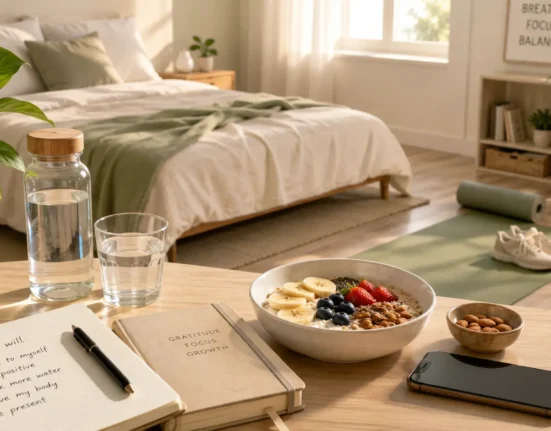
A simple breakfast such as eggs with toast, oatmeal with fruit, yogurt with berries, or a smoothie can help teens begin the day better.
2. Study Habits
Teenagers often struggle not because they cannot study, but because they do not have a clear study system.
Healthy study habits include:
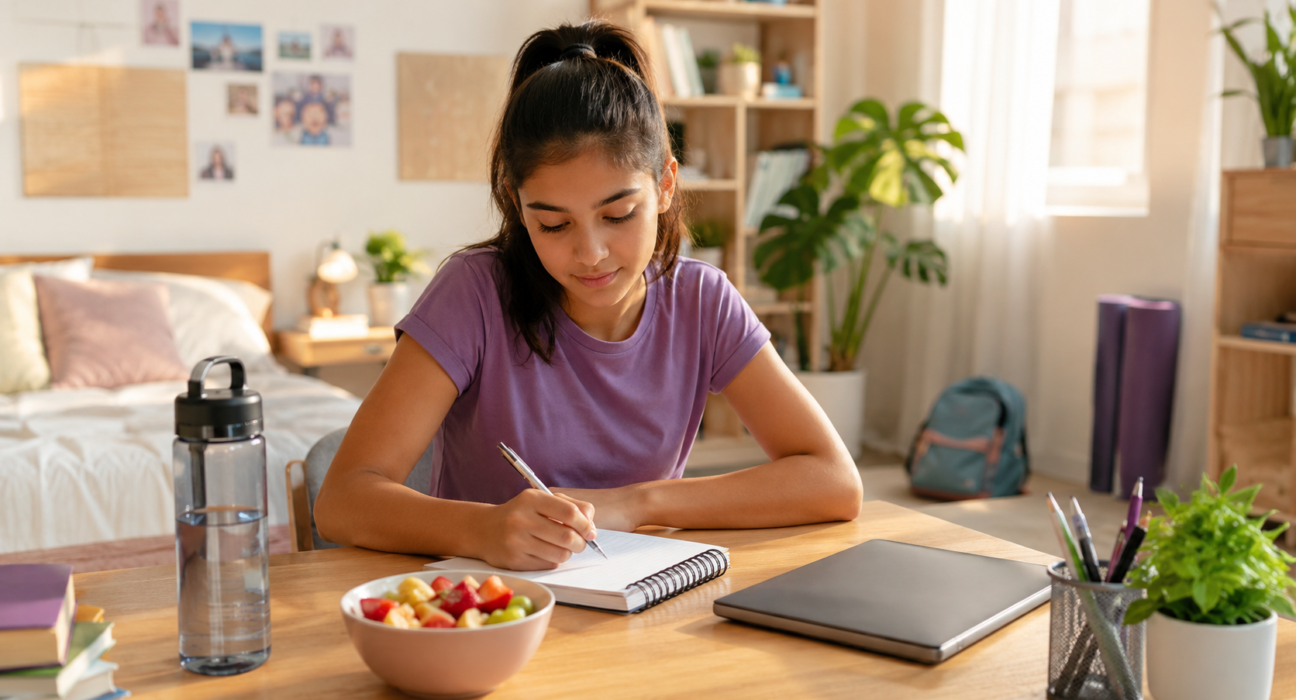
- Keeping a clean desk
- Studying at a fixed time
- Breaking homework into smaller tasks
- Taking short breaks
- Keeping the phone away during focused work
- Preparing school items at night
A good study habit does not mean studying all day. It means studying with focus and planning.
3. Digital Habits
Screens are a major part of teenage life.
Phones, games, videos, social media, and online learning can be useful, but too much screen time may affect sleep, focus, mood, and physical activity.
Healthy digital habits include:
- No phone during meals
- No screens right before sleep
- Phone-free study time
- Taking screen breaks
- Following positive content
- Avoiding late-night scrolling
Digital balance is one of the most important healthy habits for teenagers at home because screen use affects many other parts of daily life.
4. Fitness Habits
Teenagers need movement for strength, mood, confidence, and physical health.
Fitness habits do not always require a gym.
Teens can stay active through:
- Walking
- Cycling
- Sports
- Dancing
- Jogging
- Stretching
- Home workouts
- Bodyweight exercises
Regular movement can also help reduce stress and improve sleep.
The goal is not intense exercise every day. The goal is to avoid sitting for too long and make movement a normal part of life.
5. Social Habits
Healthy social habits help teenagers build better relationships.
Good social habits include:
- Communicating respectfully
- Choosing supportive friends
- Setting boundaries
- Spending time with family
- Avoiding harmful peer pressure
- Listening to others
- Asking for help when needed
Teenagers are learning how to manage friendships, emotions, and identity. Supportive relationships can help them feel more confident and understood.
6. Self-Care Habits
Self-care for teenagers includes hygiene, rest, emotional awareness, and personal responsibility.
Good self-care habits include:
- Showering regularly
- Brushing teeth twice daily
- Wearing clean clothes
- Washing face gently
- Keeping hair clean
- Organizing personal space
- Talking about stress
- Taking quiet time when needed
Self-care helps teens feel fresh, confident, and more prepared for daily life.
Building Independence Through Habits
Teenagers often want more freedom.
Healthy habits can help them earn and manage that independence.
For example, a teen who prepares their school bag at night, wakes up on time, eats breakfast, manages homework, and keeps their space clean is practicing responsibility.
Parents can support independence by:
- Giving choices
- Avoiding constant criticism
- Setting clear expectations
- Encouraging effort
- Allowing teens to solve small problems
- Listening without judgment
Healthy habits work best when teens understand why they matter.
Healthy Choices vs Unhealthy Shortcuts
Teenagers often choose what feels easy in the moment.
Some shortcuts may feel convenient but can affect wellness over time.
Unhealthy Shortcuts
- Skipping breakfast
- Sleeping very late
- Drinking too many sugary drinks
- Using phones during study
- Avoiding physical activity
- Ignoring stress
- Eating only packaged snacks
Healthier Choices
- Eating a simple breakfast
- Sleeping at a regular time
- Drinking water
- Taking study breaks
- Moving daily
- Talking about feelings
- Choosing balanced snacks
Small choices repeated often can shape lifestyle.
Daily Habits and Teen Wellness
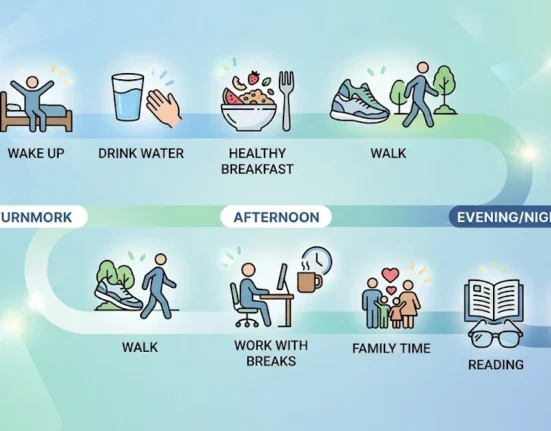
Healthy habits are easier when they fit into a routine.
If you want a more complete day-by-day structure, you can also read our guide on Daily Wellness Routine for Teens.
A daily routine can help teenagers turn healthy choices into natural habits.
Weekly Habit Tracker for Teens
A simple tracker can help teens stay consistent without feeling pressured.
Monday to Friday
- Did I drink enough water?
- Did I eat breakfast?
- Did I move my body?
- Did I finish schoolwork on time?
- Did I reduce screen time before bed?
- Did I sleep at a reasonable time?
Weekend
- Did I rest properly?
- Did I spend time offline?
- Did I help with something at home?
- Did I prepare for the next week?
This kind of tracker helps teens notice patterns and improve gradually.
How Parents Can Support Teen Habits
Parents play an important role, but support should feel respectful.
Helpful approaches include:
- Keep healthy food available
- Encourage sleep without constant arguing
- Create screen-free family meals
- Praise effort, not perfection
- Talk calmly about routines
- Give teens space to grow
- Model healthy habits yourself
Teenagers are more likely to follow habits when they feel respected rather than controlled.
Final Thoughts
Healthy habits for teenagers at home can support energy, focus, confidence, fitness, emotional wellness, and independence.
The teen years are a powerful time to build routines that can last into adulthood. Simple habits such as drinking water, eating balanced meals, sleeping well, staying active, managing screen time, keeping good hygiene, and handling emotions in healthy ways can make a meaningful difference.
The goal is not to force a perfect lifestyle.
The goal is to help teenagers build habits that make them feel stronger, calmer, more organized, and more confident.
FAQs
1. What are the most important healthy habits for teenagers?
The most important habits include good sleep, balanced meals, hydration, regular movement, hygiene, study planning, screen balance, and emotional self-care.
2. How can teenagers build better habits at home?
Teenagers can start with one habit at a time, such as drinking more water, sleeping earlier, or keeping their study area organized.
3. Why do teenagers struggle with routines?
Teenagers often manage school pressure, social changes, screen distractions, and emotional changes, which can make routines harder to follow.
4. How can parents encourage healthy habits without forcing?
Parents can offer support, model good habits, give choices, and explain the benefits instead of using pressure or criticism.
5. Are screen habits important for teenagers?
Yes. Screen habits can affect sleep, focus, mood, study time, and physical activity.
6. What is a simple fitness habit for teens?
Walking, stretching, dancing, sports, or short home workouts can help teens stay active.
7. How can teens improve emotional wellness?
Teens can talk about feelings, journal, take breaks, spend time with supportive people, and ask for help when needed.
8. What is the easiest habit to start today?
Drinking more water, preparing school items at night, or reducing phone use before bed are simple habits to begin with.
Author Bio
About the Author
Daniel Carter writes about teen wellness, healthy routines, personal development, and lifestyle habits. His work focuses on helping teenagers build practical habits that support confidence, focus, independence, and long-term well-being.
References
- HealthyChildren.org – Teen Health and Development
- UNICEF Parenting – Adolescent Development
- Nemours KidsHealth – Teens Health
- Sleep Foundation – Teens and Sleep
- NHS Live Well – Healthy Lifestyle Guidance
Disclaimer
Teen Wellness Disclaimer
This article is for educational purposes only and should not replace professional medical, nutritional, or mental health advice. Parents, caregivers, and teenagers should consult a qualified healthcare professional for concerns about teen health, growth, sleep, nutrition, emotional well-being, or development.