
Simple Diet Plan for Seniors
A simple diet plan for seniors can make healthy eating easier, especially when daily routines, appetite, energy levels, and health needs begin to change with age. Many older adults want to eat better, but they may not know where to start.
The good news is that a healthy senior diet does not need to be strict, expensive, or difficult.
A practical diet plan focuses on balanced meals, enough protein, fruits, vegetables, whole grains, healthy fats, hydration, and foods that support healthy aging. The goal is not perfection. The goal is consistency.
With the right approach, seniors can enjoy meals that support energy, digestion, strength, mobility, heart health, bone health, and overall wellness.
Why Seniors Need a Simple Diet Plan
As people age, the body’s needs can change. Seniors may require fewer calories than before, but they still need important nutrients every day.
A simple diet plan for seniors can help reduce confusion and make meals easier to follow.
A good senior diet may support:
- Daily energy
- Muscle health
- Bone strength
- Digestion
- Hydration
- Heart health
- Healthy aging
- Independence
Meal planning can also reduce the habit of skipping meals or relying too much on processed foods.
What a Healthy Senior Diet Should Include
A balanced senior diet usually includes a variety of simple foods.
These may include:
- Fruits
- Vegetables
- Whole grains
- Lean proteins
- Healthy fats
- Dairy or fortified alternatives
- Water and hydrating foods
Each food group plays a role in supporting the body.
Seniors do not need complicated recipes. They only need meals that provide steady nutrition.
Breakfast Ideas for Seniors
Breakfast can help start the day with energy.
Good breakfast options include:
- Oatmeal with berries and milk
- Eggs with whole grain toast
- Greek yogurt with fruit
- Cottage cheese with banana
- Whole grain toast with avocado
- Smoothie with yogurt and fruit
A balanced breakfast should include protein, fiber, and fluids when possible.
For example, oatmeal with milk and berries provides whole grains, calcium, and fruit in one simple meal.
Lunch Ideas for Seniors
Lunch should be nourishing but not too heavy.
Healthy lunch options include:
- Vegetable soup with whole grain bread
- Tuna sandwich on whole wheat bread
- Chicken salad with avocado
- Lentil soup with vegetables
- Rice bowl with beans and greens
- Egg salad with whole grain crackers
Soups can be especially helpful because they are warm, easy to chew, and hydrating.
Dinner Ideas for Seniors
Dinner can be simple and balanced.
Good dinner ideas include:
- Baked fish with brown rice and broccoli
- Chicken with sweet potatoes and salad
- Lentil stew with whole grain bread
- Turkey with quinoa and vegetables
- Tofu with rice and leafy greens
- Bean soup with a side of fruit
A healthy dinner should not feel too heavy. Protein, vegetables, and whole grains can make the meal more complete.
Healthy Snacks for Seniors
Snacks can help seniors who have smaller appetites or need extra nutrition between meals.
Healthy snack ideas include:
- Fruit slices
- Yogurt
- Cottage cheese
- Nuts or nut butter
- Boiled eggs
- Hummus with vegetables
- Whole grain crackers
- Smoothies
Snacks should be simple and easy to prepare.
Hydration in a Senior Diet Plan
Hydration is an important part of every diet plan.
Many seniors do not feel thirsty often, so they may drink less water than they need.
Good hydration choices include:
- Water
- Herbal tea
- Milk
- Soups
- Water-rich fruits
- Cucumber and lettuce
- Oranges and melon
Small sips throughout the day can be easier than drinking large amounts at once.
Protein for Strength and Mobility
Protein supports muscle health and daily strength.
Good protein foods include:
- Fish
- Chicken
- Turkey
- Eggs
- Greek yogurt
- Cottage cheese
- Beans
- Lentils
- Tofu
- Nuts and seeds
Including protein at each meal can help seniors support mobility and independence.
Foods for Bone Health
Bone health also matters in a senior diet plan.
Calcium, vitamin D, protein, and other nutrients help support bones and muscles.
Helpful foods include:
- Milk
- Yogurt
- Cheese
- Salmon
- Eggs
- Leafy greens
- Almonds
- Fortified foods
If you want more guidance on bone-supporting nutrition, you can read our guide on Bone Health Foods for Seniors.
Bone health and balanced eating work together to support healthy aging.
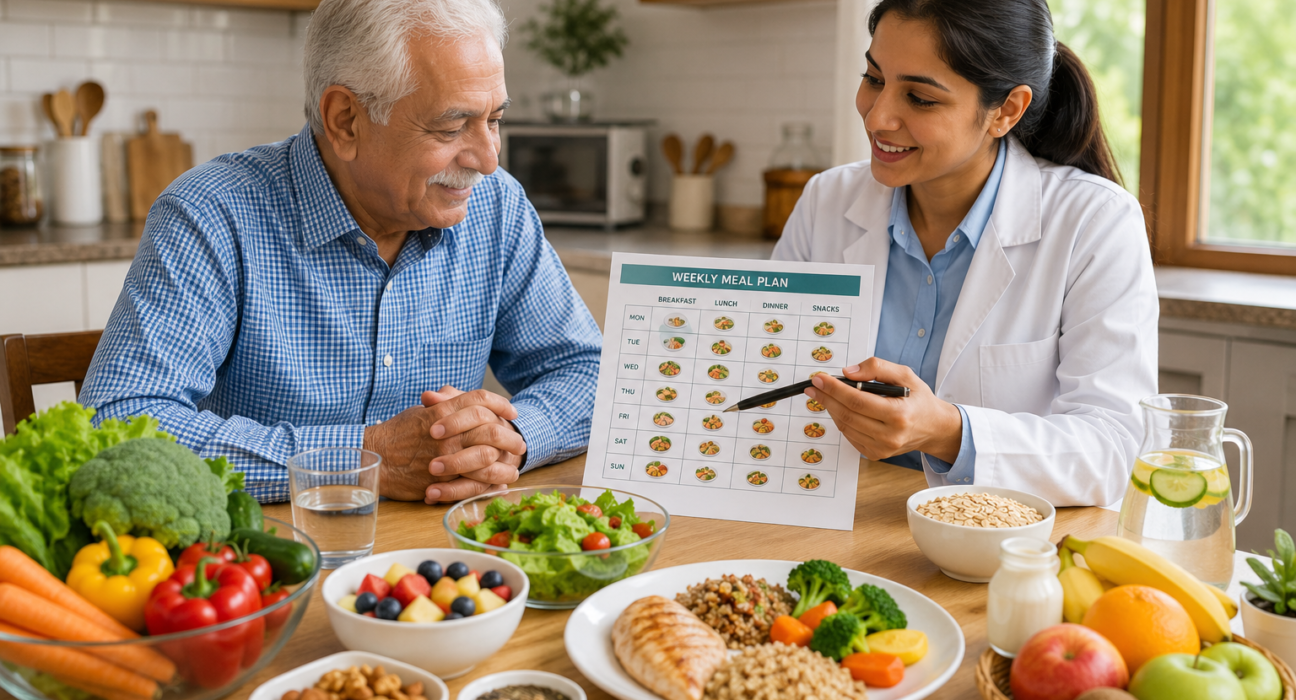
Simple Weekly Diet Plan for Seniors
Here is an easy weekly plan that seniors can adjust according to taste and health needs.
Monday
- Breakfast: Oatmeal with berries
- Lunch: Vegetable soup with whole grain bread
- Dinner: Baked fish with rice and vegetables
- Snack: Yogurt with fruit
Tuesday
- Breakfast: Eggs with toast
- Lunch: Chicken salad with avocado
- Dinner: Lentil stew with vegetables
- Snack: Apple slices with peanut butter
Wednesday
- Breakfast: Greek yogurt with fruit
- Lunch: Tuna sandwich on whole wheat bread
- Dinner: Turkey with quinoa and greens
- Snack: Cottage cheese
Thursday
- Breakfast: Smoothie with yogurt and banana
- Lunch: Bean soup with whole grain crackers
- Dinner: Chicken with sweet potatoes and broccoli
- Snack: Nuts in a small portion
Friday
- Breakfast: Oatmeal with milk and nuts
- Lunch: Egg salad with whole grain toast
- Dinner: Salmon with brown rice and salad
- Snack: Fruit bowl
Saturday
- Breakfast: Cottage cheese with banana
- Lunch: Lentil soup with vegetables
- Dinner: Tofu with rice and greens
- Snack: Yogurt
Sunday
- Breakfast: Eggs with vegetables
- Lunch: Chicken soup with whole grain bread
- Dinner: Bean stew with salad
- Snack: Orange slices
This plan can be changed based on appetite, budget, medical needs, and food preferences.
Foods Seniors May Want to Limit
Some foods should be limited because they may reduce overall diet quality when eaten too often.
- Sugary drinks
- Highly processed snacks
- Fried foods
- Excess salty foods
- Packaged meals
- Too many sweets
These foods do not need to disappear completely, but they should not replace balanced meals.
Tips to Make the Diet Plan Easier
A diet plan is easier to follow when it fits real life.
Helpful tips include:
- Keep meals simple
- Prepare soup in batches
- Use frozen vegetables
- Keep fruit visible
- Drink water with meals
- Choose soft foods when needed
- Make small portions
- Keep healthy snacks ready
Small steps are more realistic than sudden major changes.
Final Thoughts
A simple diet plan for seniors can support energy, strength, digestion, hydration, bone health, heart health, and healthy aging.
The best plan is one that feels practical and easy to follow.
Meals such as oatmeal, eggs, yogurt, soups, fish, beans, vegetables, whole grains, fruits, and healthy snacks can help seniors eat well without stress.
The goal is not a perfect diet.
The goal is steady, balanced nutrition that supports daily wellness and independence.
FAQs
1. What is a good diet plan for seniors?
A good diet plan for seniors includes fruits, vegetables, whole grains, lean protein, healthy fats, dairy or fortified alternatives, and enough fluids.
2. What should seniors eat for breakfast?
Oatmeal, eggs, Greek yogurt, cottage cheese, whole grain toast, and fruit are good breakfast options.
3. How many meals should seniors eat daily?
Many seniors do well with three small meals and one or two healthy snacks, depending on appetite and health needs.
4. What foods should seniors eat every day?
Seniors should try to include protein, vegetables, fruits, whole grains, and fluids daily.
5. Are soups good for seniors?
Yes. Soups can be easy to chew, hydrating, and nutritious when they include vegetables, beans, lentils, or lean protein.
6. What foods should seniors limit?
Sugary drinks, fried foods, highly processed snacks, excess salty foods, and packaged meals should be limited.
7. How can seniors make meal planning easier?
Using simple recipes, batch cooking, frozen vegetables, healthy snacks, and a weekly plan can make meals easier.
8. Can a diet plan help seniors stay independent?
A balanced diet can support strength, energy, mobility, and overall wellness, which may help seniors maintain independence.
Author Bio
About the Author
PureFitDay Editorial Team creates practical health, wellness, and nutrition content for readers who want simple guidance for healthier living. Our content focuses on healthy aging, senior nutrition, meal planning, bone health, heart health, fitness, mobility, strength, balance, and everyday wellness habits.
References
- Centers for Disease Control and Prevention (CDC) – Healthy Eating for Older Adults
https://www.cdc.gov - National Institute on Aging (NIA) – Healthy Eating
https://www.nia.nih.gov - World Health Organization (WHO) – Healthy Diet
https://www.who.int - Harvard Health Publishing – Nutrition and Healthy Aging
https://www.health.harvard.edu - Mayo Clinic – Nutrition and Healthy Eating
https://www.mayoclinic.org
Disclaimer
Medical Disclaimer
The information provided in this article is for educational and informational purposes only and should not be considered medical advice. Seniors should consult a qualified healthcare professional before making major dietary changes, especially if they have diabetes, kidney disease, heart conditions, swallowing difficulties, food allergies, medication concerns, or dietary restrictions. Individual nutrition needs may vary.