

Senior Fitness Routine for Energy, Balance, and Independence
Staying active is one of the most important habits seniors can develop for maintaining health, mobility, and independence. As people grow older, the body naturally changes. Muscles may become weaker, balance may feel less stable, and everyday activities may require more effort than before.
The good news is that regular exercise can help support many of these changes.
A well-rounded senior fitness routine does not need to be complicated or exhausting. In fact, some of the most effective routines include simple exercises that support strength, flexibility, balance, mobility, and overall well-being.
The goal is not to become an athlete. The goal is to stay active, feel confident, and continue enjoying daily life independently.
Why Seniors Need a Fitness Routine
Many seniors believe that daily movement alone is enough to stay healthy. While staying active throughout the day is important, a structured fitness routine provides additional benefits.
Regular exercise can help support:
- Better mobility
- Improved balance
- Greater strength
- Increased energy
- Better posture
- Improved flexibility
- Daily independence
A fitness routine can also help seniors feel more confident when walking, climbing stairs, carrying groceries, or completing household tasks.
Consistency is often more important than intensity.
Components of a Good Senior Fitness Routine
A balanced routine should include several different types of movement.
These include:
Strength Exercises
Strength exercises help maintain muscle mass and support daily activities.
Balance Exercises
Balance training helps improve stability and confidence while walking or standing.
Flexibility Exercises
Stretching exercises help reduce stiffness and improve mobility.
Cardiovascular Activity
Walking and other aerobic activities support heart health and endurance.
Combining these areas creates a complete senior fitness routine.
Start Every Session with a Warm-Up
A warm-up prepares the body for exercise.
Many seniors skip this step, but it can make movement more comfortable and reduce stiffness.
A simple warm-up may include:
- Shoulder rolls
- Seated marching
- Arm circles
- Ankle circles
- Gentle walking
Spend five minutes warming up before beginning other exercises.
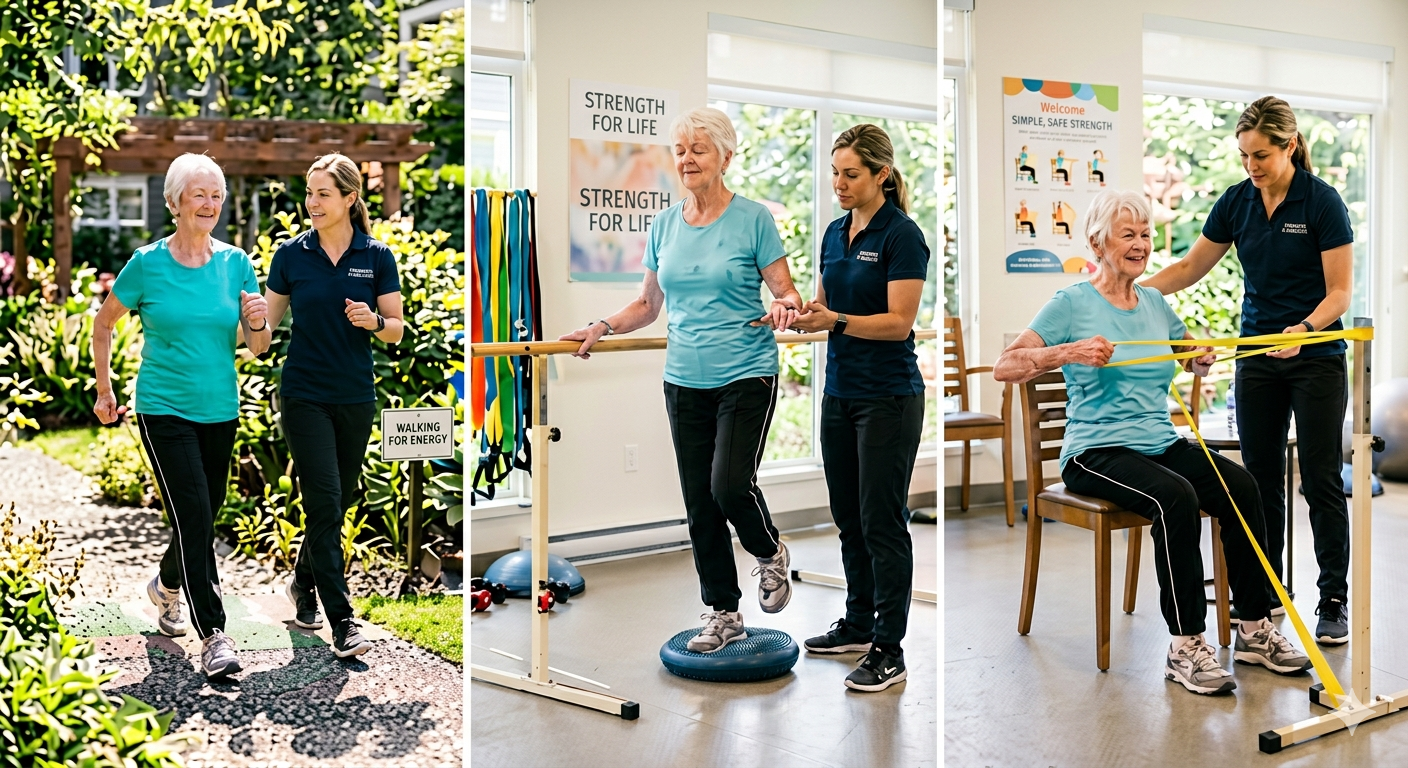
Walking for Daily Energy
Walking remains one of the most effective exercises for seniors.
It is simple, accessible, and adaptable to different fitness levels.
Walking can help support:
- Heart health
- Circulation
- Endurance
- Leg strength
- Mental well-being
Start with 5 to 10 minutes if needed and gradually increase over time.
Walking indoors or outdoors can both be beneficial.
Chair Sit-to-Stands
Chair sit-to-stands help strengthen the legs and improve independence.
Sit in a sturdy chair and slowly stand up. Pause briefly and sit back down with control.
This movement supports activities such as:
- Standing from a chair
- Getting out of bed
- Using stairs
- Walking confidently
Start with 5 repetitions and increase gradually.
Balance Exercises
Balance training is an important part of healthy aging.
Simple exercises include:
- Heel raises
- Toe raises
- Side leg raises
- Weight shifting
- Standing with support
These movements may help reduce fall risk and improve confidence.
Always use a chair or stable surface for support if needed.
Gentle Stretching
Flexibility is important for comfortable movement.
Stretching can help reduce stiffness and improve mobility.
Helpful stretches include:
- Neck stretches
- Shoulder rolls
- Side stretches
- Hamstring stretches
- Calf stretches
Move slowly and avoid forcing any stretch.
Light Strength Training
Strength exercises help support muscles and joints.
Examples include:
- Wall push-ups
- Resistance band exercises
- Light dumbbell curls
- Chair-supported squats
- Seated leg extensions
If you would like more beginner-friendly strengthening exercises, you may also find this guide helpful: Strength Training for Seniors: Safe Beginner Tips.
Strength training can be safely incorporated into a complete senior fitness routine.
Create a Weekly Routine
A simple weekly plan can make exercise easier to follow.
Monday
- Walking
- Stretching
Tuesday
- Strength exercises
- Balance training
Wednesday
- Walking
- Flexibility exercises
Thursday
- Strength exercises
- Balance exercises
Friday
- Walking
- Stretching
Saturday
- Light activity and mobility work
Sunday
- Rest or gentle walking
The routine can be adjusted according to individual fitness levels.
Exercise and Independence
One of the biggest benefits of fitness is maintaining independence.
Strong muscles, good balance, and healthy mobility can make everyday tasks easier.
Many seniors want to continue:
- Living independently
- Performing household tasks
- Shopping on their own
- Traveling comfortably
- Staying socially active
Regular exercise helps support these goals.
Energy and Daily Wellness
Exercise often helps improve energy levels.
Although it may seem surprising, moving regularly can help reduce feelings of tiredness and inactivity.
Many seniors notice they feel:
- More energetic
- More confident
- Less stiff
- More active
- More motivated
These benefits often improve quality of life.
Safety Tips for Seniors
Always prioritize safety during exercise.
Helpful tips include:
- Wear comfortable shoes
- Stay hydrated
- Exercise in a clear area
- Move slowly
- Use support when needed
- Stop if pain occurs
Exercise should feel challenging but not painful.
If dizziness or unusual symptoms occur, stop immediately and rest.
Common Fitness Mistakes
Some seniors make the mistake of doing too much too soon.
Others avoid exercise entirely because they feel they are too old to start.
Common mistakes include:
- Skipping warm-ups
- Ignoring balance support
- Holding the breath
- Exercising through pain
- Expecting quick results
Progress takes time.
Small improvements can create meaningful long-term benefits.
Staying Motivated
Consistency is easier when exercise feels enjoyable.
Helpful strategies include:
- Exercising with a friend
- Listening to music
- Tracking progress
- Setting realistic goals
- Celebrating small improvements
Remember that every movement counts.
Even short exercise sessions can be beneficial.
Final Thoughts
A senior fitness routine can help support energy, balance, strength, mobility, flexibility, and independence.
The best routine is one that feels safe, realistic, and enjoyable.
Simple activities such as walking, stretching, balance exercises, and strength training can make a significant difference when practiced regularly.
The goal is not perfection.
The goal is consistent movement that supports a healthier and more active lifestyle.
FAQs
1. What is a good senior fitness routine?
A balanced senior fitness routine includes walking, strength training, balance exercises, flexibility work, and light cardiovascular activity.
2. How often should seniors exercise?
Most seniors can benefit from some form of movement on most days of the week, depending on health status and fitness level.
3. Can seniors start exercising after age 60?
Yes. Many people begin exercising later in life and still experience improvements in strength, mobility, and overall well-being.
4. Is walking enough exercise for seniors?
Walking is excellent, but combining it with strength, balance, and flexibility exercises creates a more complete routine.
5. How can seniors improve balance?
Balance exercises such as heel raises, side leg raises, and weight shifting can help improve stability.
6. Should seniors do strength training?
Yes. Strength training can help support muscle health, mobility, and independence.
7. How long should a senior fitness routine last?
Even 15–30 minutes of daily activity can provide meaningful benefits.
8. What is the most important part of senior fitness?
Consistency. Regular movement over time is usually more beneficial than occasional intense exercise.
Author Bio
About the Author
PureFitDay Editorial Team creates practical health, wellness, and fitness content designed to help readers build healthier lifestyles. Our content focuses on senior fitness, healthy aging, mobility, strength, balance, flexibility, nutrition, and everyday wellness habits.
References
- Centers for Disease Control and Prevention (CDC) – Physical Activity for Older Adults
https://www.cdc.gov/physical-activity-basics/guidelines/older-adults.html - National Institute on Aging (NIA) – Exercise and Physical Activity
https://www.nia.nih.gov/health/exercise-and-physical-activity - World Health Organization (WHO) – Physical Activity
https://www.who.int/news-room/fact-sheets/detail/physical-activity - Harvard Health Publishing – Exercise and Fitness
https://www.health.harvard.edu/exercise-and-fitness - Mayo Clinic – Fitness for Older Adults
https://www.mayoclinic.org/healthy-lifestyle/fitness
Disclaimer
Medical Disclaimer
The information provided in this article is for educational and informational purposes only and should not be considered medical advice. Always consult a qualified healthcare professional before starting any new fitness program, especially if you have existing medical conditions, injuries, balance concerns, heart conditions, or mobility limitations. Individual fitness needs and abilities may vary. PureFitDay is not responsible for any injuries or health issues resulting from the use of information presented in this article.




Leave feedback about this