
Child Development Through a Daily Wellness Routine
Child development starts with the small habits children follow every day. A child’s routine at home can support physical growth, emotional comfort, learning ability, social behavior, hygiene, sleep, and overall wellness.
Children learn many habits by watching parents, family members, and caregivers. Simple actions such as brushing teeth, washing hands, eating breakfast, drinking water, staying active, reading, and sleeping on time can all play a role in healthy child development.
A daily wellness routine does not need to be strict or stressful. Children need balance, patience, and gentle guidance. When routines feel natural, kids are more likely to follow them without constant reminders.
The goal is to help children build healthy patterns that support growth, confidence, focus, and emotional well-being.
Why Daily Routines Matter for Child Development
A steady routine can help children feel safe, secure, and organized.
When children know what to expect during the day, they may feel more confident and less overwhelmed. This can support better behavior, learning, and emotional balance.
Daily routines may support child development by encouraging:
- Better focus
- Healthy hygiene
- Good sleep habits
- Steady energy
- Better eating habits
- Physical activity
- Emotional comfort
- School readiness
Small routines repeated daily can become lifelong habits.
Start the Day Calmly
A peaceful morning can make the whole day easier.
Children may feel rushed or stressed when mornings are unplanned. A simple morning routine can help them feel prepared and confident.
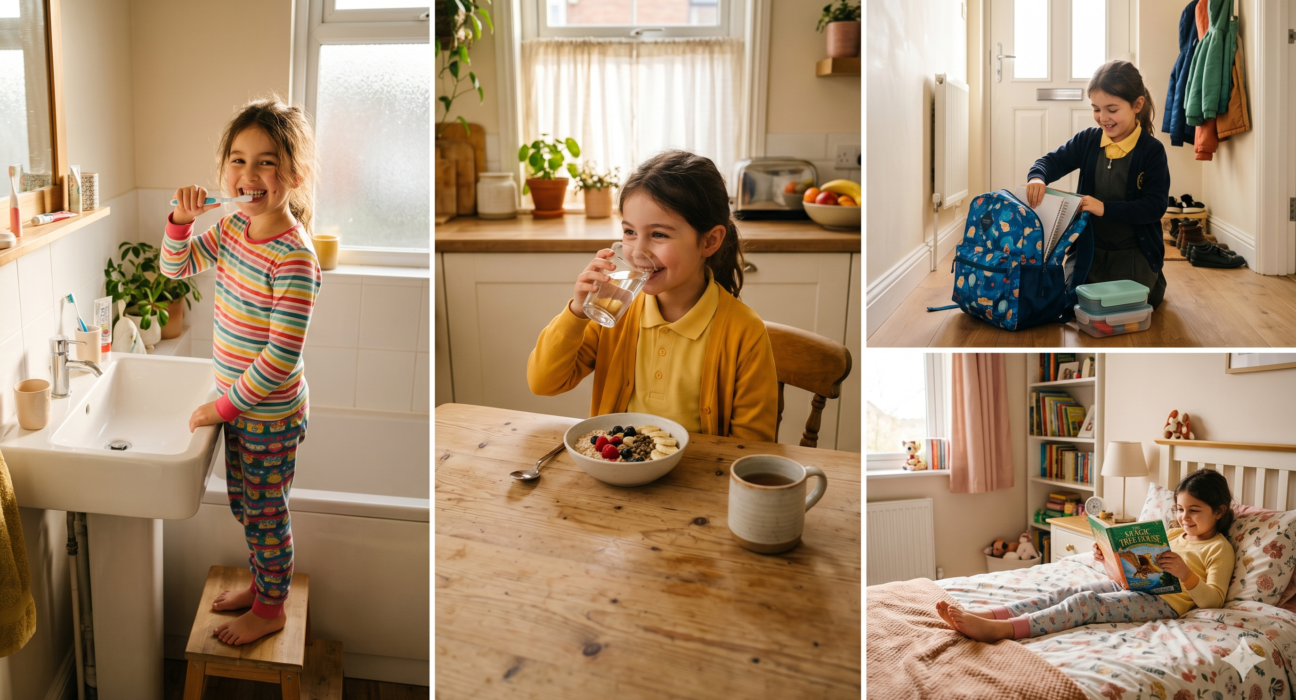
Morning habits may include:
- Waking up at a regular time
- Washing face
- Brushing teeth
- Drinking water
- Eating breakfast
- Getting dressed
- Preparing school items
A calm morning routine can support child development by helping children practice responsibility, independence, and time awareness.
Encourage Good Hygiene
Hygiene is an important part of child development and daily wellness.
Children should learn basic hygiene habits in a simple and age-appropriate way. These habits help them understand personal care and responsibility.
Helpful hygiene habits include:
- Washing hands
- Brushing teeth twice daily
- Taking regular baths
- Wearing clean clothes
- Keeping nails clean
- Covering mouth when coughing or sneezing
Parents can make hygiene easier by using gentle reminders, simple routines, and positive encouragement.
Healthy Breakfast Routine
Breakfast gives children energy for school, play, and learning.
A balanced breakfast may include:
- Eggs
- Oatmeal
- Whole grain toast
- Yogurt
- Fruit
- Milk or water
Breakfast does not need to be fancy. A simple meal with protein, fiber, and fluids can help children start the day well.
Good nutrition supports child development by helping children stay active, focused, and ready to learn.
Keep Water Nearby
Children may forget to drink water while playing or studying.
Simple hydration habits include:
- Keeping a water bottle nearby
- Drinking water after waking
- Drinking water with meals
- Drinking water after playtime
- Choosing water instead of sugary drinks
Good hydration supports energy, focus, and daily comfort.
Add Movement Every Day
Children need physical activity for healthy growth and development.
Daily movement does not always require sports or outdoor play. Simple activities at home can also support fitness, coordination, balance, and mood.
Simple activity ideas include:
- Dancing
- Stretching
- Walking
- Playing active games
- Helping with light chores
- Playing in the yard
- Jumping or balancing games
Movement helps children use energy in a healthy way and may also support better sleep.
Create a Balanced Study Routine
Child development includes learning, focus, and problem-solving.
A daily wellness routine should include learning time that feels calm and manageable.
Helpful study habits include:
- Keeping a clean study space
- Taking short breaks
- Finishing homework on time
- Reading for a few minutes daily
- Keeping school items organized
A calm learning space can help children focus better and develop stronger study habits over time.
Healthy Snack Habits
Snacks can support energy between meals.
Good snack options include:
- Apple slices
- Bananas
- Yogurt
- Nuts or nut butter if suitable
- Carrot sticks
- Whole grain crackers
- Cheese
- Fruit bowl
Healthy snacks should be easy to reach and simple to prepare.
A good snack routine can support child development by giving children steady energy for learning, playing, and daily activities.
Limit Screen Time
Screens are common in daily life, but balance is important.
Too much screen time may affect sleep, focus, mood, and activity levels.
Helpful screen habits include:
- Keeping meals screen-free
- Taking breaks during screen use
- Avoiding screens close to bedtime
- Choosing educational content
- Encouraging reading or play instead
Screen rules work better when they are simple, realistic, and consistent.
Support Emotional Wellness
Emotional wellness is a major part of child development.
Children need to feel heard, supported, and understood. A child who feels emotionally safe may feel more confident, calm, and ready to learn.
Parents can support emotional wellness by:
- Listening calmly
- Asking about the child’s day
- Praising effort
- Encouraging feelings to be shared
- Spending quality time together
- Keeping routines predictable
Small emotional support habits can make a big difference in a child’s daily confidence.
Evening Wind-Down Routine
Evenings should help children slow down before sleep.
A simple evening routine may include:
- Finishing homework
- Eating dinner
- Preparing clothes for the next day
- Putting toys away
- Brushing teeth
- Reading a short story
- Sleeping at a regular time
A calm evening routine can make bedtime smoother and help children feel settled.
Sleep Routine for Children
Sleep supports growth, learning, mood, memory, and energy.
Good sleep habits include:
- Sleeping at a consistent time
- Keeping the bedroom calm
- Avoiding screens before bed
- Reading or relaxing before sleep
- Keeping bedtime peaceful
Healthy sleep is one of the most important parts of child development because children need rest to grow and function well.
Daily Wellness and Healthy Habits
A wellness routine works best when it includes simple habits that children can repeat every day.
If you want more ideas for building healthy routines at home, you can also read our guide on Healthy Habits for Kids at Home.
Healthy habits and daily routines work together to support child development and overall wellness.
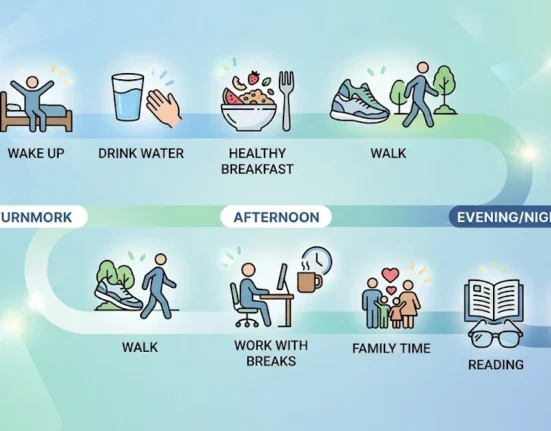
Sample Daily Wellness Routine for Children
Here is a simple routine parents can adjust:
Morning
- Wake up
- Brush teeth
- Wash face
- Drink water
- Eat breakfast
- Get ready for school
Afternoon
- Eat lunch
- Drink water
- Rest briefly
- Finish homework
- Play actively
Evening
- Eat dinner
- Put toys or school items away
- Take a bath if needed
- Brush teeth
- Read a story
- Sleep on time
This routine can be changed based on school timing, family schedule, and the child’s age.
How Parents Can Support Child Development at Home
Parents do not need a perfect routine to support child development.
What children need most is consistency, care, and encouragement.
- Keeping routines simple
- Giving gentle reminders
- Praising effort
- Being patient with mistakes
- Modeling healthy behavior
- Creating a calm home environment
Children often learn best when routines feel supportive instead of forced.
Final Thoughts
Child development is supported by the small habits children practice every day.
A daily wellness routine can help support hygiene, nutrition, hydration, activity, learning, emotional comfort, and sleep.
The best routine is simple, flexible, and easy to follow.
Children do not need a perfect schedule. They need healthy habits repeated with patience and care.
With consistency, daily routines can help children feel more confident, organized, active, and comfortable at home.
FAQs
1. How do daily routines support child development?
Daily routines help children feel secure, organized, and confident while supporting hygiene, sleep, learning, nutrition, and emotional wellness.
2. What is a good wellness routine for children?
A good routine includes brushing teeth, washing hands, eating healthy meals, drinking water, staying active, studying, relaxing, and sleeping on time.
3. Why is sleep important for child development?
Sleep supports growth, learning, mood, memory, energy, and overall wellness.
4. How can parents support child development at home?
Parents can support children with simple routines, healthy meals, emotional support, active play, reading time, and consistent sleep habits.
5. What are healthy snacks for children?
Fruit, yogurt, whole grain crackers, cheese, vegetables, and simple homemade snacks can be good options.
6. How can children stay active at home?
Children can dance, stretch, walk, play active games, help with light chores, or do simple movement activities.
7. How can parents reduce screen time?
Parents can set screen-free meals, avoid screens before bed, encourage play, and choose educational content.
8. Are routines difficult for children to follow?
No. When routines are simple, repeated daily, and supported with gentle reminders, children can learn them naturally over time.
Author Bio
About the Author
PureFitDay Editorial Team creates practical health, wellness, and lifestyle content for families and everyday readers. Our goal is to provide simple guidance on child development, kids health, child wellness, routines, nutrition, hygiene, fitness, sleep, and daily healthy habits.
References
- Centers for Disease Control and Prevention (CDC) – Child Development
https://www.cdc.gov - World Health Organization (WHO) – Physical Activity
https://www.who.int - UNICEF – Child Health and Wellbeing
https://www.unicef.org - Mayo Clinic – Children’s Health
https://www.mayoclinic.org - Harvard Health Publishing – Healthy Habits for Children
https://www.health.harvard.edu
Disclaimer
Medical Disclaimer
The information provided in this article is for educational and informational purposes only and should not be considered medical advice. Parents and caregivers should consult a qualified healthcare professional for concerns about a child’s health, nutrition, sleep, development, activity level, hygiene, or behavior. Individual needs may vary.