
Best Vitamins for a Healthy Diet
The best vitamins for a healthy diet usually come from simple everyday foods, not complicated routines. Most people think about vitamins only when they feel tired, get sick often, or see a supplement bottle at the pharmacy. But vitamins are something your body depends on quietly every single day.
They help your body turn food into energy, keep your skin healthy, support your immune system, protect your bones, and help your brain and nerves work properly. The good news is that you do not need a perfect diet to get started. Small changes in your meals can make your food more vitamin-rich over time.
This guide breaks down the best vitamins, what they do, and the foods that naturally provide them.
Why the Best Vitamins Matter in Daily Meals
Your body needs vitamins in small amounts, but their job is not small. They support many body functions that happen in the background while you work, sleep, exercise, study, or recover from a busy day.
If your meals are mostly processed foods, sugary snacks, or quick takeout, your body may miss important nutrients. This does not mean you need to panic or start taking many supplements. It simply means your meals may need more variety.
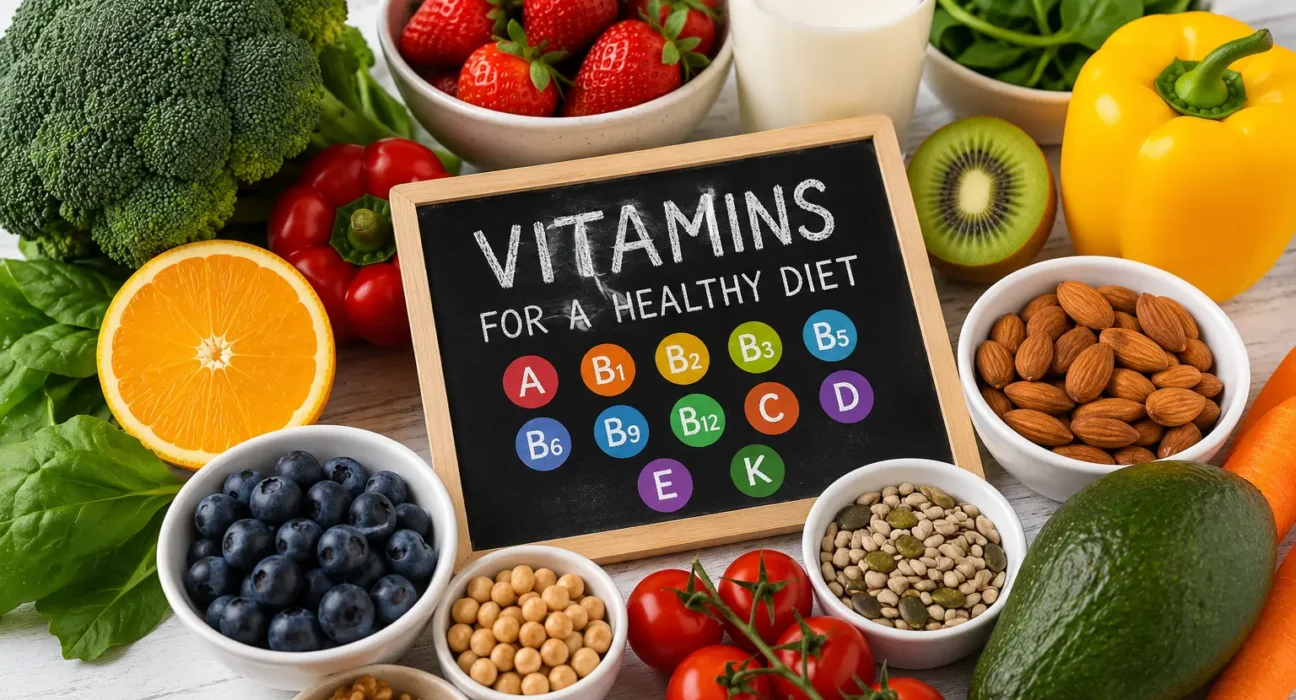
A balanced diet with fruits, vegetables, whole grains, protein foods, dairy or fortified alternatives, nuts, seeds, and healthy fats can provide many essential vitamins naturally.
Vitamin A: For Eyes, Skin, and Immunity
Vitamin A is one of the best vitamins for healthy vision, skin repair, and immune support. It also helps the body maintain normal cell growth.
Good food sources include:
- Carrots
- Sweet potatoes
- Pumpkin
- Spinach
- Kale
- Eggs
- Dairy products
A simple way to get more vitamin A is to add orange or dark green vegetables to your meals a few times a week.
Vitamin C: More Than Just Immunity
Vitamin C is often linked with colds and immunity, but it also helps your body make collagen. Collagen supports skin, blood vessels, gums, and wound healing.
You can find vitamin C in:
- Oranges
- Strawberries
- Kiwi
- Bell peppers
- Broccoli
- Tomatoes
- Guava
Fresh fruit with breakfast or bell peppers in lunch can easily increase vitamin C without making your routine difficult.
Vitamin D: The Bone Support Vitamin
Vitamin D helps the body absorb calcium, which makes it important for bones and teeth. Many people do not get enough vitamin D, especially if they spend most of the day indoors.
Food sources include:
- Salmon
- Sardines
- Egg yolks
- Fortified milk
- Fortified cereals
- Mushrooms exposed to sunlight
Sunlight can also help the body make vitamin D, but needs vary from person to person. If you feel unsure, a healthcare professional can check your levels.
Vitamin E: Protection for Your Cells
Vitamin E works as an antioxidant. That means it helps protect cells from damage caused by everyday stress inside the body.
Good sources include:
- Almonds
- Sunflower seeds
- Hazelnuts
- Avocado
- Spinach
- Olive oil
A small handful of nuts or seeds can be an easy vitamin E-rich snack.
B Vitamins: Energy and Brain Support
B vitamins are a group of nutrients that help your body use energy from food. They also support nerves, brain function, red blood cells, and metabolism.
The B vitamin family includes thiamine, riboflavin, niacin, vitamin B6, biotin, folate, and vitamin B12.
Food sources include:
- Whole grains
- Eggs
- Chicken
- Fish
- Beans
- Lentils
- Leafy greens
- Dairy products
If you often feel low on energy, your overall eating pattern matters. B vitamins help, but they work best when your meals are balanced.
Can Food Give You the Best Vitamins Naturally?
For many people, yes. A colorful and balanced diet can provide many of the best vitamins your body needs.
Supplements may help in some cases, especially when there is a confirmed deficiency, pregnancy, older age, restricted diet, or certain health condition. But supplements should not replace real food.
Whole foods provide more than vitamins. They also give fiber, minerals, antioxidants, protein, and healthy fats that work together in the body.
Easy Ways to Add More Vitamins to Meals
You do not need to change everything overnight. Start with small upgrades.
- Add fruit to breakfast.
- Use whole grain bread instead of white bread.
- Add spinach or peppers to eggs.
- Keep nuts or seeds for snacks.
- Eat fish once or twice a week if suitable.
- Add vegetables to rice, pasta, or soup.
- Choose yogurt with fruit instead of sugary desserts.
If you want more lifestyle-based wellness ideas, you can also read our guide on Teen Wellness Tips for Healthy Lifestyle.
Signs Your Diet May Need More Nutrients
Low vitamin intake does not always show up clearly at first. Sometimes the signs are mild and easy to ignore.
Possible signs may include:
- Feeling tired often
- Getting sick frequently
- Slow wound healing
- Dry skin
- Brittle nails
- Muscle weakness
- Poor focus
These symptoms can happen for many reasons, so it is better not to guess. If they continue, speak with a healthcare professional.
Food First, Supplements Second
Vitamin supplements can be useful, but they are not always needed. Taking extra vitamins without knowing your actual needs may not help, and in some cases, too much can cause problems.
A food-first approach is usually safer and more balanced. Start with better meals, then use supplements only when a professional recommends them.
The Bottom Line
The best vitamins for a healthy diet are not found in one magic food or one expensive supplement. They come from variety.
Vitamin A, vitamin C, vitamin D, vitamin E, and B vitamins all support different parts of your health, from energy and immunity to skin, bones, and brain function.
Focus on colorful meals, whole foods, enough protein, healthy fats, and consistent eating habits. Over time, these simple choices can help your body get the vitamins it needs naturally.
FAQs
1. What are the best vitamins for daily health?
Vitamin A, vitamin C, vitamin D, vitamin E, and B vitamins are some of the most important vitamins for daily health.
2. Can I get enough vitamins without supplements?
Many people can get enough vitamins from a balanced diet, but some may need supplements based on medical advice.
3. Which vitamin is good for immunity?
Vitamin C, vitamin D, vitamin A, and vitamin E all support normal immune function.
4. What vitamin helps with energy?
B vitamins help the body turn food into energy, but overall diet and sleep also matter.
5. Which foods have the most vitamins?
Fruits, vegetables, whole grains, eggs, fish, dairy, beans, nuts, and seeds are all good vitamin-rich foods.
6. Is it safe to take vitamins every day?
It depends on the vitamin and your personal needs. Always follow professional guidance before taking supplements regularly.
7. What vitamin helps bones?
Vitamin D helps the body absorb calcium, which supports bone health.
8. How can I improve my vitamin intake?
Eat more colorful fruits and vegetables, choose whole grains, include protein foods, and reduce heavily processed snacks.
Author Bio
About the Author
Olivia Carter, RD is a nutrition educator who writes about practical healthy eating, family meals, and everyday wellness. Her work focuses on helping readers make simple food choices without confusion, fear, or diet pressure.
References
- National Institutes of Health Office of Dietary Supplements – Vitamin Fact Sheets
- Academy of Nutrition and Dietetics – Vitamins and Minerals
- NHS – Vitamins and Minerals
- Harvard T.H. Chan School of Public Health – The Nutrition Source
- Mayo Clinic – Nutrition and Healthy Eating
Disclaimer
Nutrition Disclaimer
This article is for general educational purposes only. It is not medical advice and should not replace guidance from a doctor, registered dietitian, or qualified healthcare professional. Vitamin needs can vary based on age, diet, health conditions, medications, pregnancy, and lifestyle. Always seek professional advice before starting supplements or making major diet changes.