
Strength Training for Seniors: Safe Beginner Tips
Strength training for seniors can be one of the most helpful ways to support healthy aging, daily independence, and better mobility. Many older adults think strength training means heavy weights, difficult gym machines, or intense workouts, but that is not true.
For seniors, strength training can be simple, gentle, and safe when done correctly.
It may include light dumbbells, resistance bands, bodyweight movements, chair exercises, or even daily activities that gently challenge the muscles. The goal is not to build a bodybuilder-style physique. The goal is to keep the muscles strong enough to support everyday life.
Standing up from a chair, carrying groceries, climbing stairs, opening jars, walking confidently, and maintaining balance all require strength. As people get older, muscle strength may gradually decrease, especially when the body is not used regularly.
That is why safe strength training can be so valuable.
Why Strength Training Matters for Seniors
Muscles play an important role in almost every daily movement.
When muscles become weaker, ordinary tasks can feel harder. Getting out of bed, walking around the house, lifting laundry, or standing for a longer time may require more effort than before.
Strength training for seniors can help support:
- Better muscle strength
- Improved balance
- Greater mobility
- Better posture
- More confidence
- Easier daily movement
- Healthy aging
Strong muscles also support the joints. When muscles are stronger, they can help reduce unnecessary strain during daily activities.
Start with Light and Simple Movements
A common mistake is trying to lift too much weight too soon.
Seniors should always begin with light resistance and slow movements.
For beginners, strength training may start with:
- Bodyweight exercises
- Light dumbbells
- Resistance bands
- Chair-supported movements
- Wall push-ups
Even simple movements can be effective when done consistently.
There is no need to rush progress.
The body needs time to adapt, especially if exercise has not been part of the routine for a while.
Focus on Safety First
Safety is the most important part of any senior fitness routine.
Before starting, choose a safe area with enough room to move. Remove loose rugs, clutter, and anything that could cause tripping.
Keep a sturdy chair nearby for support.
Wear comfortable shoes if standing exercises are included.
Move slowly and avoid sudden jerky motions.
Strength exercises should never cause sharp pain. If dizziness, chest discomfort, or unusual shortness of breath occurs, stop immediately and rest.
Seniors with medical conditions, recent surgery, or joint concerns should speak with a healthcare professional before starting a new strength routine.
Warm Up Before Strength Training
A warm-up prepares the body for movement.
Many seniors skip warm-ups, but they are especially important before strength training.
A simple warm-up may include:
- Shoulder rolls
- Arm swings
- Seated marching
- Ankle circles
- Light walking around the room
Spend about five minutes warming up before doing strength exercises.
Warm muscles usually move more comfortably and safely.
Wall Push-Ups
Wall push-ups are a gentle way to strengthen the upper body.
Stand facing a wall and place both hands on the wall at shoulder height. Step back slightly, bend your elbows, and slowly bring your chest closer to the wall. Then push back to the starting position.
This exercise works the arms, shoulders, and chest without placing too much pressure on the joints.
Start with 8 to 10 repetitions.
Move slowly and keep breathing normally.
Chair Sit-to-Stands
Chair sit-to-stands are one of the best beginner strength exercises for seniors.
Sit in a sturdy chair with both feet flat on the floor. Slowly stand up, pause briefly, and sit back down with control.
Use your hands if needed.
This movement strengthens the legs, hips, and core muscles.
It also helps with real-life daily tasks because standing up from a chair is something seniors do many times each day.
Start with 5 repetitions and increase gradually.
Resistance Band Rows
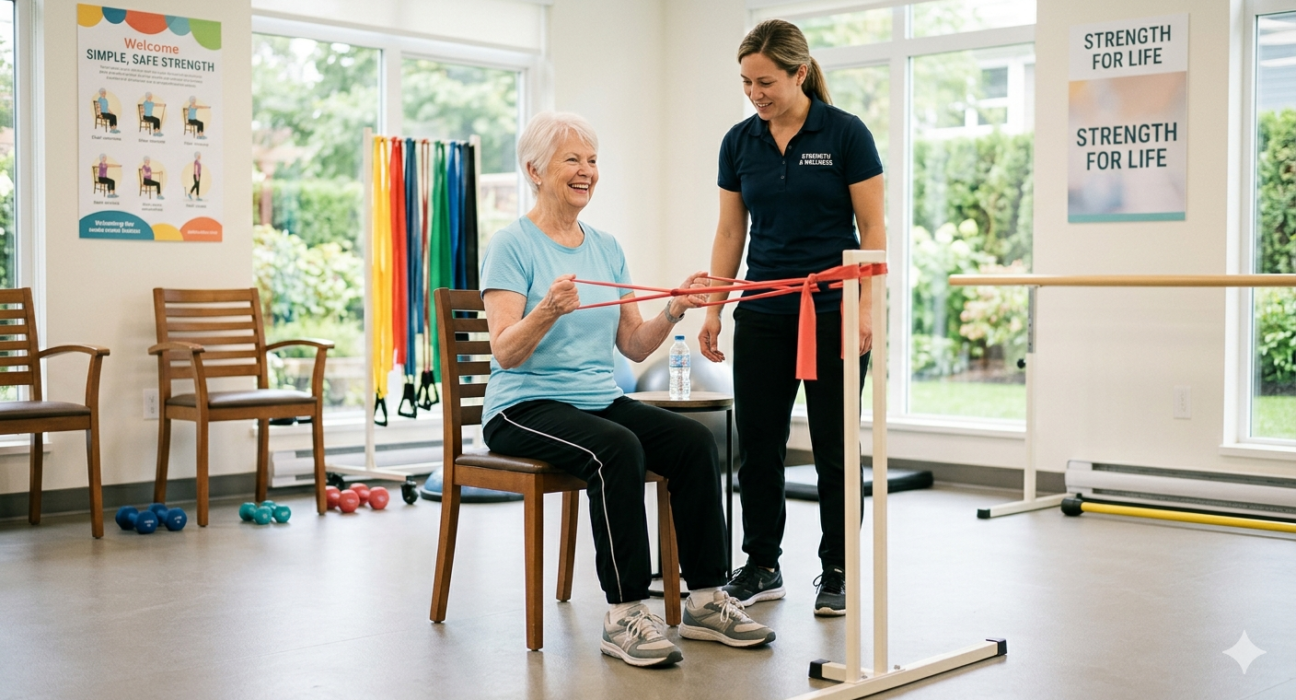
Resistance bands are useful because they provide gentle resistance without heavy weights.
To do a seated resistance band row, sit upright in a chair. Hold the band with both hands and gently pull your elbows back as if squeezing your shoulder blades together. Slowly return to the starting position.
This exercise helps strengthen the upper back and supports better posture.
Good posture can make walking, standing, and sitting more comfortable.
Start with 8 repetitions.
Use a light resistance band at first.
Light Dumbbell Curls
Light dumbbell curls help strengthen the arms.
Hold a light dumbbell in each hand, or use small water bottles if dumbbells are not available. Keep your elbows close to your body. Slowly bend your elbows and lift the weights toward your shoulders. Lower them back down with control.
This exercise supports everyday activities such as carrying bags, lifting light items, or holding household objects.
Start with 8 to 10 repetitions.
Choose a weight that feels easy to control.
Seated Leg Extensions
Seated leg extensions help strengthen the thighs.
Sit upright in a sturdy chair with both feet flat on the floor. Slowly extend one leg forward until it is straight. Hold briefly, then lower it back down. Repeat with the other leg.
Move slowly and avoid kicking.
This exercise may help support walking, standing, and climbing stairs.
Start with 5 to 8 repetitions on each leg.
Heel Raises
Heel raises strengthen the lower legs and support balance.
Stand behind a chair and hold it lightly. Slowly lift your heels so you are standing on your toes. Pause briefly, then lower your heels back down.
This exercise helps strengthen the calves and ankles.
It may also improve walking stability.
Start with 8 to 10 repetitions.
Strength Training and Morning Movement
Strength training does not always need a separate long workout session.
Some seniors prefer to add gentle strength exercises after a short morning routine. This can help the body feel awake before doing slightly more challenging movements.
If you are building a daily routine, you may also find this guide helpful: Morning Exercise Routine for Seniors.
Morning movement and beginner strength training can work well together for better daily mobility.
Create a Simple Beginner Routine
A beginner strength routine does not need to be complicated.
Here is a simple example:
Monday
- Wall push-ups
- Seated leg extensions
- Heel raises
Wednesday
- Chair sit-to-stands
- Resistance band rows
- Light dumbbell curls
Friday
- Wall push-ups
- Chair sit-to-stands
- Seated leg extensions
This routine can be adjusted based on comfort and ability.
Rest days are important because muscles need time to recover.
Do Not Forget Breathing
Many people accidentally hold their breath while exercising.
This can make movements feel harder and may increase discomfort.
Try to breathe normally during each exercise.
A simple rule is to exhale during effort and inhale while returning to the starting position.
For example, breathe out when standing up from a chair and breathe in when sitting back down.
Progress Slowly
Progress should be gradual.
Seniors do not need to increase weight quickly.
Progress may mean doing one or two more repetitions, improving control, using slightly better posture, or feeling more confident during movement.
Small improvements are still improvements.
Strength training is most effective when it becomes a regular habit rather than something done once in a while.
Benefits Beyond Muscle Strength
Strength training supports more than muscles.
Many seniors notice improvements in:
- Confidence
- Posture
- Balance
- Energy
- Daily independence
- Mobility
- Mood
When the body feels stronger, daily life often feels easier.
Even small strength gains can make ordinary tasks more comfortable.
Common Mistakes to Avoid
Some common mistakes include:
- Lifting too much weight
- Moving too quickly
- Skipping warm-ups
- Holding the breath
- Exercising through pain
- Ignoring balance support
- Doing too much too soon
Strength training should feel controlled and safe.
It should not feel rushed or painful.
Final Thoughts
Strength training for seniors can be simple, safe, and highly useful when done properly.
Gentle exercises such as wall push-ups, chair sit-to-stands, resistance band rows, light dumbbell curls, seated leg extensions, and heel raises can help support muscle strength, balance, mobility, and independence.
The key is to start slowly and focus on proper control.
You do not need heavy weights or difficult workouts.
A few safe strength exercises performed regularly can help seniors feel stronger, steadier, and more confident in daily life.
FAQs
1. Is strength training safe for seniors?
Yes, strength training can be safe for seniors when done with light resistance, slow movements, proper support, and medical guidance when needed.
2. What is the best strength exercise for seniors?
Chair sit-to-stands are one of the best beginner strength exercises because they strengthen the legs and support daily independence.
3. How often should seniors do strength training?
Many seniors can benefit from strength training two to three times per week, with rest days between sessions.
4. Do seniors need weights for strength training?
No. Seniors can use bodyweight exercises, resistance bands, light dumbbells, or household items like water bottles.
5. Can strength training improve balance?
Yes. Stronger legs, hips, and core muscles can help support better balance and safer movement.
6. What weight should seniors start with?
Seniors should start with very light weights or resistance bands and focus on control before increasing resistance.
7. Can seniors build muscle after 60?
Yes. Seniors can improve muscle strength at any age with consistent, safe strength training.
8. When should seniors stop strength training?
Seniors should stop if they feel sharp pain, dizziness, chest discomfort, unusual shortness of breath, or sudden weakness.
Author Bio
About the Author
PureFitDay Editorial Team creates practical health, wellness, and fitness content for readers who want simple and helpful guidance. Our content focuses on senior fitness, healthy aging, strength, mobility, balance, flexibility, joint health, nutrition, and everyday wellness habits.
References
- Centers for Disease Control and Prevention (CDC) – Physical Activity for Older Adults
https://www.cdc.gov/physical-activity-basics/guidelines/older-adults.html - National Institute on Aging (NIA) – Strength Exercises
https://www.nia.nih.gov/health/exercise-and-physical-activity - World Health Organization (WHO) – Physical Activity
https://www.who.int/news-room/fact-sheets/detail/physical-activity - Harvard Health Publishing – Strength Training
https://www.health.harvard.edu/exercise-and-fitness - Mayo Clinic – Strength Training
https://www.mayoclinic.org/healthy-lifestyle/fitness/in-depth/strength-training/art-20046670
Disclaimer
Medical Disclaimer
The information provided in this article is for educational and informational purposes only and should not be considered medical advice. Seniors should consult a qualified healthcare professional before starting any new strength training routine, especially if they have heart conditions, joint pain, balance concerns, injuries, recent surgery, or mobility limitations. Individual fitness levels and health needs may vary.