
Hygiene Tips for Teenagers
Teen hygiene tips become more important when the body starts changing during puberty. Teenage years can bring more sweat, oily skin, body odor, acne, hair growth, and a stronger need for daily cleanliness. These changes are normal, but they can feel uncomfortable if a teen does not have a simple hygiene routine.
Good hygiene is not about using expensive products or spending hours in front of a mirror. It is about staying clean, fresh, and confident through small daily habits. A teenager who follows a basic routine usually feels more comfortable at school, during sports, around friends, and at home.
The best routine is the one that fits real life. School mornings are often rushed. Sports days can be sweaty. Weekends can be lazy. That is why these teen hygiene tips are arranged around a normal teenager’s day instead of a long checklist that feels difficult to follow.
Morning Teen Hygiene Tips
A clean day usually starts with a clean morning routine. Teenagers do not need a complicated routine, but a few steps can make a big difference.
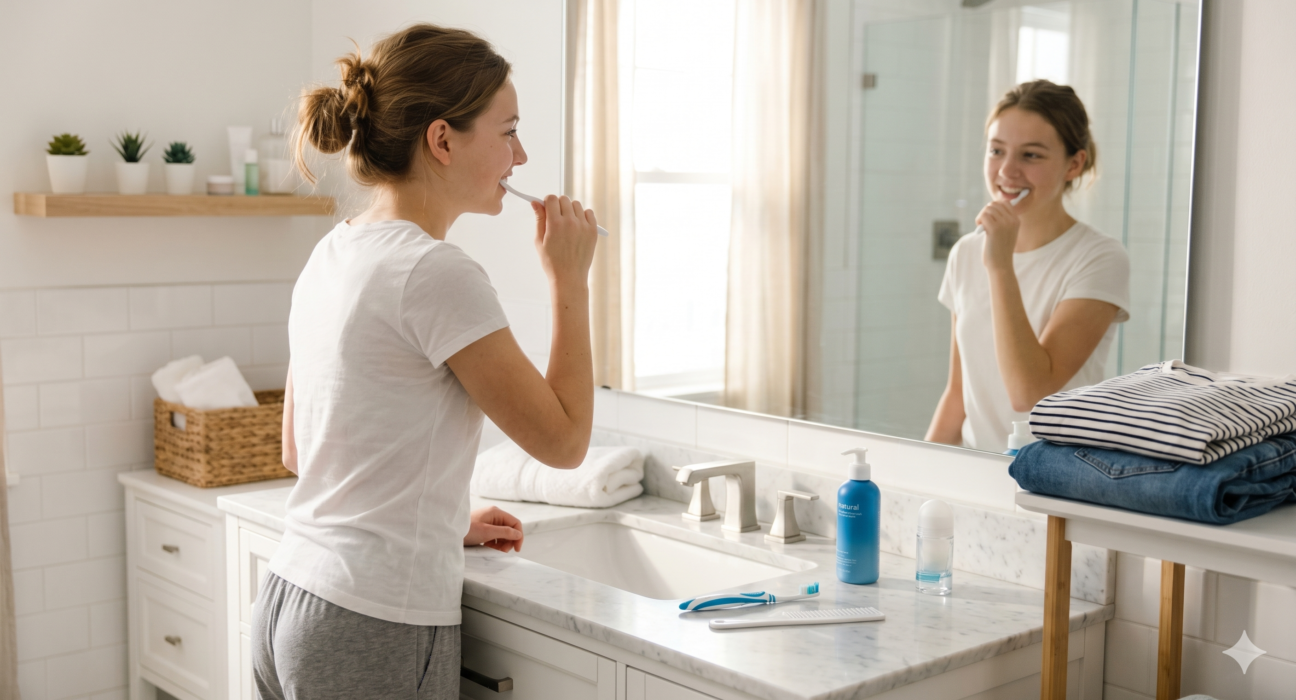
Start by brushing your teeth properly. Morning breath is common, and brushing helps remove plaque, food particles, and odor. Use fluoride toothpaste and take enough time instead of brushing quickly. If possible, gently clean the tongue too because it can hold bacteria that cause bad breath.
Next, wash your face with a gentle cleanser or plain water if your skin is sensitive. Teen skin can become oily, especially around the forehead, nose, and chin. Washing the face in the morning helps remove sweat and oil that build up overnight.
If you sweat at night or feel sticky in the morning, take a quick shower. Pay attention to underarms, feet, neck, back, and private areas. These areas can collect sweat and odor more easily. After bathing, dry your body properly with a clean towel.
Use deodorant on clean, dry underarms. Deodorant works better after washing, not when it is applied over sweat. Wear clean underwear, clean socks, and fresh clothes. Even if your body is clean, dirty clothes can bring back odor quickly.
School Hygiene Habits for Teenagers
School days can be long. Teenagers sit in classrooms, walk between rooms, use shared desks, touch bags, phones, books, and sometimes sports equipment. Because of this, hygiene should continue during the day.
Handwashing is one of the simplest habits. Wash your hands before eating, after using the bathroom, after coughing or sneezing, and when you come home from school. If soap and water are not available, sanitizer can help, but proper handwashing is still better when hands are visibly dirty.
Keep a small hygiene pouch in your school bag if possible. It can include tissues, sanitizer, lip balm, a small comb, sanitary products if needed, and maybe a spare pair of socks on sports days. This does not need to be fancy. It just helps you stay prepared.
A clean routine can also support confidence and emotional comfort. Teenagers who feel fresh and organized may find it easier to follow simple mental wellness tips for teenagers along with daily self-care habits.
Avoid sharing personal items like towels, combs, lip balm, makeup, razors, toothbrushes, or face towels. Sharing these things can spread germs, skin irritation, or infections. It may feel harmless, but personal hygiene items should stay personal.
Teenagers who wear braces should be extra careful after lunch or snacks. Food can get stuck around brackets, so rinsing the mouth with water after eating can help until proper brushing is possible.
Teen Hygiene Tips for Sweat and Body Odor
Sweat itself is not always the main problem. Body odor usually happens when sweat mixes with bacteria on the skin. During puberty, sweat glands become more active, so teenagers may notice stronger odor than before.
The first step is regular bathing. A daily shower is helpful for many teenagers, especially in hot weather or after activity. If you play sports, exercise, or sweat a lot, showering afterward is a good habit.
Clothes matter too. Change underwear and socks every day. Do not wear the same sweaty shirt again without washing it. Sports uniforms should be washed regularly and should not stay inside a closed bag for days.
Feet can also smell if socks and shoes stay damp. Wash your feet, dry between the toes, wear clean socks, and let shoes air out. If shoes are always wet or closed, odor can become stronger.
Deodorant can help manage underarm smell, but it should be part of a full routine. Showering, clean clothes, and good laundry habits are just as important.
Simple Skin Care for Teenagers
Teenagers often deal with oily skin, pimples, blackheads, or acne. This can feel stressful, but the routine should stay gentle.
Wash your face twice a day: once in the morning and once before bed. Use a mild cleanser and avoid scrubbing too hard. Scrubbing does not remove acne faster. It can irritate the skin and make redness worse.
Do not pop pimples. It may feel tempting, but squeezing can cause marks, swelling, or infection. Also avoid using too many products at the same time. A simple routine is usually better than applying harsh creams, scrubs, masks, and random remedies all together.
Keep pillowcases clean because oil, sweat, and hair products can transfer to the skin while sleeping. Also try not to touch your face again and again during the day, especially with dirty hands.
If acne is painful, spreading, or leaving scars, it is better to ask a doctor or dermatologist for proper advice.
Hair and Scalp Hygiene
Hair care depends on hair type, weather, sweating, and personal routine. Some teenagers need to wash their hair more often, while others do not. The main sign is how your scalp feels. If it is oily, itchy, sweaty, or smells unpleasant, it may be time to wash.
Use shampoo properly and rinse it out fully. Leaving shampoo in the hair can make the scalp itchy or flaky. If you use hair gel, oil, spray, or styling products, wash your hair regularly to avoid buildup.
Combs and brushes also need cleaning sometimes. They collect oil, dust, and product residue. A clean comb keeps your hair routine fresher.
Night Hygiene Routine for Teens
Night routine is just as important as morning routine. A good night routine helps remove sweat, dirt, oil, and germs from the day.
Brush your teeth before sleeping. This helps protect teeth from food particles and plaque. Flossing once a day is also a useful habit, especially if food often gets stuck between teeth.
Wash your face before bed, especially if you were outside, sweating, or wearing sunscreen or makeup. Change into clean sleepwear. Avoid sleeping in the same clothes you wore outside all day.
Put dirty clothes in the laundry instead of leaving them on the bed or chair. Keep your towel dry after use because damp towels can smell bad and collect germs.
Teenagers can also build better hygiene by connecting it with other healthy habits for teenagers at home, such as better sleep, cleaner rooms, and a more organized routine.
Hygiene Mistakes Teenagers Should Avoid
Some hygiene mistakes are common during teenage years. One mistake is using perfume or deodorant instead of bathing. Fragrance can cover odor for a short time, but it does not clean the body.
Another mistake is wearing dirty socks or underwear again. These items collect sweat quickly and should be changed daily.
Many teens also use harsh skincare products because they want fast results. Strong scrubs, random home remedies, or too many acne products can irritate the skin. Gentle care is usually safer.
Not drying the body properly after a shower is another mistake. Damp areas, especially feet and skin folds, can become uncomfortable or smelly.
Skipping oral care is also common. Brushing only once a day may not be enough for fresh breath and healthy teeth. A proper morning and night routine is better.
Quick Hygiene Checklist for Teenagers
A simple daily checklist can make hygiene easier:
- Brush teeth morning and night
- Wash face twice daily
- Shower regularly, especially after sweating
- Use deodorant on clean underarms
- Wear clean underwear and socks
- Wash hands before eating
- Keep nails trimmed and clean
- Change sweaty clothes quickly
- Do not share personal hygiene items
- Keep towels and pillowcases clean
This checklist is easy to follow and covers the basics without making the routine feel too heavy.
Final Thoughts
Teen hygiene tips should feel simple, respectful, and realistic. Puberty brings changes, and hygiene routines need to change with them. More sweat, oily skin, body odor, and acne are normal parts of growing up, but daily care can make them easier to manage.
Teenagers do not need expensive products or a perfect routine. A clean body, fresh clothes, good oral care, handwashing, skin care, and clean personal items are enough to build confidence.
The best hygiene routine is the one a teenager can repeat every day. Start with the basics, stay consistent, and ask for help if acne, odor, skin irritation, or dental problems do not improve.
FAQs
1. What are the most useful teen hygiene tips?
The most useful teen hygiene tips include bathing regularly, brushing teeth twice daily, washing the face gently, using deodorant, wearing clean clothes, washing hands, changing sweaty clothes, and keeping nails clean.
2. Should teenagers shower every day?
Many teenagers benefit from a daily shower, especially during puberty, hot weather, or after sports. Teens who sweat more may need to shower more often to stay fresh and manage body odor.
3. Why do teenagers have stronger body odor?
During puberty, sweat glands become more active. When sweat mixes with bacteria on the skin, body odor can become stronger. Regular bathing, deodorant, and clean clothes can help.
4. How can teenagers keep their skin clean without irritating it?
Teenagers should wash their face gently twice a day, avoid harsh scrubbing, avoid popping pimples, and use simple products. If acne is painful or leaving marks, they should speak to a dermatologist.
5. What should teens keep in a school hygiene pouch?
A simple school hygiene pouch can include tissues, hand sanitizer, lip balm, a comb, sanitary products if needed, and a small pack of wipes. It helps teens stay fresh during long school days.
Author Bio
Pure Fit Day Self-Care Team writes easy health and hygiene guides for teens and families. Our content focuses on practical routines, clean habits, skin basics, confidence, and simple wellness steps that fit everyday school and home life.
References
- NHS Children’s Health — Hygiene for young people and teenagers
- Nemours KidsHealth — Hygiene Basics for Teens
- American Dental Association MouthHealthy — Brushing and flossing guidance
- Cleveland Clinic — Teen acne and skin care guidance
Disclaimer
This article is for general hygiene education only. It is not a medical diagnosis or treatment plan. If a teenager has severe acne, unusual body odor, skin infection, itching, rashes, dental pain, bleeding gums, or any hygiene-related concern that does not improve, they should speak with a qualified doctor, dentist, dermatologist, or healthcare professional.