
Easy Exercises for Seniors to Stay Active at Home
Many older adults believe exercise requires a gym membership, expensive equipment, or long workout sessions. In reality, an easy exercise for seniors can be as simple as standing up from a chair, walking through the house, or performing gentle stretches in the living room.
The body naturally changes with age, but staying active can help maintain strength, flexibility, balance, and confidence. Even a few minutes of movement each day can make daily activities easier and support long-term independence.
The best part is that most seniors can exercise safely from the comfort of home without needing special equipment or advanced fitness knowledge.
Common Challenges Seniors Face at Home
As people grow older, they may notice changes that affect daily movement.
Some common challenges include:
- Stiff joints
- Reduced flexibility
- Lower energy levels
- Balance concerns
- Difficulty standing for long periods
- Reduced muscle strength
These changes are common, but becoming less active can make them worse. Regular movement helps the body stay functional and supports a better quality of life.
Why Home Exercises Work So Well
Many seniors feel more comfortable exercising at home.
Home workouts offer several advantages:
- No travel required
- Comfortable environment
- Flexible schedule
- Safe pace
- Easy to modify
- Less pressure than a gym
An easy exercise for seniors performed consistently often produces better results than occasional intense workouts.
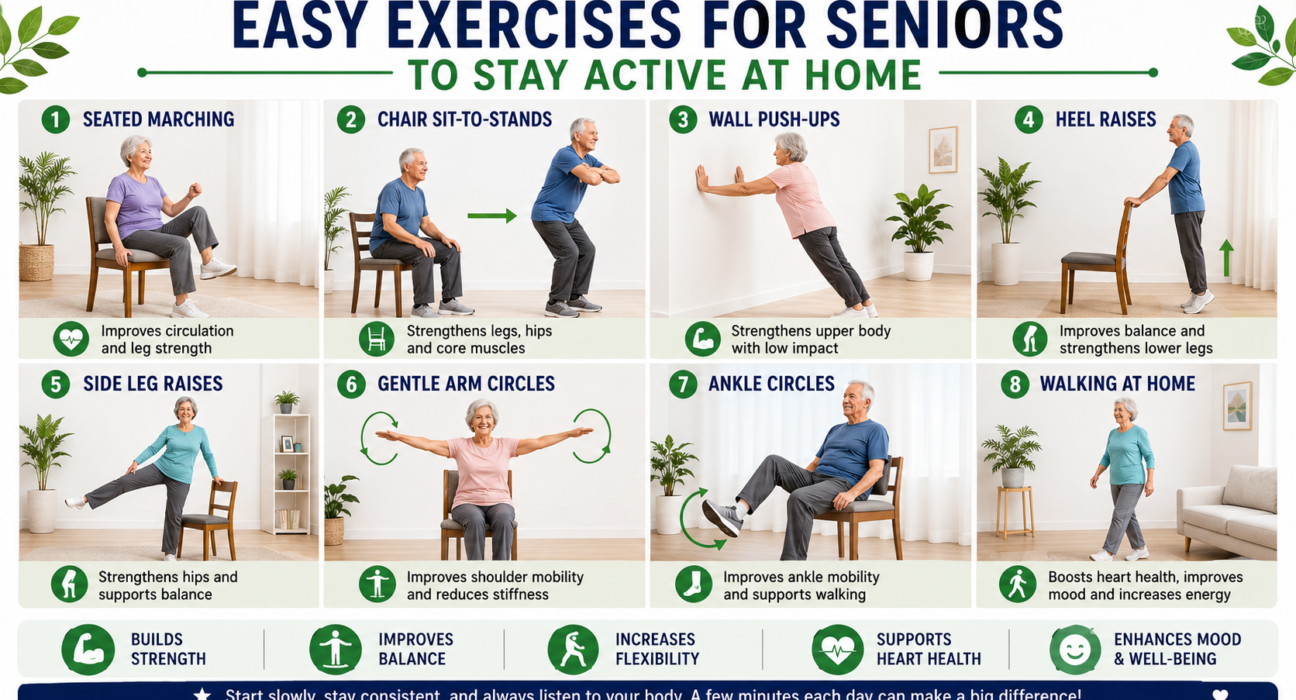
1. Chair Stands for Lower Body Strength
One of the most useful exercises for older adults is the chair stand.
Sit in a sturdy chair with your feet flat on the floor.
Slowly stand up and then sit back down with control.
Benefits include:
- Stronger legs
- Improved balance
- Better mobility
- Easier daily movements
This exercise directly supports activities such as standing from a sofa, getting out of bed, and using stairs.
Start with 5 repetitions and gradually increase.
2. Indoor Walking
Walking remains one of the simplest forms of exercise.
If outdoor walking is difficult, walking indoors can still provide benefits.
Try:
- Walking through hallways
- Walking around rooms
- Marching in place
- Walking while talking on the phone
Indoor walking may help support:
- Heart health
- Circulation
- Energy levels
- Mobility
Even ten minutes of walking can be beneficial.
3. Wall Push-Ups
Many seniors avoid upper-body exercises because traditional push-ups feel difficult.
Wall push-ups provide a safer alternative.
Stand facing a wall.
Place both hands against the wall and slowly bend your elbows.
Push yourself back to the starting position.
This easy exercise for seniors helps strengthen:
- Arms
- Shoulders
- Chest muscles
Start with 8 to 10 repetitions.
4. Heel Raises for Better Balance
Strong lower legs contribute to balance and walking confidence.
Stand behind a sturdy chair.
Slowly rise onto your toes.
Pause briefly before lowering your heels.
Benefits include:
- Better balance
- Stronger calves
- Improved walking stability
Try 10 repetitions.
5. Seated Knee Lifts
This exercise is ideal for seniors who prefer sitting while exercising.
Sit upright in a chair.
Lift one knee toward your chest.
Lower it and repeat with the other leg.
This movement helps activate:
- Hip muscles
- Leg muscles
- Core stability
It is also useful for improving circulation.
6. Gentle Shoulder Mobility Exercises
Shoulder stiffness can make everyday tasks difficult.
Simple shoulder movements can help maintain flexibility.
Try:
- Shoulder rolls
- Arm circles
- Gentle reaching exercises
These exercises may help make activities such as dressing, reaching shelves, and carrying light objects more comfortable.
7. Stretching for Flexibility
Flexibility supports comfortable movement.
Simple stretches may include:
- Neck stretches
- Shoulder stretches
- Calf stretches
- Hamstring stretches
- Side stretches
Stretching should feel gentle and comfortable.
Never force a stretch or move into pain.
A Simple Weekly Activity Plan
Many seniors find it easier to stay active when following a simple schedule.
Monday
Indoor walking and stretching
Tuesday
Chair exercises and balance practice
Wednesday
Walking and shoulder mobility exercises
Thursday
Chair stands and heel raises
Friday
Walking and flexibility exercises
Saturday
Light activity such as gardening or household movement
Sunday
Gentle stretching and recovery
The goal is not perfection. The goal is regular movement.
Mistakes Seniors Should Avoid
Many people unintentionally make exercise more difficult than it needs to be.
Doing Too Much Too Soon
Starting aggressively often leads to soreness and frustration.
Skipping Warm-Ups
A few minutes of gentle movement can prepare muscles and joints for exercise.
Ignoring Balance Training
Balance is just as important as strength.
Sitting for Long Periods
Even short movement breaks throughout the day can be beneficial.
Comparing Yourself to Others
Fitness should be based on your own abilities and comfort level.
How Exercise Supports Independence
One of the biggest benefits of an easy exercise for seniors routine is maintaining independence.
Regular movement can help support:
- Standing from chairs
- Carrying groceries
- Walking comfortably
- Climbing stairs
- Household tasks
- Daily confidence
The stronger and more mobile the body remains, the easier everyday life often feels.
Combining Exercise with Healthy Habits
Exercise works best when combined with other healthy lifestyle habits.
Good sleep, hydration, balanced meals, and personal care all contribute to overall wellness.
If you would like additional guidance on maintaining mobility and strength, you can also read our guide on Senior Fitness Tips for Better Strength and Mobility.
Together, these habits can support a healthier and more active lifestyle.
Final Thoughts
An easy exercise for seniors routine does not need to be complicated.
Simple activities such as chair stands, walking, stretching, wall push-ups, heel raises, and seated knee lifts can help support strength, mobility, balance, and independence.
The most important thing is consistency.
A few minutes of movement every day can help seniors stay active, confident, and comfortable while continuing to enjoy everyday life.
FAQs
1. What is the best easy exercise for seniors?
Walking, chair stands, stretching, and heel raises are among the safest and most effective options.
2. How often should seniors exercise at home?
Most seniors benefit from regular movement several days each week.
3. Can seniors build strength without going to a gym?
Yes. Many effective exercises can be performed safely at home using body weight or household items.
4. Are chair exercises effective?
Yes. Chair exercises help improve strength, mobility, circulation, and confidence.
5. Is walking indoors as helpful as outdoor walking?
Indoor walking can still support mobility, circulation, and overall activity levels.
6. What should seniors do before exercising?
A short warm-up with gentle movements helps prepare the body.
7. Which exercise helps improve balance?
Heel raises, chair-supported balance exercises, and walking can help improve stability.
8. When should seniors stop exercising?
Exercise should stop if there is severe pain, dizziness, chest discomfort, or unusual symptoms.
Author Bio
About the Author
Margaret Lewis writes about healthy aging, senior fitness, mobility, and independent living. She focuses on practical wellness strategies that help older adults stay active, confident, and engaged in daily life.
References
- National Institute on Aging (NIA) – Exercise and Physical Activity for Older Adults
- American College of Sports Medicine (ACSM) – Exercise Guidelines for Older Adults
- National Council on Aging (NCOA) – Healthy Aging Programs
- MedlinePlus – Senior Health and Exercise
- Arthritis Foundation – Physical Activity for Older Adults
Disclaimer
Medical Disclaimer
This article is intended for educational purposes only and does not replace professional medical advice. Seniors with chronic health conditions, recent surgeries, mobility limitations, balance concerns, or other medical conditions should consult a qualified healthcare provider before beginning a new exercise routine.
FAQs
1. What are the easiest exercises for seniors at home?
Some of the easiest exercises for seniors include seated marching, chair sit-to-stands, wall push-ups, heel raises, gentle stretching, and indoor walking. These exercises require little to no equipment and can be performed safely at home.
2. How often should seniors exercise?
Most seniors can benefit from some form of physical activity on most days of the week. Even 10–15 minutes of daily movement can support strength, mobility, and overall health.
3. Can seniors exercise without going to a gym?
Yes. Many effective senior exercises can be performed at home using a sturdy chair, body weight, and simple movements. A gym is not necessary to stay active.
4. Are chair exercises effective for older adults?
Yes. Chair exercises help improve strength, circulation, flexibility, and mobility while reducing the risk of falls. They are especially useful for seniors with limited mobility.
5. What should seniors do if they feel pain while exercising?
Exercise should not cause sharp pain. If pain, dizziness, or unusual discomfort occurs, stop exercising and rest. Consult a healthcare professional if symptoms continue.
6. Does walking count as exercise for seniors?
Absolutely. Walking is one of the best forms of exercise for older adults because it supports heart health, balance, mobility, and mental well-being.
7. How can seniors improve balance at home?
Simple exercises such as heel raises, side leg raises, weight shifting, and chair-supported balance practice can help improve stability and confidence.
8. Is it too late to start exercising after age 60 or 70?
No. Many older adults begin exercising later in life and still experience improvements in strength, mobility, flexibility, and overall quality of life.
Author Bio
About the Author
PureFitDay Editorial Team is dedicated to creating practical health, wellness, and fitness content that helps readers build healthier lifestyles. Our goal is to provide easy-to-understand information on senior fitness, healthy aging, body care, nutrition, and overall well-being through simple and actionable advice.
References
- Centers for Disease Control and Prevention (CDC) – Physical Activity for Older Adults
https://www.cdc.gov/physical-activity-basics/guidelines/older-adults.html - National Institute on Aging (NIA) – Exercise and Physical Activity for Older Adults
https://www.nia.nih.gov/health/exercise-and-physical-activity - World Health Organization (WHO) – Physical Activity Guidelines
https://www.who.int/news-room/fact-sheets/detail/physical-activity - Harvard Health Publishing – Exercise and Aging
https://www.health.harvard.edu/exercise-and-fitness - Mayo Clinic – Fitness and Exercise for Older Adults
https://www.mayoclinic.org/healthy-lifestyle/fitness
Disclaimer
Medical Disclaimer:
The information provided in this article is for educational and informational purposes only and should not be considered medical advice. Always consult a qualified healthcare professional before starting any new exercise program, especially if you have existing medical conditions, injuries, or mobility limitations. Individual fitness needs and abilities may vary. PureFitDay is not responsible for any injuries or health issues resulting from the use of information presented in this article.
FAQs
1. What are the easiest exercises for seniors at home?
Some of the easiest exercises for seniors include seated marching, chair sit-to-stands, wall push-ups, heel raises, gentle stretching, and indoor walking. These exercises require little to no equipment and can be performed safely at home.
2. How often should seniors exercise?
Most seniors can benefit from some form of physical activity on most days of the week. Even 10–15 minutes of daily movement can support strength, mobility, and overall health.
3. Can seniors exercise without going to a gym?
Yes. Many effective senior exercises can be performed at home using a sturdy chair, body weight, and simple movements. A gym is not necessary to stay active.
4. Are chair exercises effective for older adults?
Yes. Chair exercises help improve strength, circulation, flexibility, and mobility while reducing the risk of falls. They are especially useful for seniors with limited mobility.
5. What should seniors do if they feel pain while exercising?
Exercise should not cause sharp pain. If pain, dizziness, or unusual discomfort occurs, stop exercising and rest. Consult a healthcare professional if symptoms continue.
6. Does walking count as exercise for seniors?
Absolutely. Walking is one of the best forms of exercise for older adults because it supports heart health, balance, mobility, and mental well-being.
7. How can seniors improve balance at home?
Simple exercises such as heel raises, side leg raises, weight shifting, and chair-supported balance practice can help improve stability and confidence.
8. Is it too late to start exercising after age 60 or 70?
No. Many older adults begin exercising later in life and still experience improvements in strength, mobility, flexibility, and overall quality of life.
Author Bio
About the Author
PureFitDay Editorial Team is dedicated to creating practical health, wellness, and fitness content that helps readers build healthier lifestyles. Our goal is to provide easy-to-understand information on senior fitness, healthy aging, body care, nutrition, and overall well-being through simple and actionable advice.
References
- Centers for Disease Control and Prevention (CDC) – Physical Activity for Older Adults
https://www.cdc.gov/physical-activity-basics/guidelines/older-adults.html - National Institute on Aging (NIA) – Exercise and Physical Activity for Older Adults
https://www.nia.nih.gov/health/exercise-and-physical-activity - World Health Organization (WHO) – Physical Activity Guidelines
https://www.who.int/news-room/fact-sheets/detail/physical-activity - Harvard Health Publishing – Exercise and Aging
https://www.health.harvard.edu/exercise-and-fitness - Mayo Clinic – Fitness and Exercise for Older Adults
https://www.mayoclinic.org/healthy-lifestyle/fitness
Disclaimer
Medical Disclaimer:
The information provided in this article is for educational and informational purposes only and should not be considered medical advice. Always consult a qualified healthcare professional before starting any new exercise program, especially if you have existing medical conditions, injuries, or mobility limitations. Individual fitness needs and abilities may vary. PureFitDay is not responsible for any injuries or health issues resulting from the use of information presented in this article.