

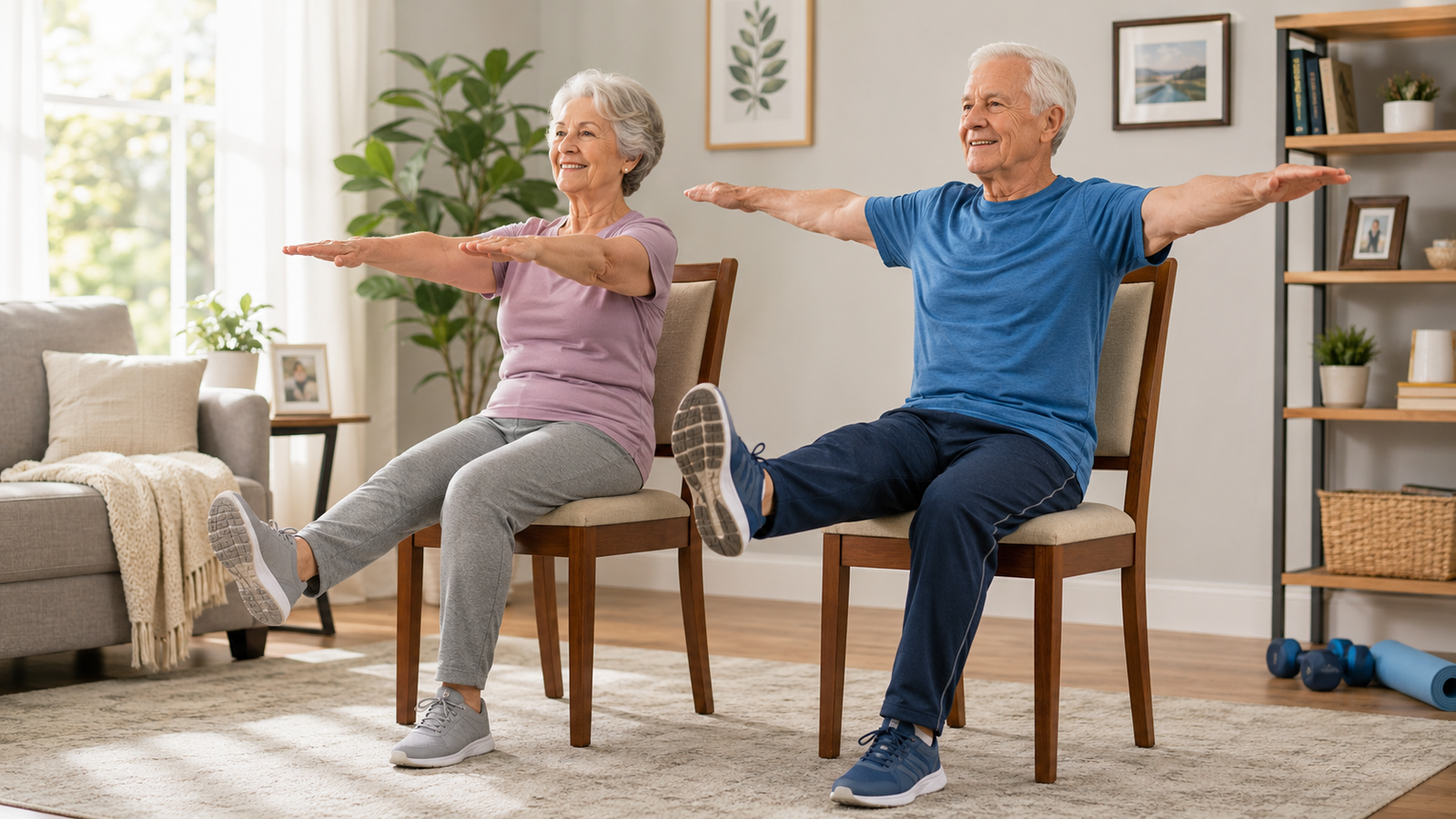
Chair Exercises for Seniors with Limited Mobility
Chair exercises are a helpful way for seniors to stay active, especially when standing workouts feel difficult or unsafe. Many older adults want to exercise, but balance problems, joint stiffness, weakness, or limited mobility can make regular workouts challenging.
The good news is that movement does not always need to happen while standing.
A sturdy chair can provide support, comfort, and safety while still allowing seniors to move their arms, legs, shoulders, ankles, and core muscles. For many people, chair exercises are a practical way to build strength and confidence without putting too much pressure on the body.
These exercises can be done at home, in a living room, bedroom, or even beside a dining table. They do not require expensive equipment. Most of the time, all you need is a stable chair, comfortable clothing, and a few minutes of regular practice.
Why Chair Exercises Are Helpful for Seniors
Chair exercises are useful because they make movement more accessible.
Some seniors may not feel steady enough to stand for long periods. Others may feel tired quickly or worry about falling. A chair provides support and allows the body to move in a safer way.
Chair exercises can help support:
- Better circulation
- Stronger muscles
- Improved flexibility
- Better posture
- Reduced stiffness
- More confidence
- Daily mobility
They are also useful for seniors recovering from inactivity or those who want a gentle starting point.
The goal is not to exercise perfectly. The goal is to move regularly and safely.
Choose the Right Chair
Before starting, it is important to choose a safe chair.
Use a sturdy chair that does not roll or slide. Avoid chairs with wheels, soft cushions, or unstable legs. A dining chair or firm armchair can work well.
Place the chair on a flat surface. Keep the area around you clear so there are no objects that could cause tripping.
Sit upright with your feet flat on the floor.
Good posture helps make each movement more effective and comfortable.
Start with Seated Marching
Seated marching is one of the easiest chair exercises for seniors.
Sit tall with both feet on the floor. Slowly lift one knee, lower it, and then lift the other knee. Continue alternating legs as if marching while seated.
This movement helps activate the legs and supports circulation.
It is a good warm-up exercise because it gently wakes up the lower body.
Start with 30 seconds. If that feels comfortable, slowly increase to one minute.
Seated Arm Raises
Arm raises help improve shoulder movement and upper body strength.
Sit upright and keep your feet flat on the floor. Slowly raise both arms in front of you or out to the sides. Lift only as high as feels comfortable, then lower your arms slowly.
Do not force the movement.
This exercise can help with daily tasks like reaching for items, lifting light objects, or getting dressed.
Try 8 to 10 repetitions.
Chair Leg Extensions
Leg extensions help strengthen the front of the thighs.
Sit tall in your chair. Slowly extend one leg forward until it is straight. Hold for a moment, then lower it back down. Repeat with the other leg.
Move slowly and avoid kicking the leg.
This exercise can support leg strength, knee control, and easier walking.
Start with 5 to 8 repetitions on each side.
Seated Heel and Toe Raises
This is a simple exercise for the lower legs and ankles.
Sit with both feet flat on the floor. Lift your heels while keeping your toes on the floor. Lower them down. Then lift your toes while keeping your heels on the floor.
This movement helps activate the calves, ankles, and feet.
It may also support walking comfort and circulation.
Try 10 repetitions of each movement.
Gentle Shoulder Rolls
Shoulder stiffness is common among older adults, especially for those who sit for long periods.
Sit upright and gently roll your shoulders forward in small circles. After a few repetitions, roll them backward.
Keep the movement slow and relaxed.
This exercise can help reduce tension and improve upper body comfort.
Shoulder rolls are also useful before doing arm exercises.
Seated Side Bends
Side bends help improve gentle flexibility through the waist and sides of the body.
Sit upright with your feet flat on the floor. Slowly lean a little to one side, then return to the center. Repeat on the other side.
Do not bend too far.
The movement should feel gentle and controlled.
This exercise can help reduce stiffness and support better posture.
Seated Ankle Circles
Ankle circles are useful for mobility and balance support.
Sit comfortably and lift one foot slightly off the floor. Slowly rotate your ankle in a circle. After a few circles, reverse direction. Repeat with the other foot.
This simple exercise helps keep the ankles moving and may support safer walking.
Ankles are easy to ignore, but they play an important role in standing and balance.
Seated Forward Reach
The seated forward reach helps stretch the back and improve gentle movement.
Sit near the front of the chair with both feet flat on the floor. Slowly reach your hands toward your knees or shins. Return to the starting position carefully.
Do not force your body forward.
If you feel dizzy or uncomfortable, stop and sit upright.
This movement should feel light and easy.
Chair Exercises and Daily Independence
Chair exercises are not only about fitness.
They can help with real daily tasks.
Stronger legs may make it easier to stand from a chair. Better shoulder movement may help with dressing. Improved ankle mobility may support walking. Better posture may help reduce discomfort during daily sitting.
Small movements can support independence in quiet but meaningful ways.
If you want more simple senior movement ideas, you can also read our guide on Easy Exercises for Seniors to Stay Active at Home.
Chair exercises and home exercises work well together for seniors who want safe and simple fitness habits.
Create a Simple Chair Exercise Routine
A basic chair routine does not need to be long.
Here is an easy example:
Morning
- Seated marching for 1 minute
- Shoulder rolls
- Arm raises
- Heel and toe raises
Afternoon
- Leg extensions
- Ankle circles
- Seated side bends
Evening
- Gentle forward reach
- Slow breathing
- Light shoulder movement
This routine can be adjusted based on comfort and ability.
Even 10 minutes can be helpful when done regularly.
Safety Tips for Chair Exercises
Safety should always come first.
Before beginning, make sure the chair is stable. Move slowly. Keep breathing normally. Do not hold your breath during movement.
Stop if you feel:
- Sharp pain
- Dizziness
- Chest discomfort
- Unusual shortness of breath
- Sudden weakness
Seniors with medical conditions, recent surgery, heart concerns, or serious mobility problems should speak with a healthcare professional before starting a new routine.
Final Thoughts
Chair exercises for seniors are a simple and safe way to stay active, especially for older adults with limited mobility.
You do not need a gym, heavy equipment, or difficult workouts. Seated marching, arm raises, leg extensions, ankle circles, shoulder rolls, and gentle stretches can all support strength, flexibility, circulation, and daily comfort.
The most important thing is consistency.
Start slowly. Use a sturdy chair. Move gently. Rest when needed.
A few minutes of chair exercises each day can help seniors feel more active, confident, and comfortable at home.
FAQs
1. Are chair exercises good for seniors?
Yes. Chair exercises can help seniors improve strength, flexibility, circulation, posture, and mobility in a safe seated position.
2. Can chair exercises help with limited mobility?
Yes. Chair exercises are especially useful for seniors with limited mobility because they reduce the need for standing while still allowing gentle movement.
3. How often should seniors do chair exercises?
Many seniors can benefit from chair exercises several days a week. Even 10 minutes per day can be helpful when done consistently.
4. What is the easiest chair exercise for seniors?
Seated marching is one of the easiest chair exercises. It helps activate the legs and supports circulation.
5. Do chair exercises improve balance?
Chair exercises can support balance indirectly by strengthening legs, ankles, and core muscles. Standing balance exercises may also be added when safe.
6. Can seniors do chair exercises every day?
Some gentle chair exercises can be done daily, but seniors should listen to their body and rest when needed.
7. Do chair exercises require equipment?
No. Most chair exercises only require a sturdy chair. Light resistance bands or small hand weights can be added later if appropriate.
8. When should seniors stop exercising?
Seniors should stop if they feel sharp pain, dizziness, chest discomfort, unusual shortness of breath, or sudden weakness.
Author Bio
About the Author
PureFitDay Editorial Team creates practical and easy-to-understand health, wellness, and fitness content for readers who want to build healthier daily habits. Our content focuses on senior fitness, healthy aging, mobility, body care, nutrition, and simple wellness routines.
References
- Centers for Disease Control and Prevention (CDC) – Physical Activity for Older Adults
https://www.cdc.gov/physical-activity-basics/guidelines/older-adults.html - National Institute on Aging (NIA) – Exercise and Physical Activity
https://www.nia.nih.gov/health/exercise-and-physical-activity - World Health Organization (WHO) – Physical Activity
https://www.who.int/news-room/fact-sheets/detail/physical-activity - Harvard Health Publishing – Exercise and Aging
https://www.health.harvard.edu/exercise-and-fitness - Mayo Clinic – Fitness and Exercise
https://www.mayoclinic.org/healthy-lifestyle/fitness
Disclaimer
Medical Disclaimer
The information provided in this article is for educational and informational purposes only and should not be considered medical advice. Seniors should consult a qualified healthcare professional before starting any new exercise routine, especially if they have heart conditions, balance concerns, joint pain, injuries, recent surgery, or mobility limitations. Individual fitness levels and health needs may vary.
“`




Leave feedback about this