

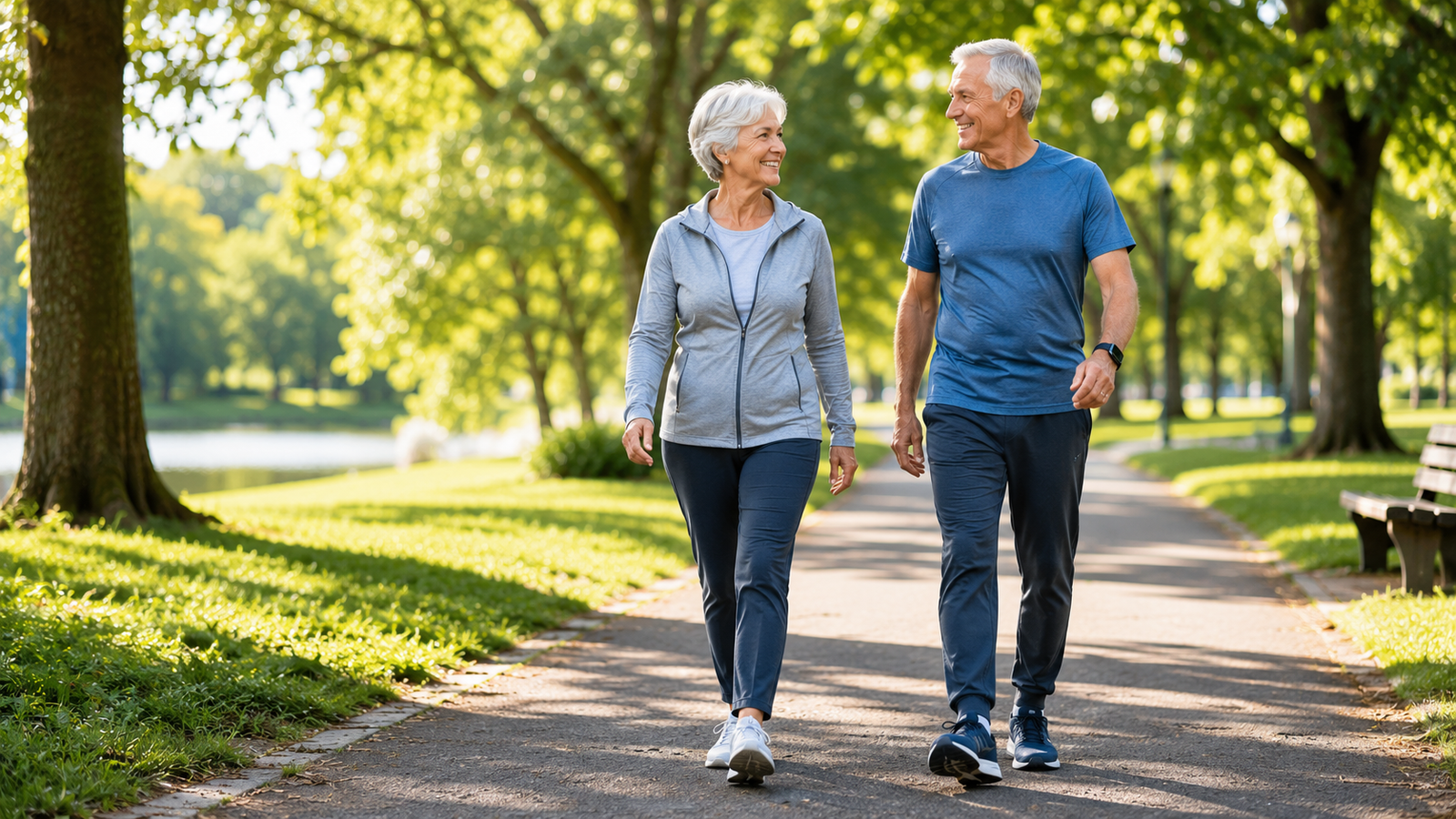
Walking Benefits for Seniors and Healthy Aging
Walking is one of the simplest forms of exercise, but it can be one of the most helpful habits for older adults.
Many seniors think fitness means difficult workouts, gym machines, or long exercise sessions. In reality, walking is often enough to help the body stay active, mobile, and stronger over time. It does not require special equipment. It does not need a gym membership. It can be done outdoors, indoors, in a hallway, at a park, or even around the house.
That is why walking is such a practical exercise for seniors.
As people get older, daily movement becomes more important. Muscles can become weaker, joints may feel stiff, and balance may not feel as steady as before. Regular walking can help support strength, flexibility, circulation, mood, and independence.
The goal is not to walk fast or cover long distances immediately. The goal is to keep moving in a safe and comfortable way.
Why Walking Is Good for Seniors
Walking is gentle, natural, and easy to adjust according to fitness level.
Some seniors may walk for twenty or thirty minutes at a time. Others may begin with only five minutes. Both are useful starting points.
Walking helps keep the body active without placing too much stress on the joints. It also supports daily activities such as standing, climbing stairs, carrying light items, and moving around the home.
A regular walking habit can support:
- Better mobility
- Stronger legs
- Improved balance
- Healthier heart function
- Better mood
- More energy
- Greater confidence
Small walks repeated consistently can make a noticeable difference.
Walking Supports Heart Health
One of the most important walking benefits for seniors is heart support.
Walking increases movement, encourages better circulation, and helps the body stay active. It is a simple way to support cardiovascular wellness without doing intense exercise.
A slow or moderate walk can still be helpful.
Older adults do not need to push themselves too hard. Even a comfortable pace can help the body stay engaged.
For seniors who are new to exercise, short walks are a safe place to begin. Over time, the distance or duration can be increased gradually.
Walking Helps Maintain Leg Strength
Strong legs are important for independence.
Everyday tasks depend on leg strength. Getting out of a chair, walking to the bathroom, going up stairs, standing in the kitchen, or walking outside all require lower-body support.
Walking naturally uses the legs, hips, ankles, and feet.
When done regularly, it can help keep these muscles active. This may make daily movement easier and more comfortable.
For seniors who feel weak or tired quickly, starting with a short indoor walk can still be beneficial.
The important thing is to move regularly.
Walking Can Improve Balance
Balance often becomes a concern with age.
Many older adults become afraid of falling, and that fear can make them move less. Unfortunately, moving less may lead to weaker muscles and less confidence.
Walking can help support balance because it trains the body to move, shift weight, and stay steady.
A safe walking routine can slowly build confidence.
For better safety, seniors can:
- Walk on flat surfaces
- Wear supportive shoes
- Avoid slippery areas
- Use a walking stick if needed
- Walk with a family member or friend
Safety should always come first.
Walking Supports Joint Mobility
Joints can become stiff when the body is not moved regularly.
Walking helps keep the knees, hips, ankles, and back moving gently. This can reduce the feeling of stiffness and support better daily comfort.
Many seniors feel better after a short walk because movement helps the body loosen up.
There is no need to walk fast.
A calm, steady pace is enough.
Walking regularly can be especially helpful in the morning when the body may feel stiff after sleeping.
Walking Can Improve Mood
Walking is not only good for the body.
It can also support mental well-being.
Many seniors feel more positive after walking, especially outdoors. Fresh air, sunlight, nature, and gentle movement can help reduce stress and improve mood.
Even a short walk around the garden or neighborhood can feel refreshing.
Walking can also provide a sense of routine and purpose.
For seniors who spend a lot of time indoors, going for a walk may help break the day in a healthy way.
Walking Encourages Independence
Independence matters deeply to many older adults.
Being able to move comfortably helps seniors feel more confident in daily life.
Walking supports the ability to perform simple tasks without always needing assistance. It can help with shopping, visiting neighbors, attending appointments, or enjoying time outdoors.
The more comfortable a person feels while walking, the easier daily life often becomes.
This is one of the biggest reasons walking should be part of a senior fitness routine.
Start with Short Walks
Seniors who are not used to walking should begin slowly.
There is no need to walk for thirty minutes on the first day.
Start with five to ten minutes.
If that feels comfortable, slowly increase the time.
A simple walking plan may look like this:
Week 1
Walk for 5–10 minutes at a comfortable pace.
Week 2
Increase to 10–15 minutes if your body feels ready.
Week 3
Try walking a little longer or adding one extra walk during the day.
Progress should be gradual.
The body needs time to adjust.
Indoor Walking Is Also Useful
Not every senior can walk outside every day.
Weather, safety concerns, traffic, or limited mobility may make outdoor walking difficult.
That does not mean walking should stop.
Indoor walking can still help.
Seniors can walk:
- Around the living room
- Through a hallway
- Around the kitchen
- Inside a mall
- In a community center
- While watching television
Even walking inside the house counts as movement.
If you want more simple home movement ideas, you can also read our guide on Easy Exercises for Seniors to Stay Active at Home.
Walking and home exercises work well together for senior fitness.
Wear Comfortable Shoes
Shoes matter more than many people realize.
Poor footwear can make walking uncomfortable and may increase the risk of slips or falls.
Seniors should choose shoes that feel comfortable, supportive, and stable.
Good walking shoes should:
- Fit properly
- Support the feet
- Have non-slip soles
- Feel comfortable for daily walking
- Avoid being too loose or too tight
Comfortable shoes can make walking safer and more enjoyable.
Walk with Good Posture
Posture can affect how walking feels.
Try to keep the head up, shoulders relaxed, and arms moving naturally. Avoid looking down constantly unless checking the path for safety.
Good posture can help reduce strain and make walking feel smoother.
Seniors should move at a pace that feels natural.
There is no need to rush.
The best walking pace is the one that allows steady breathing and comfortable movement.
Make Walking Enjoyable
Walking becomes easier to maintain when it feels enjoyable.
Some seniors like walking with a friend or family member. Others enjoy listening to soft music, birds, or natural sounds.
Walking in a park, garden, or quiet street can make the activity feel peaceful.
A walking routine does not have to feel like exercise.
It can feel like fresh air, relaxation, and a healthy break from sitting.
Stay Hydrated
Water is important before and after walking.
Seniors may not always feel thirsty, but hydration still matters.
Keep water nearby, especially during warm weather.
If walking outdoors, avoid extreme heat and choose cooler times of the day, such as morning or evening.
Hydration supports energy and overall comfort during activity.
Listen to Your Body
Walking should feel helpful, not painful.
If there is sharp pain, dizziness, chest discomfort, or unusual shortness of breath, stop and rest.
Seniors with medical conditions, heart concerns, joint pain, or balance issues should speak with a healthcare professional before starting a new walking routine.
Everyone’s body is different.
The goal is safe and steady progress.
Final Thoughts
Walking is one of the best exercises for seniors because it is simple, gentle, and easy to fit into daily life.
It can support heart health, leg strength, balance, mobility, mood, energy, and independence. It can be done outdoors or indoors, alone or with others, for a few minutes or longer depending on ability.
The most important thing is consistency.
Start slowly. Wear comfortable shoes. Choose safe walking areas. Rest when needed. Keep water nearby.
A short daily walk may seem simple, but over time it can help seniors feel stronger, steadier, and more confident.
Healthy aging often begins with small steps.
And walking is one of the best steps to start with.
FAQs
1. What are the main walking benefits for seniors?
Walking can support heart health, leg strength, balance, mobility, mood, energy, and independence in older adults.
2. How long should seniors walk each day?
Many seniors can start with 5–10 minutes per day and slowly increase the time as their comfort and stamina improve.
3. Is walking enough exercise for seniors?
Walking is a great exercise, but it works best when combined with light strength, stretching, and balance exercises.
4. Can seniors walk indoors?
Yes. Indoor walking around the home, hallway, mall, or community center can still support movement and fitness.
5. What should seniors wear while walking?
Comfortable clothing and supportive, non-slip shoes are recommended for safer and more comfortable walking.
6. Is walking good for balance?
Yes. Regular walking can help improve stability and confidence, especially when done safely on flat surfaces.
7. Should seniors walk fast?
No. Seniors should walk at a comfortable pace that allows steady breathing and safe movement.
8. When should seniors avoid walking?
Seniors should avoid walking during extreme heat, slippery conditions, severe pain, dizziness, or when advised by a healthcare professional.
Author Bio
About the Author
PureFitDay Editorial Team creates simple, practical, and easy-to-understand health and fitness content for readers who want to live healthier lives. Our content focuses on senior fitness, healthy aging, wellness routines, body care, and everyday habits that support long-term well-being.
References
- Centers for Disease Control and Prevention (CDC) – Physical Activity for Older Adults
https://www.cdc.gov/physical-activity-basics/guidelines/older-adults.html - National Institute on Aging (NIA) – Walking and Exercise for Older Adults
https://www.nia.nih.gov/health/exercise-and-physical-activity - World Health Organization (WHO) – Physical Activity
https://www.who.int/news-room/fact-sheets/detail/physical-activity - Harvard Health Publishing – Walking for Health
https://www.health.harvard.edu/exercise-and-fitness/walking-your-steps-to-health - Mayo Clinic – Walking: Trim Your Waistline, Improve Your Health
https://www.mayoclinic.org/healthy-lifestyle/fitness/in-depth/walking/art-20046261
Disclaimer
Medical Disclaimer:
The information provided in this article is for educational and informational purposes only and should not be considered medical advice. Seniors should consult a qualified healthcare professional before starting any new walking or exercise routine, especially if they have heart conditions, joint pain, balance concerns, injuries, or other medical issues. Individual fitness levels and health needs may vary.

Leave feedback about this