

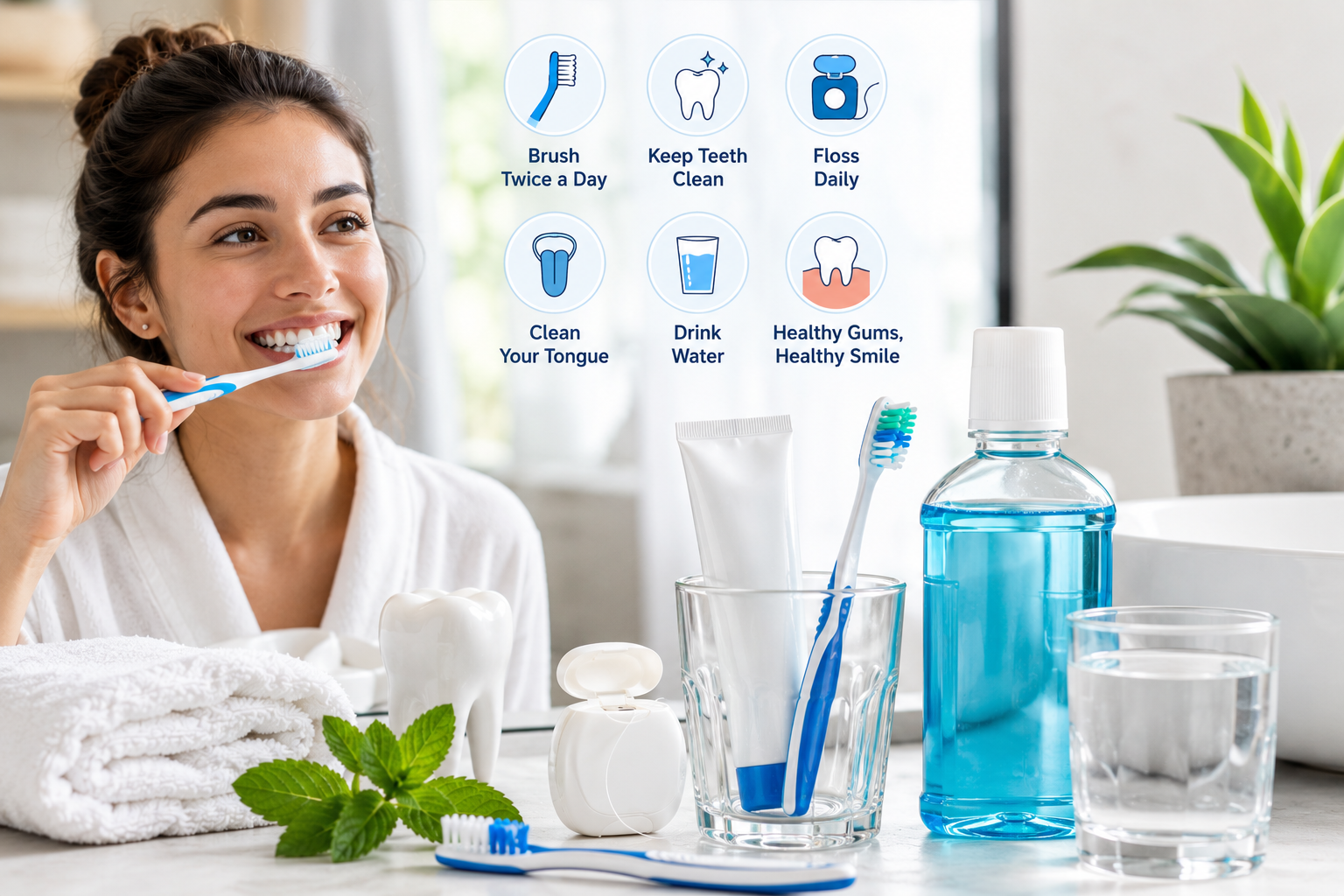
Simple Oral Hygiene Habits for Healthy Teeth and Fresh Breath
Most people brush their teeth every day, but very few actually think about oral hygiene beyond that. It becomes part of the routine. You wake up, brush quickly, rinse, and move on with your day. At night, you may do the same thing before going to bed. Because it feels so normal, it is easy to assume that brushing alone is enough.
The reality is a little different.
A healthy mouth needs regular attention, just like the rest of your body. Clean teeth, fresh breath, and healthy gums are not usually the result of one product or a perfect smile. They are often the result of simple habits repeated consistently over time.
Good oral hygiene can make a surprising difference in daily life. When your mouth feels fresh and clean, you naturally feel more comfortable talking to people, smiling, attending meetings, or spending time with friends and family. On the other hand, bad breath, plaque buildup, food trapped between teeth, or irritated gums can become frustrating and sometimes embarrassing.
The good news is that maintaining better oral hygiene does not require expensive treatments or a complicated routine. Most people can improve their oral health simply by paying more attention to a few basic habits.
Why Oral Hygiene Matters More Than Appearance
When people think about oral care, they often focus on appearance first.
They want whiter teeth, a brighter smile, or cleaner-looking teeth in photographs. While there is nothing wrong with wanting a nice smile, oral hygiene is about much more than appearance.
Your mouth is used constantly throughout the day. You eat, drink, talk, laugh, and breathe through it. Every meal leaves behind tiny food particles. Drinks can leave residue on the teeth. Bacteria naturally exist inside the mouth and can build up throughout the day.
If these things are not cleaned regularly, they can lead to plaque, unpleasant breath, and gum discomfort over time.
That is why oral hygiene should be viewed as part of overall personal care rather than simply a cosmetic routine.
A clean mouth feels healthier, fresher, and more comfortable every day.
Your Mouth Works All Day Long
Think about everything your mouth does in a normal day.
You might start your morning with coffee or tea. Then breakfast. Maybe a snack later. Lunch. Another drink. Dinner. More snacks. Throughout all of this, your teeth, gums, and tongue are constantly exposed to food and beverages.
Many people never stop to consider how much activity takes place inside the mouth every day.
Food particles can settle between teeth. Sugars can remain on surfaces. Drinks can leave residue behind. Even after a meal feels finished, small traces can remain.
This is exactly why daily oral care matters.
Without regular cleaning, these small leftovers continue to build up over time.
Brushing Is Important, But Technique Matters Too
Most people brush their teeth.
The bigger question is whether they brush properly.
Some people rush through the process in less than a minute. Others focus only on the front teeth because those are the teeth they can easily see. Some brush aggressively because they believe harder brushing means cleaner teeth.
In reality, good brushing is usually gentle and thorough.
Using a soft-bristled toothbrush is often the best approach. Instead of scrubbing aggressively, focus on cleaning all surfaces carefully. Brush the front, back, and chewing surfaces of your teeth. Pay attention to the gumline where plaque can build up.
Many dentists recommend brushing twice daily. Once in the morning and once before going to sleep.
Night brushing is especially important because it removes food particles and buildup that would otherwise remain in the mouth for hours while you sleep.
A few extra minutes spent brushing properly can make a noticeable difference over time.
Slow Down and Give Your Teeth Attention
One of the most common oral hygiene mistakes is rushing.
Mornings are busy. People are getting ready for work, school, meetings, or daily responsibilities. Because of this, brushing sometimes becomes a task people try to finish as quickly as possible.
But oral care is not a race.
Slowing down for an extra minute can help ensure every area of your mouth gets attention.
Think of brushing as part of your daily self-care routine rather than just another item on your checklist.
The goal is not to brush harder.
The goal is to brush better.
Do Not Ignore Your Tongue
A surprising number of people forget about their tongue completely.
They brush their teeth carefully, rinse their mouth, and finish their routine without ever cleaning their tongue.
The tongue can collect bacteria, food residue, and buildup throughout the day. In many cases, this contributes to bad breath even when teeth appear clean.
Cleaning your tongue is simple.
You can gently brush it with your toothbrush or use a tongue scraper if you prefer. There is no need to scrub aggressively. A gentle cleaning is usually enough.
Many people notice that their mouth feels noticeably fresher after adding this simple step to their routine.
Flossing Helps Where a Toothbrush Cannot
Even a good toothbrush cannot always reach every space between your teeth.
That is where flossing becomes useful.
Tiny food particles can become trapped between teeth throughout the day. Sometimes these particles remain hidden in areas that are difficult to reach with brushing alone.
Flossing helps remove debris from these tighter spaces.
Many people skip flossing because it feels inconvenient or unnecessary. Others only floss when they feel something stuck between their teeth.
However, making flossing a regular habit can help support a cleaner mouth and fresher breath.
You do not necessarily need a complicated flossing routine.
Even a few minutes each day can help.
Water Is One of the Simplest Oral Hygiene Tools
People often look for complicated solutions when some of the simplest habits can be surprisingly effective.
Drinking water is a good example.
Water helps rinse away leftover food particles and can help your mouth feel cleaner throughout the day. It also helps prevent excessive dryness.
A dry mouth can sometimes contribute to unpleasant breath because there is less saliva available to naturally clean the mouth.
After meals, coffee, tea, or sweet drinks, having a glass of water can help refresh your mouth.
Of course, water does not replace brushing or flossing.
But it is an easy habit that supports overall oral hygiene.
Be Mindful of Sugary Foods and Drinks
Most people enjoy sweets occasionally, and there is nothing wrong with that.
The issue usually comes from frequency rather than occasional treats.
When sugary foods and drinks are consumed regularly throughout the day, they leave residues behind that bacteria can feed on.
This does not mean you need to completely avoid desserts or sweet beverages.
Instead, focus on balance.
Drink water afterward when possible. Avoid sipping sugary drinks continuously for hours. Maintain a consistent brushing routine.
Small daily choices often have a bigger impact than dramatic short-term changes.
Fresh Breath Usually Starts with Better Habits
Many people immediately reach for gum, mints, or mouthwash when they notice bad breath.
These products can be helpful temporarily.
However, fresh breath often starts with consistent daily oral care rather than quick fixes.
Brushing thoroughly, cleaning the tongue, flossing regularly, and staying hydrated can all contribute to a fresher mouth.
Sometimes people are surprised by how much fresher their breath feels after simply improving their routine.
If persistent bad breath continues despite good oral hygiene habits, it may be worth speaking with a dental professional.
But for many people, improving the basics solves a large part of the problem.
Replace Your Toothbrush More Often Than You Think
A toothbrush does not last forever.
Over time, bristles become worn, bent, and less effective.
An older toothbrush may not clean as efficiently as a newer one.
Pay attention to the condition of your brush. If the bristles begin spreading outward or look worn down, it is probably time for a replacement.
Replacing your toothbrush regularly is one of the easiest oral hygiene habits to maintain.
It takes very little effort but supports better cleaning.
Gum Health Deserves Attention Too
People often focus entirely on their teeth while forgetting about their gums.
Healthy gums play a major role in overall oral health.
If your gums frequently bleed, feel swollen, or become uncomfortable while brushing, it may be a sign that they need additional attention.
Gentle brushing and proper flossing can help support gum health.
Ignoring gum problems rarely makes them disappear.
The earlier you pay attention to changes, the easier it usually is to address them.
Healthy teeth and healthy gums work together.
Both deserve care.
Professional Dental Care Still Matters
Daily oral hygiene is extremely important, but it does not replace professional dental care.
Many dental issues develop gradually.
At first, there may be no pain or obvious symptoms. Because of this, some people assume everything is fine until a problem becomes difficult to ignore.
Regular dental checkups can help identify concerns earlier.
Many people wait until something hurts before scheduling an appointment.
A better approach is treating dental visits as part of preventive care rather than emergency care.
Even simple checkups can provide valuable information about the condition of your teeth and gums.
Oral Hygiene Is Part of Personal Grooming
A clean mouth affects more than just dental health.
It can influence confidence as well.
Fresh breath and clean teeth can make social situations more comfortable. Whether you are attending a meeting, going to work, meeting friends, or speaking with customers, feeling confident about your oral hygiene can make a difference.
Oral care is one part of a larger personal care routine.
In fact, if you are looking to improve your overall hygiene habits, you may also find these Hand Washing Tips for Better Hygiene and Health helpful. Just like oral care, proper hand hygiene is a simple daily habit that supports cleanliness, confidence, and overall wellness.
Both habits work together as part of a healthier lifestyle.
Common Oral Hygiene Mistakes
Many oral hygiene problems are caused by small mistakes repeated every day.
Some people brush too quickly.
Others skip brushing before bed.
Many forget to clean their tongue.
Some never floss.
Others continue using the same toothbrush long after it should have been replaced.
There are also people who only think about dental care when pain appears.
Fortunately, these habits can usually be improved without making your routine complicated.
Small corrections often create meaningful results.
A Simple Daily Oral Care Routine
A good oral hygiene routine does not need to take a huge amount of time.
In the morning:
- Brush your teeth thoroughly.
- Clean your tongue.
- Drink water.
Throughout the day:
- Stay hydrated.
- Rinse your mouth with water after meals when possible.
At night:
- Brush again before sleeping.
- Floss if needed.
- Avoid going to bed with food particles left in your mouth.
This routine is simple, practical, and realistic for most people.
The key is consistency.
Final Thoughts
Good oral hygiene is not about perfection.
It is about developing simple habits that support cleaner teeth, fresher breath, and healthier gums over time.
Brushing properly, cleaning your tongue, flossing regularly, drinking water, paying attention to sugar intake, replacing your toothbrush, and visiting a dentist when needed can all contribute to a healthier mouth.
You do not need expensive products or complicated routines.
You simply need consistency.
When your mouth feels clean and fresh, you naturally feel more confident throughout the day. That is why oral hygiene is not only about dental care. It is also about comfort, confidence, self-care, and better personal hygiene.





Leave feedback about this