

Foods Rich in Vitamins and Minerals
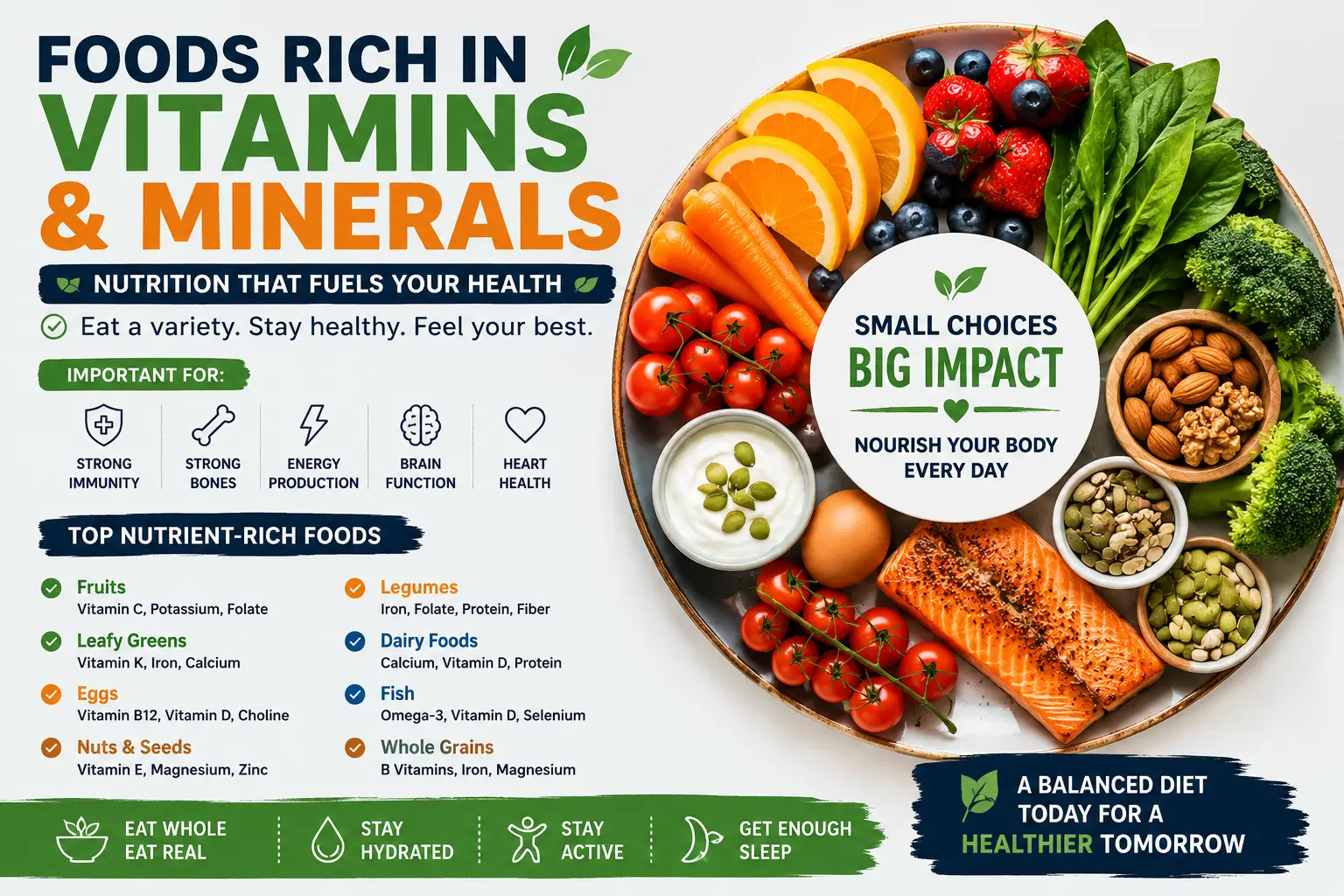
Vitamin foods are everyday foods that give your body important nutrients for energy, immunity, bones, skin, digestion, and overall wellness. You do not need a complicated diet to get more vitamins and minerals. In many cases, simple foods like fruits, vegetables, eggs, beans, yogurt, fish, nuts, seeds, and whole grains can support your body naturally.
Many people think healthy eating means buying expensive superfoods or taking many supplements. But your daily plate matters more than any single product. When your meals include different colors, textures, and food groups, your body receives a wider mix of nutrients.
This guide explains the best foods rich in vitamins and minerals, how they help your body, and how to add them to meals without making your routine difficult.
Why Vitamin Foods Matter More Than “Perfect Eating”
No one eats perfectly every day. That is normal. The goal is not perfection. The goal is to build meals that give your body useful nutrients most of the time.
Vitamins and minerals help support:
- Daily energy
- Immune function
- Healthy bones
- Skin and hair health
- Brain function
- Muscle function
- Digestion
- Overall wellness
When your meals are too limited or mostly processed, you may miss important nutrients. Adding more whole foods can slowly improve your nutrition.
Colorful Fruits: Easy Vitamin Foods for Every Day
Fruits are some of the easiest vitamin foods to include in your routine. They provide natural sweetness, fiber, water, vitamins, and antioxidants.
Good Fruit Choices
- Oranges
- Apples
- Bananas
- Berries
- Mangoes
- Kiwi
- Melons
- Grapes
Citrus fruits like oranges and kiwi are known for vitamin C. Bananas provide potassium. Berries contain antioxidants and fiber. Mangoes provide vitamin A and other helpful nutrients.
Simple idea: add fruit to breakfast, yogurt, smoothies, or snacks.
Vegetables That Bring Vitamins and Minerals Together
Vegetables are powerful because they provide many nutrients with relatively few calories. Dark green, orange, red, and purple vegetables all offer different benefits.
Nutrient-Rich Vegetables
- Spinach
- Broccoli
- Carrots
- Sweet potatoes
- Bell peppers
- Tomatoes
- Peas
- Kale
Spinach and kale can provide vitamin K, folate, and minerals. Carrots and sweet potatoes contain beta-carotene. Bell peppers are rich in vitamin C. Broccoli supports fiber, vitamin C, and other nutrients.
You can add vegetables to eggs, rice, pasta, soups, sandwiches, wraps, or simple side dishes.
Eggs: A Small Food with Big Nutrition
Eggs are affordable, easy to cook, and full of useful nutrients. They contain protein, vitamin B12, vitamin D, choline, selenium, and other nutrients that support daily health.
Eggs can be used in many simple meals:
- Boiled eggs with breakfast
- Omelet with vegetables
- Egg sandwich
- Scrambled eggs with whole grain toast
- Eggs added to rice or wraps
For many people, eggs are one of the most practical foods to keep at home.
Beans and Lentils for Minerals, Fiber, and Energy
Beans and lentils are excellent foods for people who want budget-friendly nutrition. They provide plant-based protein, fiber, iron, magnesium, potassium, and folate.
Good Options
- Lentils
- Chickpeas
- Kidney beans
- Black beans
- White beans
- Peas
These foods help keep meals filling and steady. They work well in soups, rice bowls, salads, wraps, stews, and homemade snacks.
Dairy and Fortified Alternatives
Dairy foods can provide calcium, protein, vitamin B12, phosphorus, and sometimes vitamin D. These nutrients help support bones, teeth, muscles, and general health.
Common options include:
- Milk
- Yogurt
- Cheese
- Cottage cheese
- Fortified plant-based milk
If you do not use dairy, choose fortified alternatives when possible. Fortified products may include added calcium, vitamin D, or vitamin B12.
Nuts and Seeds: Small Additions with Strong Benefits
Nuts and seeds are rich in healthy fats, vitamin E, magnesium, zinc, selenium, and other minerals. A small amount can add nutrition and texture to meals.
Helpful Choices
- Almonds
- Walnuts
- Sunflower seeds
- Pumpkin seeds
- Chia seeds
- Flaxseeds
- Sesame seeds
You can sprinkle seeds on oatmeal, yogurt, salads, smoothies, or homemade snacks. People with allergies should avoid unsafe options and choose suitable alternatives.
Fish and Seafood for Key Nutrients
Fish can provide vitamin D, vitamin B12, iodine, selenium, protein, and omega-3 fats. These nutrients may support heart, brain, and overall wellness.
Good choices may include:
- Salmon
- Sardines
- Tuna
- Trout
- Mackerel
If you do not eat fish, you can still get many vitamins and minerals from other foods, but some people may need professional advice about omega-3 or vitamin B12 needs.
Whole Grains for B Vitamins and Minerals
Whole grains are another important group of vitamin foods. They provide fiber, B vitamins, magnesium, iron, and steady energy.
Better Grain Choices
- Oats
- Brown rice
- Whole wheat bread
- Whole grain pasta
- Quinoa
- Barley
These foods can help you feel full for longer and support digestion. Swapping refined grains for whole grains is a simple improvement.
How to Build a Vitamin-Rich Plate
You do not need to count every nutrient. A balanced plate can help you naturally include more vitamins and minerals.
Try this simple plate method:
- Half plate: fruits and vegetables
- One quarter: protein such as eggs, fish, chicken, beans, lentils, or yogurt
- One quarter: whole grains or starchy vegetables
- Small amount: healthy fats from nuts, seeds, olive oil, or avocado
- Drink: water
This method keeps eating simple and flexible.
Food First, Supplements Later
Whole foods should usually come first because they provide more than one nutrient at a time. A bowl of yogurt with fruit and seeds, for example, may provide protein, calcium, vitamin C, fiber, healthy fats, and minerals.
Supplements may help some people, but they should not replace balanced meals. If you are new to supplements, read our guide on Daily Supplements Guide for Beginners.
Simple Meal Ideas Using Vitamin Foods
Breakfast
- Oatmeal with berries and chia seeds
- Eggs with spinach and whole grain toast
- Yogurt with fruit and nuts
Lunch
- Chicken wrap with vegetables
- Lentil soup with whole grain bread
- Rice bowl with beans, peppers, and yogurt sauce
Dinner
- Fish with sweet potato and broccoli
- Bean stew with salad
- Whole grain pasta with vegetables and protein
Snacks
- Fruit with peanut butter if suitable
- Carrot sticks with hummus
- Cheese with whole grain crackers
- Seeds mixed into yogurt
Common Mistakes That Reduce Nutrient Intake
Sometimes people are eating enough food but not enough variety.
Common mistakes include:
- Eating the same meals every day
- Skipping fruits and vegetables
- Choosing sugary drinks instead of water
- Depending too much on packaged snacks
- Avoiding whole food groups without replacement
- Skipping breakfast or lunch often
Small adjustments can improve your nutrient intake without making meals stressful.
A Simple Way to Remember It
The best vitamin foods are not rare or complicated. They are often basic foods that you can find in regular grocery stores.
Choose more colorful fruits, vegetables, beans, lentils, eggs, yogurt, fish, nuts, seeds, and whole grains. These foods work together to support energy, immunity, bones, digestion, and daily wellness.
You do not need to change everything in one day. Start by adding one nutrient-rich food to one meal. Then build from there.
FAQs
1. What are vitamin foods?
Vitamin foods are foods that naturally provide vitamins and minerals, such as fruits, vegetables, eggs, beans, yogurt, nuts, seeds, fish, and whole grains.
2. Which foods have the most vitamins and minerals?
Leafy greens, berries, citrus fruits, eggs, fish, beans, lentils, dairy foods, nuts, seeds, and whole grains are nutrient-rich choices.
3. Can I get vitamins and minerals without supplements?
Many people can meet their needs through a balanced diet, but some may need supplements based on medical advice.
4. What minerals are important for daily health?
Calcium, iron, magnesium, zinc, potassium, iodine, and selenium are examples of important minerals.
5. How can I add more vitamin foods to my diet?
Add fruit to breakfast, include vegetables with lunch and dinner, choose whole grains, and snack on nuts, seeds, or yogurt.
Author Bio
About the Author
Hannah Miller, MS Nutrition is a nutrition writer and meal planning educator who focuses on simple, food-first wellness. She creates practical guides that help readers build healthier meals using everyday ingredients.
References
- National Institutes of Health Office of Dietary Supplements – Vitamin and Mineral Fact Sheets
- Academy of Nutrition and Dietetics – Healthy Eating and Nutrients
- British Nutrition Foundation – Vitamins and Minerals
Disclaimer
Nutrition Information Disclaimer
This article is for general educational purposes only and should not be considered medical or dietary advice. Nutrient needs vary by age, health condition, pregnancy status, medications, and lifestyle. Speak with a qualified healthcare professional or registered dietitian before making major diet changes or using supplements.





Leave feedback about this