

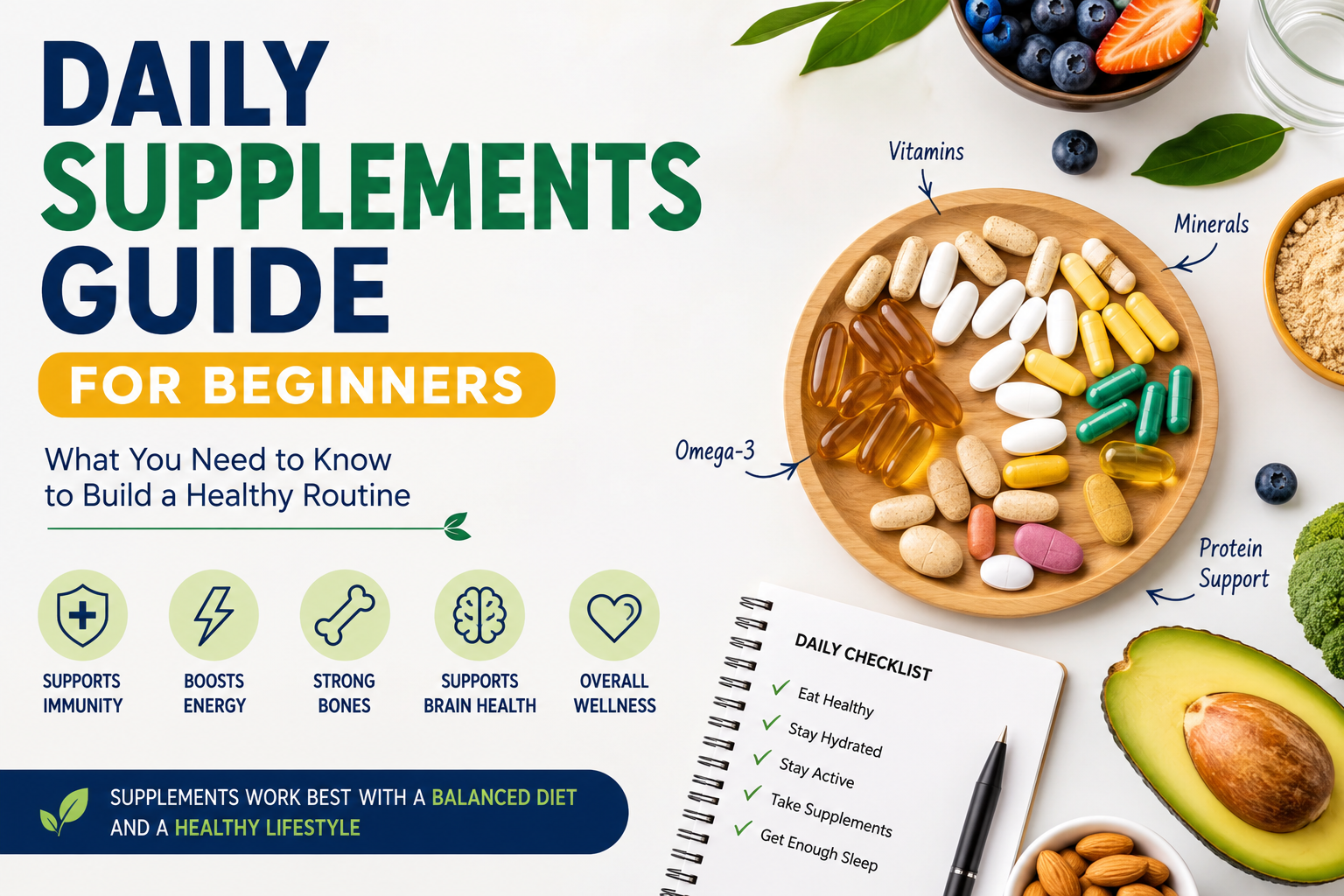
Daily Supplements Guide for Beginners
Walking into a pharmacy or health store can feel overwhelming. Shelves are filled with vitamins, minerals, herbal products, protein powders, and countless bottles that all promise better health. If you’re new to nutrition, knowing where to begin isn’t always easy. That’s why this daily supplements guide is designed for beginners who want practical information instead of confusing marketing claims.
Many people assume supplements are essential for everyone, while others believe they should be avoided completely. The truth usually falls somewhere in the middle. Supplements can be useful in certain situations, but they work best when they support a healthy lifestyle rather than replace one.
This beginner-friendly guide explains what supplements are, who may benefit from them, how to choose them wisely, and the mistakes to avoid before adding anything to your daily routine.
What Are Daily Supplements?
Daily supplements are products that provide nutrients your body needs, such as vitamins, minerals, amino acids, or other dietary ingredients. They are available in many forms, including tablets, capsules, powders, gummies, and liquids.
The purpose of supplements is to help fill nutritional gaps when your regular diet does not provide enough of certain nutrients. However, they are meant to supplement your diet—not replace healthy meals.
Do You Really Need Supplements?
Not everyone needs supplements. Many healthy adults can meet their nutritional needs by eating a balanced diet that includes fruits, vegetables, whole grains, lean proteins, dairy or fortified alternatives, and healthy fats.
However, some people may benefit from supplements because of their age, lifestyle, health conditions, or dietary choices.
Examples include:
- People with diagnosed vitamin deficiencies
- Older adults with changing nutritional needs
- Individuals following vegetarian or vegan diets
- Pregnant women following medical advice
- People with certain digestive conditions
- Those with limited food variety
The safest approach is to speak with a healthcare professional before starting any supplement program.
Food Comes Before Supplements
One of the biggest misconceptions is that supplements can make up for poor eating habits.
Imagine eating fast food every day while taking a multivitamin. Although the supplement may provide some nutrients, it cannot replace the fiber, antioxidants, healthy fats, and other natural compounds found in whole foods.
Think of supplements as a backup plan—not the foundation of good nutrition.
Common Supplements Beginners Often Hear About
If you’ve recently started learning about nutrition, you’ve probably come across the same names repeatedly. Understanding what they do can make shopping much less confusing.
Multivitamins
Multivitamins combine several vitamins and minerals into one product. Some people choose them as a convenient way to support general nutrition, although they are not necessary for everyone.
Vitamin D
Vitamin D supports calcium absorption and contributes to bone health. Since many people spend much of their time indoors, healthcare providers sometimes recommend checking vitamin D levels when deficiency is suspected.
Omega-3 Fatty Acids
Omega-3 supplements are commonly used by people who eat little or no fish. These healthy fats play a role in normal heart and brain function.
Calcium
Calcium is well known for supporting healthy bones and teeth. Dairy products, fortified foods, and leafy vegetables are common dietary sources.
Iron
Iron helps carry oxygen throughout the body. Because too much iron can be harmful, supplements should only be taken when recommended by a healthcare professional.
How to Choose Quality Daily Supplements
Not all supplements are made to the same standards. Before buying a product, take a few minutes to read the label carefully.
Look for:
- Clear ingredient lists
- Appropriate serving sizes
- Reputable manufacturers
- Products stored correctly
- Expiry dates
- Quality testing or certification where available
A higher price does not always mean a better product. Instead, focus on quality, transparency, and recommendations from qualified healthcare professionals.
Questions to Ask Before Buying a Supplement
Before placing a bottle in your shopping cart, ask yourself a few simple questions.
- Am I trying to solve a specific nutritional need?
- Have I improved my diet first?
- Has a healthcare professional recommended this supplement?
- Do I understand the correct dosage?
- Could this interact with any medications I already take?
Taking a few moments to answer these questions can help you make more informed decisions.
Building a Simple Supplement Routine
If your healthcare provider recommends supplements, keep your routine simple rather than buying many products at once.
Choose a regular time each day to take them, such as with breakfast or dinner, depending on the instructions provided on the label.
Consistency is usually more helpful than taking supplements occasionally and forgetting them the rest of the week.
Supplements Are Only One Part of Wellness
Even the best supplement cannot replace healthy habits such as regular physical activity, quality sleep, stress management, hydration, and balanced eating.
People who focus only on supplements often overlook the lifestyle habits that make the biggest difference over time.
If you’re interested in learning about nutrients that naturally support your health, you can also read our guide on Nutrition and Diet Tips for Better Energy.
Common Supplement Mistakes Beginners Should Avoid
Starting daily supplements can feel simple, but beginners often make small mistakes that reduce safety or effectiveness.
Taking Too Many Products at Once
More supplements do not always mean better health. Taking several products together can increase the chance of side effects or unnecessary nutrient intake.
Ignoring the Label
Serving size, dosage, timing, and warnings matter. Always read the label before using any supplement.
Expecting Fast Results
Supplements are not quick fixes. If your diet, sleep, hydration, and activity levels are poor, supplements alone will not solve everything.
Copying Someone Else’s Routine
Your friend’s supplement plan may not be right for you. Nutritional needs depend on age, health, diet, medications, and lifestyle.
When Daily Supplements May Not Be Appropriate
Some people should be extra careful before using supplements.
Speak with a healthcare professional first if you:
- Take prescription medications
- Are pregnant or breastfeeding
- Have kidney, liver, heart, or digestive conditions
- Have had allergic reactions to supplements
- Are preparing for surgery
- Already take fortified foods or multiple vitamin products
Natural does not always mean risk-free. Supplements can still interact with medications or affect health conditions.
A Beginner-Friendly Supplement Checklist
Before starting any supplement, use this simple checklist.
- Have I reviewed my diet first?
- Do I know why I need this supplement?
- Is the dose appropriate?
- Is the brand reliable?
- Have I checked the expiry date?
- Am I taking it at the right time?
- Have I asked a professional if I am unsure?
This checklist helps make daily supplements safer and more intentional.
How to Store Supplements Properly
Storage is often ignored, but it matters.
Most supplements should be kept in a cool, dry place away from direct sunlight. Bathrooms are usually not ideal because heat and moisture can affect product quality.
Keep supplements away from children and pets. Gummies and chewables may look like candy, so they should be stored carefully.
How Long Should You Take Supplements?
The answer depends on why you are taking them.
Some supplements may be used short-term to correct a deficiency. Others may be recommended longer-term due to diet, age, or medical needs.
A good habit is to review your supplement routine regularly with a healthcare professional instead of taking the same products forever without checking whether you still need them.
The Simple Way to Start
Daily supplements can be helpful, but they should be chosen with care. Beginners do not need a cabinet full of bottles. They need a clear reason, safe guidance, and a strong food-first approach.
Start with your meals, hydration, sleep, and activity. Then, if a supplement is needed, choose it carefully and use it consistently.
The best supplement routine is not the biggest one. It is the one that fits your real needs and supports your overall health safely.
FAQs
1. What are daily supplements?
Daily supplements are products such as vitamins, minerals, capsules, powders, or liquids used to support nutrient intake when diet alone may not be enough.
2. Should beginners take a multivitamin?
Some beginners may use a multivitamin, but it is not necessary for everyone. It is better to review your diet and ask a healthcare professional first.
3. Are daily supplements safe?
Many supplements are safe when used correctly, but safety depends on dose, health conditions, medications, and product quality.
4. Can supplements replace healthy food?
No. Supplements cannot replace whole foods because food provides fiber, protein, healthy fats, antioxidants, and many other useful compounds.
5. What supplement should I start with first?
There is no one best supplement for everyone. Start only with what you actually need based on your diet, health, or professional advice.
6. Can I take multiple supplements together?
Sometimes, but combining products can increase the risk of too much of certain nutrients. Professional guidance is recommended.
7. When is the best time to take supplements?
Timing depends on the supplement. Some are taken with meals, while others may have different instructions. Always follow the label or professional advice.
8. How do I know if a supplement is working?
Some benefits may not be easy to feel. Blood tests, symptom tracking, and professional follow-up can help determine whether a supplement is useful.
Author Bio
About the Author
Mark Ellison, MPH is a preventive health writer who focuses on nutrition basics, supplement safety, and beginner wellness education. His writing helps readers understand health products clearly before making everyday wellness decisions.
References
- National Institutes of Health Office of Dietary Supplements – Dietary Supplement Fact Sheets
- U.S. Food & Drug Administration – Dietary Supplements
- Academy of Nutrition and Dietetics – Vitamins, Minerals, and Supplements
- NHS – Vitamins and Minerals
- Mayo Clinic – Dietary Supplements Guidance
Disclaimer
Supplement Disclaimer
This article is for educational purposes only and should not be considered medical, nutritional, or supplement advice. Supplements may interact with medications or may not be suitable for certain health conditions. Always consult a qualified healthcare professional before starting, stopping, or combining daily supplements.





Leave feedback about this