

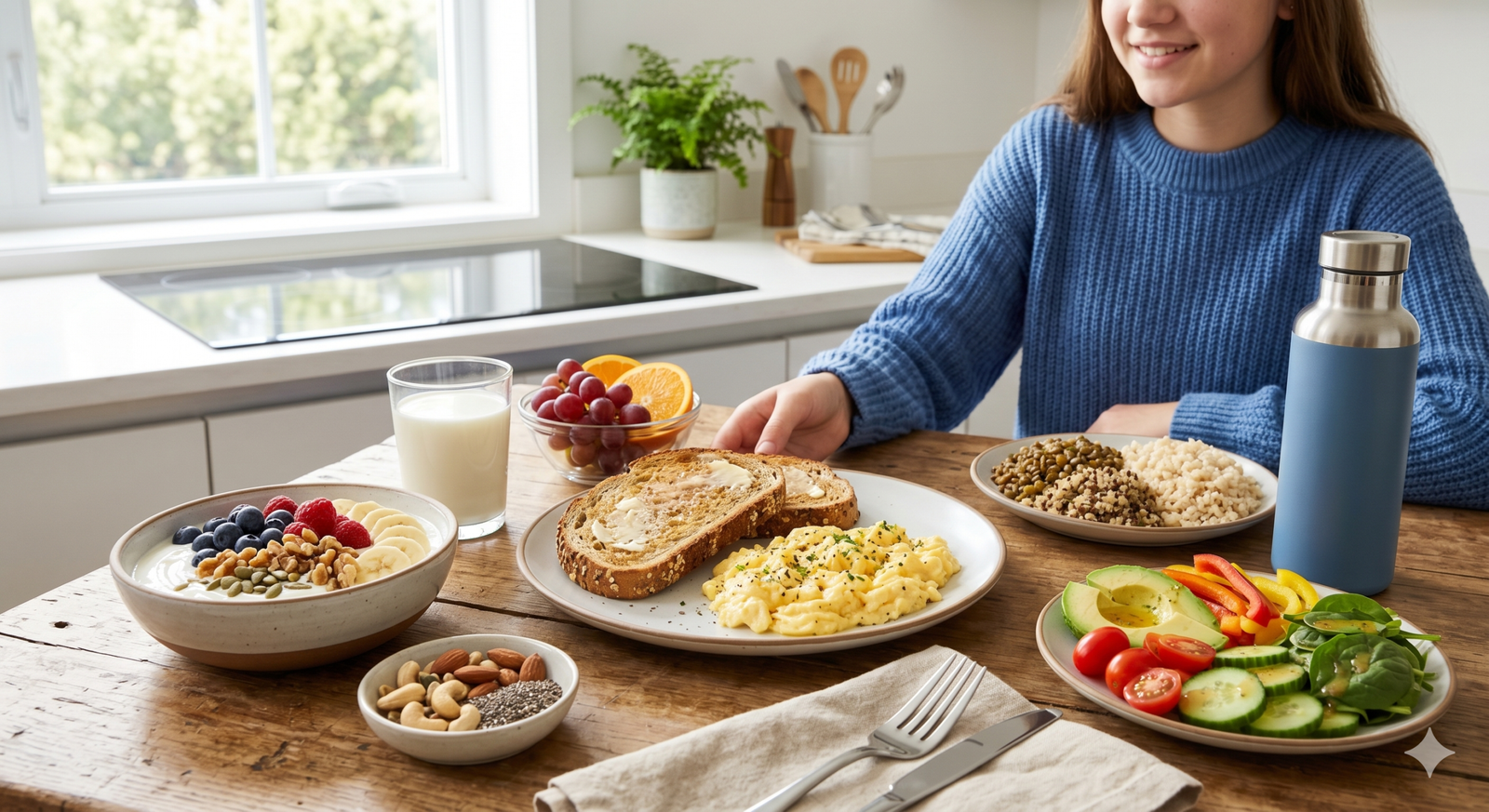
Best Foods for Teens Growth and Energy
Teen growth foods matter because teenage years are a time of fast body changes, school pressure, sports, long study hours, and busy routines. During this age, the body needs steady energy, strong bones, healthy muscles, better focus, and proper nutrients to support growth.
Many teenagers either skip meals, eat too many snacks, depend on sugary drinks, or forget to drink enough water. This can make them feel tired, irritated, sleepy in class, or low on energy during the day. Food does not need to be expensive or fancy to be healthy. Simple home meals can give teenagers the fuel they need.
The goal is not a perfect diet. The goal is balance. Teenagers need foods that give energy, support growth, and keep them full for longer. These teen growth foods can fit into breakfast, lunch, dinner, school snacks, and after-school routines.
Start with a Balanced Plate
Before choosing individual foods, teenagers should understand what a balanced plate looks like. A good meal usually includes a mix of carbohydrates, protein, healthy fats, fruits or vegetables, and water.
Carbohydrates give energy. Protein supports muscles and repair. Healthy fats help the body absorb some vitamins and provide long-lasting energy. Fruits and vegetables provide fiber, vitamins, and minerals. Dairy or fortified alternatives can support bones with calcium and vitamin D.
A simple balanced plate can include rice or roti, chicken or lentils, vegetables, yogurt, and water. It does not have to look like a diet meal. It only needs variety.
Teen growth foods work best when they are eaten regularly, not only once in a while.
Breakfast Foods That Give Morning Energy
Breakfast is often skipped by teenagers, especially when mornings are rushed. But skipping breakfast can make school hours feel harder. A good breakfast helps the body start the day with energy.
Easy breakfast ideas include:
- Egg with whole grain toast
- Oats with milk and fruit
- Yogurt with banana or berries
- Peanut butter toast
- Paratha with egg and yogurt
- Milk with dates and nuts
- Whole grain cereal with milk
Eggs are useful because they provide protein and other nutrients. Oats and whole grain bread provide slow energy. Yogurt and milk support calcium intake. Fruits add natural sweetness and fiber.
Teenagers who do not feel hungry early in the morning can start small. A glass of milk, a banana, or yogurt is still better than leaving home completely empty.
Protein Foods for Muscles and Strength
Protein is important during teenage years because the body is growing. It helps build and repair muscles, supports strength, and keeps the stomach full for longer.
Good protein foods include:
- Eggs
- Chicken
- Fish
- Lean meat
- Lentils
- Beans
- Chickpeas
- Yogurt
- Milk
- Cheese
- Tofu
- Nuts and seeds
Protein does not always have to come from meat. Lentils, beans, chickpeas, and dairy can also be useful. For teenagers who play sports or exercise, protein becomes even more important because muscles need recovery after activity.
A simple lunch with rice and lentils, or roti with chicken and yogurt, can be a strong meal. Teen growth foods should include protein at most meals, even in small amounts.
Calcium-Rich Foods for Bones
Teenagers are still building bone strength. This is why calcium-rich foods are important. Calcium supports bones and teeth, while vitamin D helps the body use calcium properly.
Helpful calcium foods include:
- Milk
- Yogurt
- Cheese
- Fortified plant milk
- Leafy greens
- Calcium-set tofu
- Fish with soft edible bones
Many teenagers avoid milk or dairy, but they still need calcium from other sources. If a teen cannot take dairy because of allergy, intolerance, or preference, fortified alternatives may help.
A simple habit like adding yogurt with lunch or drinking milk in the evening can support daily calcium intake.
Iron Foods for Energy and Focus
Iron is important for energy because it helps carry oxygen in the body. Low iron can make a teenager feel tired, weak, dizzy, or unfocused. Teen girls may especially need to pay attention to iron because of monthly periods.
Good iron foods include:
- Lean meat
- Chicken
- Fish
- Eggs
- Lentils
- Beans
- Chickpeas
- Spinach
- Fortified cereals
- Nuts and seeds
Plant-based iron is absorbed better when eaten with vitamin C foods. For example, lentils with lemon, beans with tomatoes, or spinach with citrus can be helpful.
Iron-rich teen growth foods can support energy, school focus, and daily stamina.
Whole Grains for Long-Lasting Energy
Teenagers need energy, but not all energy foods work the same way. Sugary snacks may give quick energy, but the energy often drops fast. Whole grains provide slower, steadier energy.
Good whole grain options include:
- Oats
- Brown rice
- Whole wheat bread
- Whole wheat roti
- Whole grain pasta
- Barley
- Corn
- Whole grain cereal
Whole grains also provide fiber, which helps digestion and keeps teens full for longer. A breakfast with oats or whole grain toast can be better than only eating sugary biscuits or sweet drinks.
White rice and regular roti can still be part of meals, but adding more whole grains when possible can improve balance.
Fruits and Vegetables for Daily Vitamins
Fruits and vegetables are important teen growth foods because they provide vitamins, minerals, fiber, and antioxidants. They also support digestion, skin health, and overall wellness.
Teenagers do not need rare or expensive fruits. Simple options work well:
- Apples
- Bananas
- Oranges
- Dates
- Berries
- Mango
- Carrots
- Cucumber
- Tomatoes
- Spinach
- Peas
- Potatoes
- Sweet potatoes
The easiest way is to add one fruit or vegetable to each meal. A banana with breakfast, cucumber with lunch, or vegetables with dinner can slowly improve the routine.
Smoothies can also help, but whole fruits are usually better than fruit juices because they contain more fiber.
Healthy Fats for Growth and Fullness
Many teenagers think all fats are bad, but the body needs healthy fats. They help with energy, fullness, and absorption of some vitamins.
Healthy fat foods include:
- Nuts
- Seeds
- Peanut butter
- Avocado
- Olive oil
- Fish
- Eggs
The key is portion control. A handful of nuts, one spoon of peanut butter, or a small amount of oil in home cooking can be enough.
Too many fried foods, chips, and fast foods can make the diet unbalanced. They can be enjoyed sometimes, but they should not replace regular meals.
Smart Snacks for School and After School
Snacks can be helpful if they are chosen wisely. Teenagers often get hungry between meals, especially after school or sports.
Better snack ideas include:
- Fruit with yogurt
- Boiled eggs
- Peanut butter toast
- Milk and dates
- Nuts and raisins
- Roasted chickpeas
- Cheese sandwich
- Hummus with vegetables
- Homemade smoothie
- Whole grain crackers
These snacks provide more nutrition than candy, soda, or chips. They also help prevent overeating later in the day.
Teenagers who have long school hours can keep a simple snack in their bag if allowed.
Drinks That Support Energy
Water is the most important drink for teenagers. Dehydration can cause tiredness, headache, poor focus, and low energy. Many teens drink tea, soda, energy drinks, or packaged juices but forget water.
Teenagers should drink water throughout the day, especially in hot weather, after sports, or during long school hours.
Milk can also be useful because it provides protein and calcium. Sugary drinks and energy drinks should be limited because they can add too much sugar and may affect sleep or energy levels.
Easy One-Day Food Plan for Teenagers
Here is a simple example:
- Breakfast: Egg with whole grain toast and milk
- School snack: Banana or nuts
- Lunch: Rice or roti with chicken, lentils, vegetables, and yogurt
- After school: Peanut butter toast or fruit smoothie
- Dinner: Roti or rice with fish, beans, vegetables, and salad
- Before bed if hungry: Milk or yogurt
This is only an example. Teenagers can adjust meals based on culture, budget, taste, and home food. The main idea is to include protein, whole grains, fruits, vegetables, calcium, iron, and water.
Building food habits becomes even more effective when combined with hygiene tips for teenagers. Good nutrition and proper personal hygiene work together to support better health, confidence, energy levels, and daily well-being.
Foods Teenagers Should Limit
Teenagers do not need to completely avoid favorite foods. However, some foods should not become daily habits.
Limit:
- Sugary drinks
- Energy drinks
- Too much fast food
- Packaged snacks
- Excess sweets
- Very salty chips
- Skipping meals and then overeating later
These foods can be enjoyed sometimes, but regular meals should come first. A balanced routine gives better energy than depending on quick snacks all day.
Final Thoughts
Best foods for teens growth and energy are simple foods that support the body during a busy stage of life. Teenagers need steady energy for school, sports, study, mood, and growth.
Teen growth foods include protein, whole grains, fruits, vegetables, calcium-rich foods, iron-rich foods, healthy fats, and enough water. A teenager does not need a perfect diet to feel better. Small changes, like eating breakfast, adding yogurt to meals, drinking more water, and choosing better snacks, can make a real difference.
Healthy eating should feel realistic. Start with the foods available at home, build simple meals, and stay consistent. Over time, better food habits can help teenagers feel stronger, more focused, and more energetic.
FAQs
1. What are the best teen growth foods?
The best teen growth foods include eggs, milk, yogurt, lentils, beans, chicken, fish, whole grains, fruits, vegetables, nuts, seeds, and iron-rich foods. These support energy, muscles, bones, and daily health.
2. What should teenagers eat for energy before school?
Teenagers can eat eggs, oats, whole grain toast, milk, yogurt, fruit, peanut butter, or a simple homemade smoothie. These foods give better morning energy than only sugary snacks or tea.
3. Why is protein important for teenagers?
Protein helps support muscle growth, body repair, strength, and fullness. Teenagers can get protein from eggs, chicken, fish, lentils, beans, chickpeas, milk, yogurt, nuts, and seeds.
4. Which foods help teen bones grow strong?
Calcium-rich foods like milk, yogurt, cheese, fortified plant milk, leafy greens, and calcium-set tofu can support bones and teeth. Vitamin D is also important for calcium use in the body.
5. Are snacks okay for teenagers?
Yes, snacks can be helpful if they are balanced. Fruit, yogurt, nuts, boiled eggs, peanut butter toast, roasted chickpeas, or milk are better snack options than sugary drinks and packaged snacks.
Author Bio
Pure Fit Day Nutrition Team creates practical food and wellness content for teens and families. Our nutrition articles focus on simple meals, balanced eating, school-day energy, growth support, and realistic healthy habits that can fit everyday home life.
References
- NHS — The Eatwell Guide
- Harvard T.H. Chan School of Public Health — Healthy Eating Plate
- Academy of Nutrition and Dietetics — Give Your Teen’s Iron a Boost
- MedlinePlus — Nutrition
- Royal Children’s Hospital Melbourne — Nutrition and healthy eating
Disclaimer
This article is for general nutrition education only. It is not a personalized diet plan or medical advice. Teenagers with food allergies, diabetes, eating disorders, digestive issues, anemia, weight concerns, or any medical condition should speak with a doctor, registered dietitian, or qualified healthcare professional before making major diet changes.





Leave feedback about this