

Simple Hygiene Tips for Kids
Simple hygiene tips for kids can help children build healthy personal care habits at home. Hygiene is not only about staying clean. It also helps children learn responsibility, confidence, and daily routine.
Children often learn hygiene by watching adults. When parents and caregivers make hygiene simple, calm, and consistent, kids are more likely to follow these habits every day.
Good hygiene habits can include washing hands, brushing teeth, bathing regularly, wearing clean clothes, keeping nails trimmed, and learning how to cover the mouth when coughing or sneezing.
The goal is not to make hygiene stressful. The goal is to help children understand personal care in a simple and positive way.
Why Hygiene Matters for Kids
Hygiene plays an important role in children’s daily wellness.
Clean hands, clean teeth, clean clothes, and regular bathing can help children feel fresh and comfortable throughout the day.
Good hygiene habits may support:
- Personal care
- Daily confidence
- Healthy routines
- Cleanliness
- Responsibility
- Comfort at school and home
- Overall child wellness
When hygiene becomes part of a normal routine, children can learn to take better care of themselves over time.
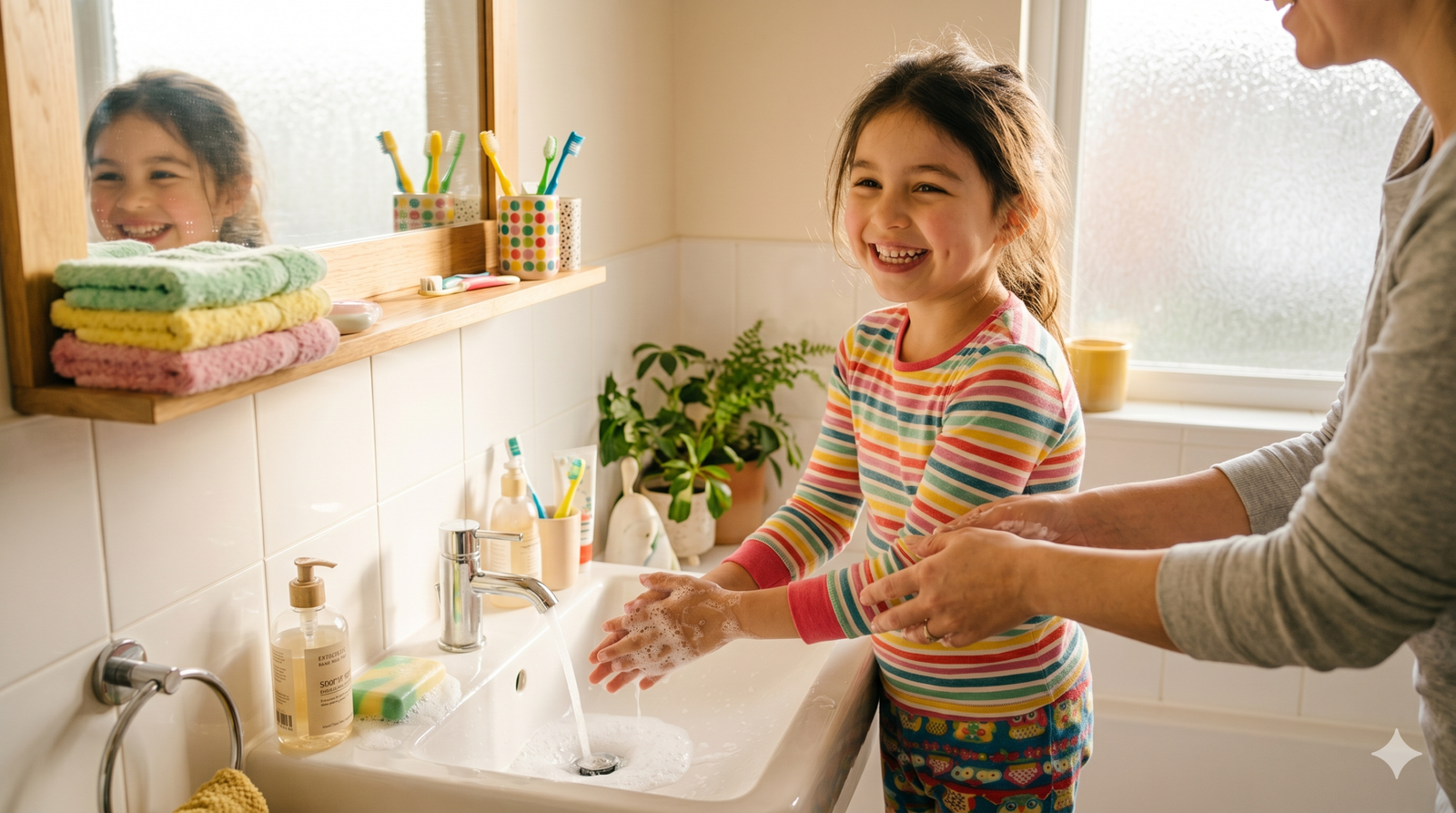
Teach Hand Washing Early
Hand washing is one of the most important hygiene habits for kids.
Children should wash their hands:
- Before eating
- After using the bathroom
- After playing outside
- After touching pets
- After coughing or sneezing
- When coming home from school
- After touching dirty surfaces
Parents can teach children to use soap and water and wash all parts of the hands, including the fingers, palms, and backs of hands.
A short song or timer can make hand washing more fun.
Make Brushing Teeth a Routine
Brushing teeth twice daily is an important hygiene habit.
Children should brush in the morning and before bedtime.
Parents can help by:
- Choosing a child-friendly toothbrush
- Using a simple timer
- Brushing together
- Keeping toothpaste within reach
- Praising effort
Tooth brushing becomes easier when it is part of the same routine every day.
Bathing and Body Cleanliness
Regular bathing helps children feel clean and comfortable.
Bathing routines may depend on age, activity level, weather, and family schedule.
Kids who play outside, sweat, or get dirty may need more frequent baths.
A simple bath routine may include:
- Washing body gently
- Cleaning underarms
- Washing feet
- Rinsing properly
- Drying with a clean towel
- Wearing clean clothes afterward
Bath time should feel calm and safe.
Keep Nails Clean and Trimmed
Children often touch many surfaces while playing, studying, or eating.
Keeping nails clean and trimmed is a small but important hygiene habit.
Parents can check nails regularly and trim them when needed.
Children can also learn to wash under nails during hand washing.
Short, clean nails are easier to maintain and help children feel neat.
Teach Coughing and Sneezing Habits
Children should learn how to cover their mouth and nose when coughing or sneezing.
A simple habit is to cough or sneeze into the elbow instead of the hands.
Parents can gently remind children to:
- Cover coughs and sneezes
- Use tissues when needed
- Throw tissues away
- Wash hands afterward
These habits are helpful at home, school, and public places.
Wear Clean Clothes Daily
Clean clothes help children feel fresh and comfortable.
Children should learn to change clothes after bathing, after heavy sweating, or when clothes become dirty.
Simple clothing habits include:
- Wearing clean underwear daily
- Changing socks regularly
- Putting dirty clothes in a laundry basket
- Keeping school clothes ready
- Choosing comfortable clothes
This also teaches responsibility and organization.
Hair Care for Kids
Hair hygiene is another part of personal care.
Children may need help washing, brushing, or combing their hair depending on age and hair type.
Simple hair care habits include:
- Washing hair regularly
- Brushing or combing gently
- Keeping hair away from eyes
- Using clean hair accessories
- Avoiding sharing combs or brushes
Hair care should be gentle and comfortable for children.
Hygiene and Daily Routine
Hygiene works best when it is connected to daily routines.
For example:
Morning
- Wash face
- Brush teeth
- Comb hair
- Wear clean clothes
After School
- Wash hands
- Change clothes if needed
- Put dirty items away
Night
- Take bath if needed
- Brush teeth
- Wear clean nightwear
A predictable routine makes hygiene easier for children to remember.
Hygiene and Child Development
Good hygiene habits can support responsibility and independence as children grow.
When children learn to wash hands, brush teeth, organize clothes, and care for their body, they begin building important life skills.
If you want to understand how routines support overall growth, you can also read our guide on Child Development Through a Daily Wellness Routine.
Daily hygiene and wellness routines can work together to support child development.
Make Hygiene Fun for Kids
Children may not always enjoy hygiene tasks at first.
Parents can make hygiene more enjoyable by using:
- Fun toothbrushes
- Colorful towels
- Hand washing songs
- Reward charts
- Simple reminders
- Child-friendly soap
- Positive praise
The goal is to encourage the habit without making the child feel pressured.
Be Patient with Learning
Children may forget hygiene steps, rush through brushing, or resist bathing sometimes.
This is normal.
Parents can help by staying calm and repeating instructions gently.
Instead of scolding, it can help to say:
“Let’s wash hands before eating.”
Or:
“Let’s brush together for two minutes.”
Simple language and consistency work better than pressure.
Hygiene Mistakes Parents Should Avoid
Some common mistakes include:
- Expecting children to remember everything alone
- Making hygiene feel like punishment
- Rushing routines too much
- Not modeling good hygiene
- Using harsh products
- Ignoring dental care
- Skipping hand washing reminders
Children learn better when hygiene feels normal and manageable.
Final Thoughts
Simple hygiene tips for kids can help children build healthy daily habits at home.
Hand washing, brushing teeth, bathing, wearing clean clothes, keeping nails clean, covering coughs, and caring for hair are all important parts of personal care.
The goal is not perfection.
The goal is consistency.
With patient guidance and simple routines, children can learn hygiene habits that support confidence, comfort, responsibility, and overall wellness.
FAQs
1. What are simple hygiene tips for kids?
Simple hygiene tips for kids include washing hands, brushing teeth, bathing, wearing clean clothes, trimming nails, and covering coughs or sneezes.
2. How often should kids wash their hands?
Kids should wash hands before eating, after using the bathroom, after playing outside, after coughing or sneezing, and when coming home from school.
3. How can parents make brushing teeth easier?
Parents can use a fun toothbrush, a timer, brushing songs, and gentle reminders to make brushing easier.
4. Why is hygiene important for children?
Hygiene helps children stay clean, feel confident, build responsibility, and follow healthy daily routines.
5. How can kids learn hygiene habits?
Kids learn hygiene through repetition, simple routines, reminders, and watching adults practice good habits.
6. Should children bathe every day?
Bathing needs may vary based on age, activity, weather, and family routine. Children should bathe regularly and whenever they are sweaty or dirty.
7. Why should kids keep nails clean?
Clean and trimmed nails are easier to maintain and help children keep their hands neat.
8. How can hygiene support child wellness?
Good hygiene supports daily comfort, confidence, routine, responsibility, and overall child wellness.
Author Bio
About the Author
PureFitDay Editorial Team creates practical health, wellness, and lifestyle content for families and everyday readers. Our goal is to provide simple guidance on kids health, hygiene, child wellness, routines, nutrition, fitness, sleep, and daily healthy habits.
References
- Centers for Disease Control and Prevention (CDC) – Handwashing
https://www.cdc.gov - World Health Organization (WHO) – Hygiene
https://www.who.int - UNICEF – Hygiene and Child Health
https://www.unicef.org - Mayo Clinic – Children’s Health
https://www.mayoclinic.org - American Dental Association – Children’s Oral Health
https://www.ada.org
Disclaimer
Medical Disclaimer
The information provided in this article is for educational and informational purposes only and should not be considered medical advice. Parents and caregivers should consult a qualified healthcare professional or dentist for concerns about a child’s hygiene, oral health, skin, hair, development, or overall health. Individual needs may vary.





Leave feedback about this